Why traditional observability misses AI agent failure
August 4, 2026/5 min read/Julia Berman
Your dashboard is green. Latency is inside SLA, error rates are flat, every health check is passing, and the on-call rotation has been quiet for a week. By every measure your observability stack was built to capture, your AI agents are healthy.
They may also be making bad decisions at scale, and you would have no way of knowing.
This is the uncomfortable gap opening up under enterprise AI programs right now. Most organizations are walking into it with tooling they trust for exactly the wrong reasons. A useful way to see the shift is through the operational question enterprises need to answer. For conventional software, it was largely: Is the system running as expected? For AI agents, it is increasingly: Is the system making the right decisions?
AI observability was built to answer the first. Yet on its own, it has almost nothing to say about the second.
This piece breaks down the agent-specific failure modes that slip past traditional monitoring — drift, scope creep, decision-quality failure — and what it takes to evaluate agents as the decision systems they actually are.
The observability stack most teams inherited (i.e. APM, distributed tracing, log aggregation, uptime monitoring) was engineered for deterministic systems. A service crashes. A request times out. A dependency returns a 500. A queue backs up and throughput collapses. These are the failure modes of conventional software, and traditional observability catches them well because the question it was built to answer is fundamentally binary: is this thing running or not, and how fast is it responding?
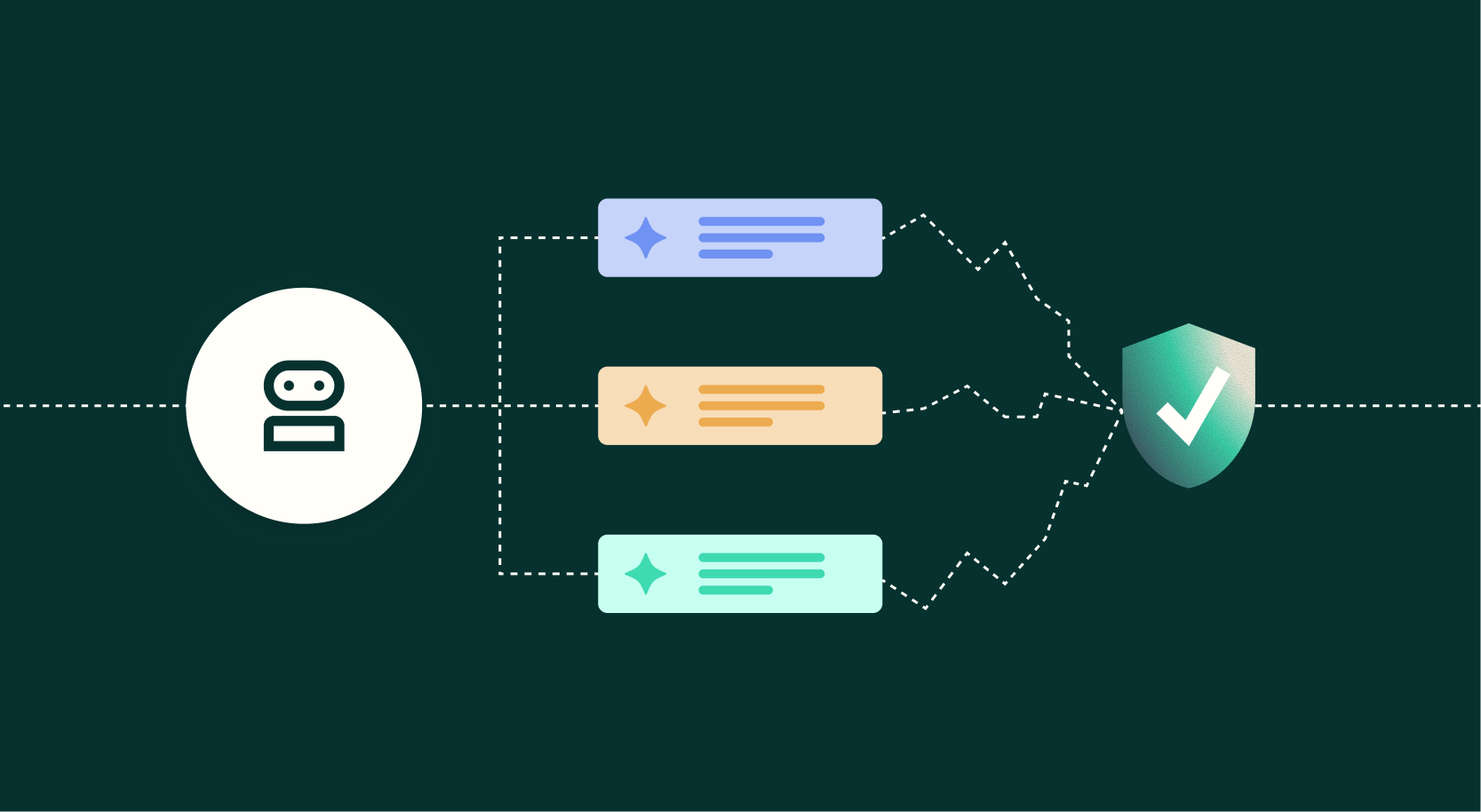
That question covered many of the operational failures teams were accustomed to managing. But it becomes less sufficient with AI agents. Agents introduce a failure class that traditional observability was never designed to see, because agents stay up while going wrong. They fail, inside the logic of a decision, in ways no infrastructure signal registers.
Consider three ways an agent goes wrong while every dashboard stays green. Each will look familiar the moment you stop thinking about infrastructure and start thinking about decisions.
An agent that performed well in evaluation degrades as the world moves underneath it. The input distribution shifts as customer behavior changes. An upstream data source is reformatted. A model provider silently updates a version behind an API you lack control over. The retrieved context that grounded good answers in March is stale by September.
None of this throws an error. The agent responds on time, every time, with well-formed output. It is simply and increasingly wrong, and the decline is gradual enough that no static threshold ever trips. This is the exact pattern ML teams learned the hard way with production models: launch accuracy tells you almost nothing about accuracy two quarters later, and the systems that looked most stable on an infrastructure dashboard were often the ones drifting underneath it.
An agent scoped and validated for one narrow task begins being used for adjacent ones nobody signed off on. A support agent validated for order-status questions starts fielding billing disputes, while a summarization agent gets wired into a workflow where its output now triggers an automated action. Each individual call returns successfully, so the system reports full health.
But the agent is now operating well outside the boundary where anyone actually verified its judgment, and because no health check encodes where that boundary was supposed to be, the expansion is invisible until something goes visibly wrong downstream. In other words, the blast radius grows silently while the dashboard stays green.
The agent returns a confident, fluent, on-time answer that happens to be wrong: a flawed chain of reasoning, a hallucinated figure presented with total assurance, a plausible recommendation resting on a false premise. This is the failure mode that most starkly exposes the limits of uptime thinking, because a response that is fast, available, and incorrect is byte-for-byte indistinguishable from a correct one to an APM tool.
Your tracing shows a clean span. Even your latency histogram looks great. But still, the agent has just approved something it should have flagged, or told a customer something untrue with perfect grammatical confidence.
The common thread is the part that should reframe the whole problem: none of these are infrastructure failures. They are decision failures.
You cannot monitor the quality of a decision with a stack built to monitor the availability of a service. The two are not points on a spectrum where better APM eventually gets you there. They are different questions. Uptime asks: is it responding? Agent reliability asks: is it responding correctly, within scope, with reasoning that still holds? Ultimately, no amount of tracing granularity converts one into the other.
Enterprises don't deploy agents to stay online. They deploy them to make or support decisions — approvals, routing, triage, recommendations, actions taken autonomously on a customer's behalf. As agents move from assisting a human to acting without one in the loop, the cost of a silent wrong decision stops being a support ticket and becomes a compliance exposure, a mispriced contract, or customer harm propagated at machine speed and scale.
The failure won’t announce itself on a page at 3 a.m. It accumulates quietly across thousands of individually "successful" transactions, and you find out from a regulator, an auditor, or a customer rather than your monitoring. For anyone accountable for both the upside of an AI program and its downside, that asymmetry is the central problem.
Ask yourself the three questions that actually matter, and notice that none of them appear on any observability dashboard:
Can you name every agent running in production right now?
Do you know what decisions they're making?
Could you explain any of it to a regulator?
These are accountability questions, and the gap between how many agents you're running and how well you can answer for them widens every quarter you treat agent health as an uptime problem.
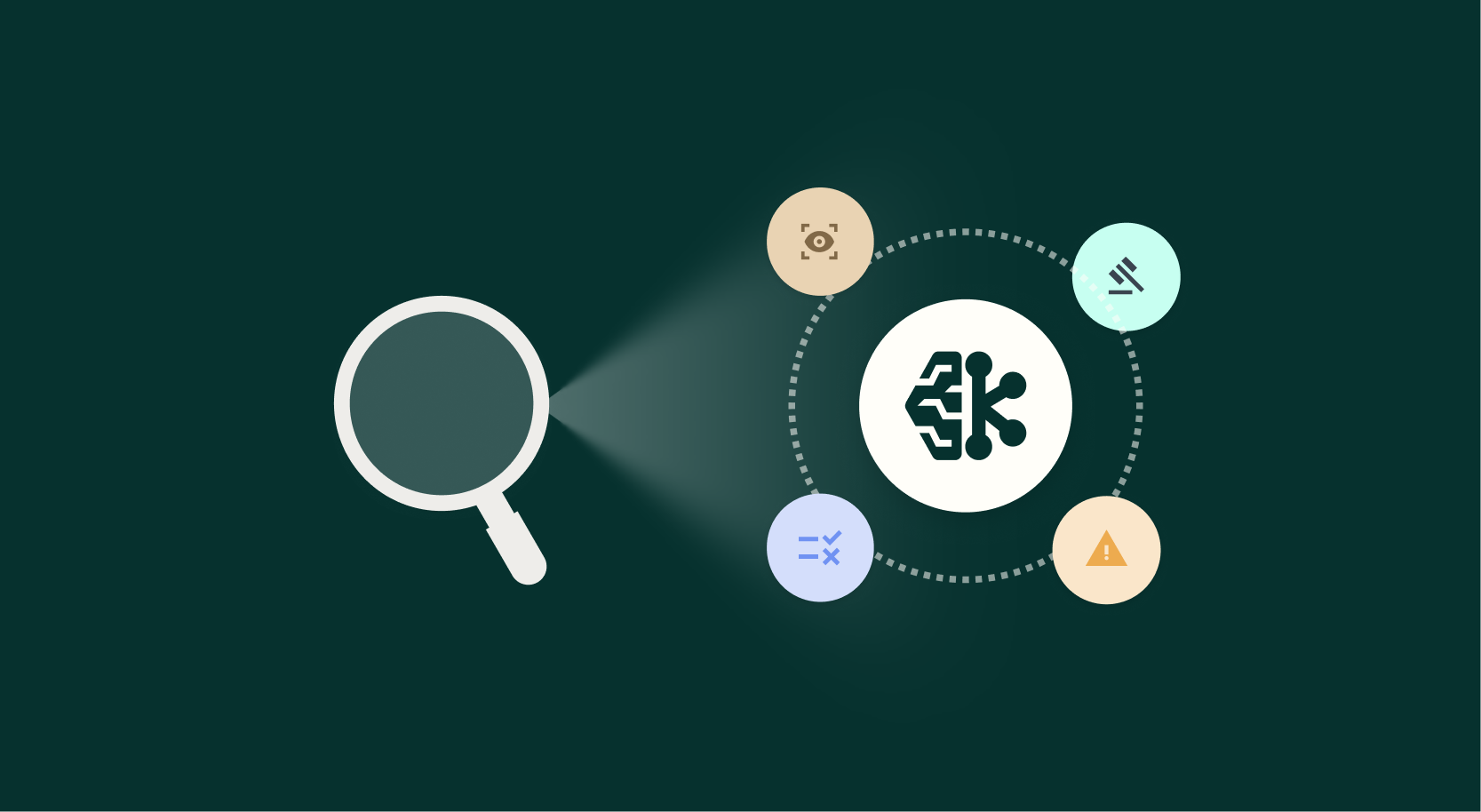
Closing this gap means treating agents as what they are — decision systems. In practice that means three disciplines, none of which live in a traditional observability tool:
You cannot evaluate what you cannot see, and agents are scattered across copilots, cloud platforms, and internal tools, frequently with no clear owner. A complete, current inventory with ownership and business purpose attached is the precondition for everything else. Shadow agents are the agent-era version of shadow IT, except they can act.
That means monitoring output quality over time, not latency. Watching for behavioral drift and shifts in how an agent uses its tools versus error rates. Tracking whether an AI agent is still delivering the business outcome it was deployed for — the KPIs and value it was supposed to produce over the requests-per-minute it happens to be serving.
Consistent evaluation frameworks applied across every agent. Risk classification and certification so a high-impact agent is held to a higher standard than a low-stakes one. A validation regime that periodically re-tests an agent against a known-good standard rather than assuming its launch behavior holds forever. An auditable trail from problem to resolution for when, not if, something goes wrong.
This is a genuinely different discipline, and the organizations that will trust agents with consequential decisions are the ones building it now, before the blast radius grows, rather than bolting it on after the first silent failure surfaces in front of a customer.
None of this is unprecedented. It's the extension of a discipline enterprises have been maturing for years in the narrower world of production machine learning, where teams learned (often painfully) that a deployed model's launch accuracy tells you almost nothing about its accuracy six months in, and that the only defense is continuous evaluation against the outcomes you actually care about.
Dataiku, the Platform for AI Success, has spent those years helping organizations monitor, evaluate, and govern models running in production, treating the quality of what a system decides as a first-class signal rather than an afterthought behind uptime.
Dataiku Agent Management extends that same discipline to the agent era, giving enterprises a single control layer to discover every agent running across their platforms, monitor the quality of the decisions those agents make, and govern them against consistent evaluation and risk standards. It surfaces the shadow agents no dashboard is watching, tracks behavioral drift and scope creep as first-class signals rather than infrastructure afterthoughts, and holds a high-impact agent to a higher bar than a low-stakes one. That is what turns agent oversight from a hope into an operating model the enterprise can actually stand behind.
Your agents can pass every health check you have and still fail at the job you deployed them to do. Building the inventory, evaluation, and governance to detect that failure is what separates agent experimentation from an agent program the enterprise can actually trust.