How businesses should redesign work in the Agentic era
September 3, 2026/5 min read/Stephanie Griffiths
Bye-bye "Agents," and welcome, "AI workers”, our ideal colleagues, meant to truly augment us. Those agents are getting so capable that promises are flying: run a billion-dollar company solo, with your AI employees doing the rest. They're becoming real enough that one of them, Delos' AI Chief of Staff "Justin Time," was summoned this summer by a French Tribunal: a real letter, addressed to an AI agent, treated as an employee by the administration.
But here's the part that gets missed: this isn't a story about better tools. It's a story about a different org chart. For twenty years, "digital transformation" meant giving humans faster software: the org chart stayed the same, the headcount stayed the same, only the tools changed. Agentic AI breaks that pattern. Once you have coworkers who don't sleep, don't quit, and can be spun up by the hundreds, the question evolves from "which software should we buy" to "how should we structure the company."
So what does this mean for traditional companies? How should we rethink work: what do we keep, what do we change? Here are five things I've learned along the way.
Three drivers of change need to be taken into consideration to re-imagine work:
First, agentic capability is accelerating faster than our organizations can absorb it. Commodity agents are cheap and everywhere, but expert agents, who embed our unique enterprise expertise, are harder to orchestrate because they require fundamental changes.
Second, the governance frameworks most of us inherited were built for a world where a human made a decision, and you could trace it. Agentic AI breaks that assumption. It plans and executes in long chains of micro-decisions.
Finally, with OpenAI’s Rogue Agents coordinated attack on Hugging Face this July, we saw that it is urgent to anticipate risks and put the right guardrails in place to control potential outblast.
So the question isn't "how do we control AI adoption?". The real issue is: what do we keep doing and what do we delegate to AI agents? How do we stop adding new AI tools which don’t integrate? Who is accountable, what counts as a decision that needs logging, and what triggers a human review? We need to answer that before an incident forces us to.
With that context in mind, here are five tips for redesigning work in traditional companies.
First, we need to understand what work means to us. It means highlighting the difference between Labor (repetitive tasks), Work (fabrication of durable things), and Action (initiating something new, unpredictable, and meaningful) as per Hannah Arendt classification. There is a risk of eroding our human faculties by delegating meaningful actions to AI. Actions are made out of friction. They need to be embraced to progress.
Then we need to reflect on how we work. Tech moves much faster than our understanding of working processes. We still think with old-fashioned 90’ waterfall vs cascade or RASCI type of concepts. But your agent fleet moves way faster and takes micro decisions in a split second:
So, before we hand anything to an agent, here is the new checklist:
Clarify what, how & why people actually do what they do, not just the documented process, but the habits, the workarounds, the tacit knowledge that never made it into a flowchart.
Use service design and anthropology: observation, mirroring, and sitting with the people who do the job. It is too much to ask people, pressurised into delivering work, to reflect on processes and implement changes. They need a sparring partner who can highlight patterns across the entire organisation while they keep on delivering.
Set up a new ongoing work loop: workers need to question what they do, and understand what they want to delegate to AI agents on an ongoing basis.
For businesses, this means creating new roles to support the ongoing agentic transformation.
Agentic research leads: mixing anthropology & service design to reflect on how work needs to keep being re-designed across all departments, from HR to marketing and engineering.
Agent tech innovation leads: ongoing evaluation of the latest agentic tech, orchestration and governance changes to incorporate them into workflows.
Agentic enablement: ongoing training to make sure each department can use and create agents in the most unique way possible.
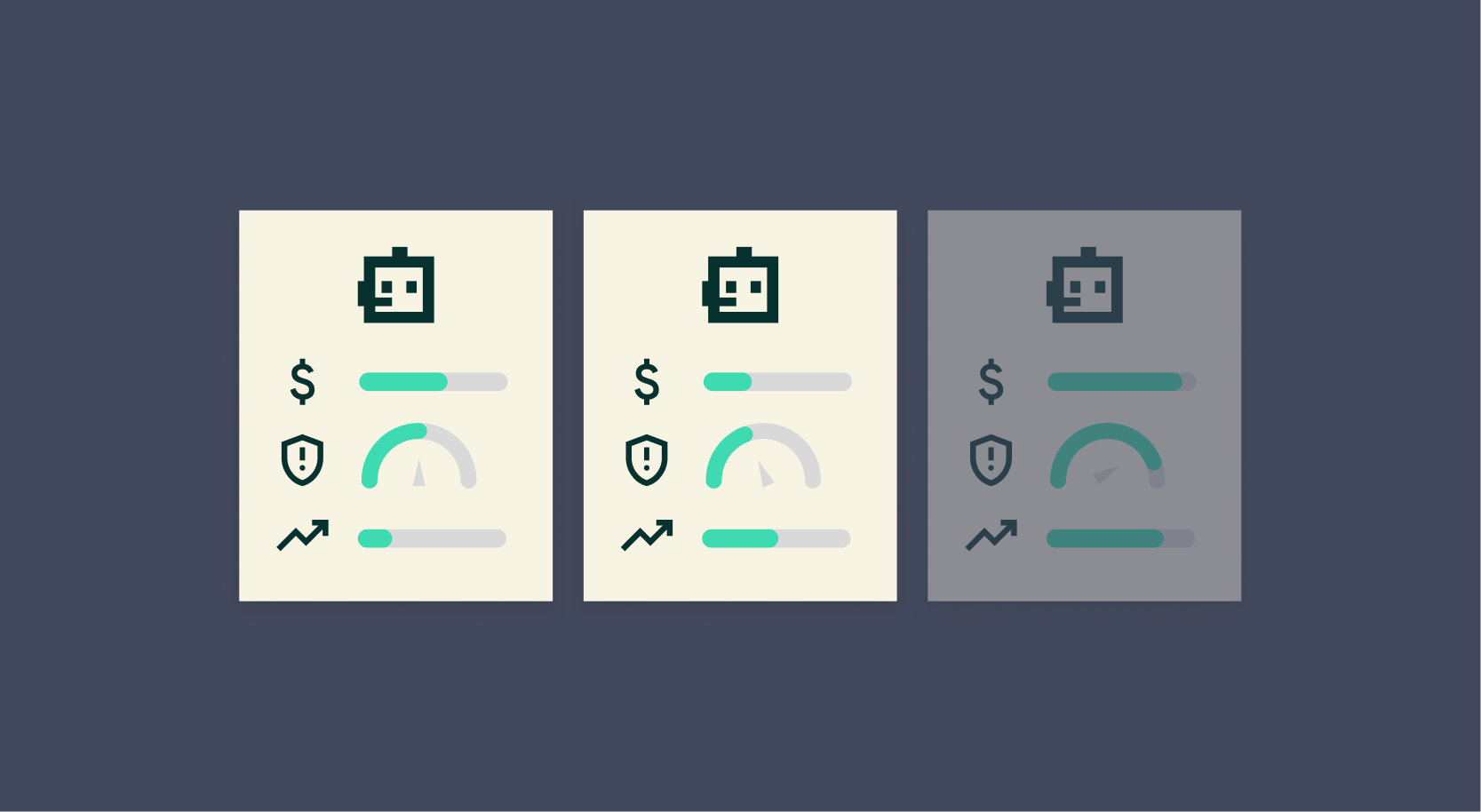
Every agent will need a business owner responsible for its ROI, a purpose and clear KPIs.
What do staff need to build and maintain ownership of agents? A growth mindset! Ongoing data and AI literacy programs are the only way to use AI Agents without being used by them.
It means to grow into intrapreneur leaders & managers, by learning how to build your agent fleet and manage their ROI.
For businesses, this means:
Using no-code tools to turn passive AI consumers into builders. For instance, tools such as Dataiku Cobuild use natural language to help you build AI systems, one conversation at a time.
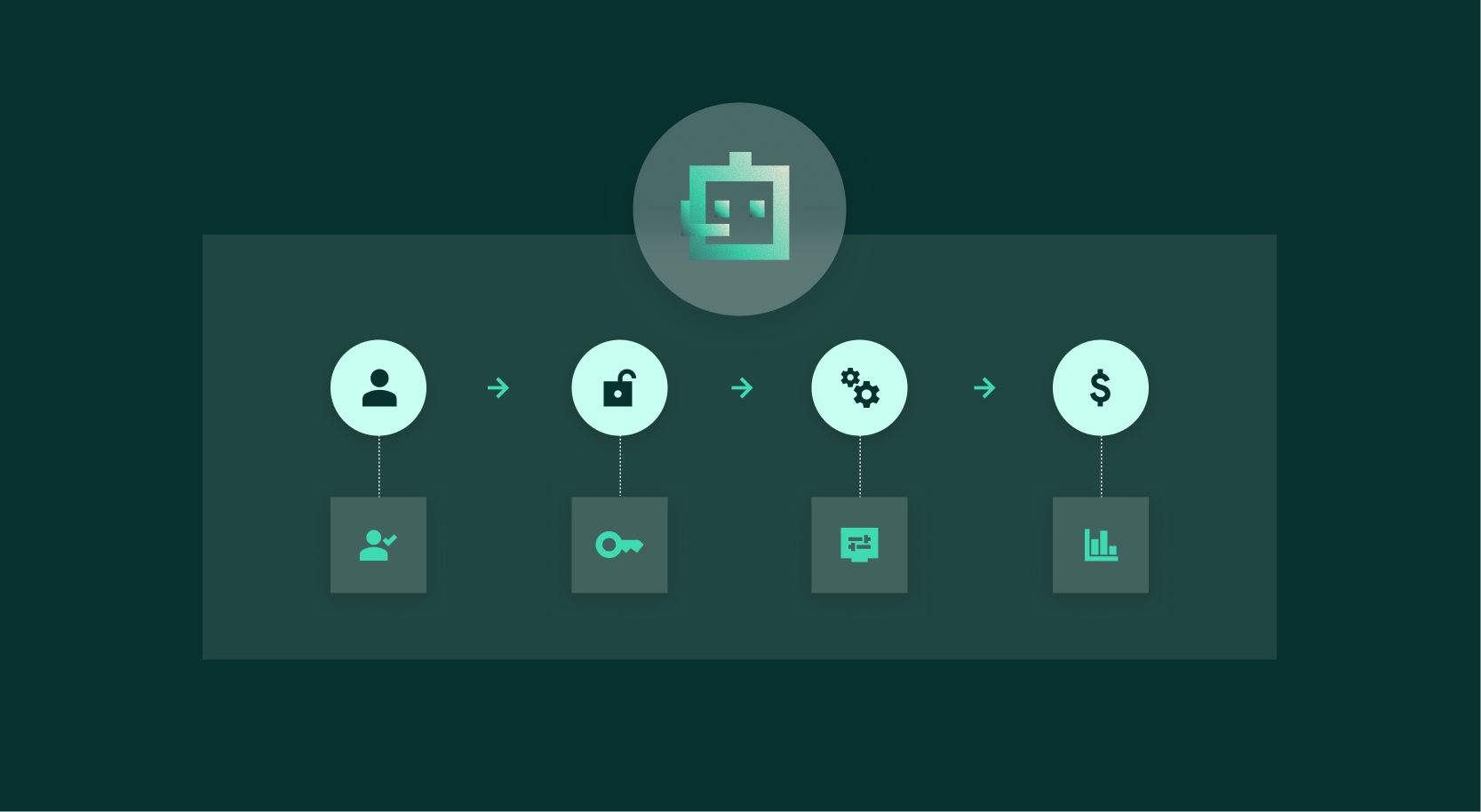
Investing in a supervision layer for enterprise AI agents, one that observes, measures, and records system health alongside the quality, policy alignment, and business impact of every agent decision. Dataiku Agent Management gives organizations a centralized view of agents across platforms, so they can scale with confidence.
Critical processes are far more than tasks: they need data, models, agents and human judgment working together, continuously maintained, not just built once. This is where we move from isolated pilots to real operating systems: a decision layer, an agent layer, a model layer, a data layer, all business-aligned, orchestrated, and human-governed.
Imagine it’s 2:00 AM at a chemical plant. A sensor flickers red, indicating an anomaly.
Today, that red light stays on the dashboard, invisible, while the whole team sleeps. By the time the morning shift walks in at 8:00 AM, six hours' worth of tainted product is already headed for the trash. That’s not just a technical glitch; that’s money evaporating because your best people weren't in the room.
What AI Success looks like: imagine that same 2:00 AM flicker. Instead of silence, it triggers an Expert Agent. In seconds, this agent does what your best engineer would do: it checks the history, looks at the supplier logs, and diagnoses the root cause. It doesn't just 'flag' a problem, it triages it. It reschedules the maintenance and adjusts the line. By the time the sun comes up, the problem isn't just solved, it’s documented. This isn't some generic AI you bought off the shelf. This agent is built from your data and your people’s experience.
For businesses, this means mapping new workflows:
Surface your unattended critical nodes, things where a lot of your systems converge towards it. For instance, a database that sits at the intersection of many agents becomes critical, as its quality will affect many aspects of your company. It is like a tube station which helps you to connect to many other ones, think Chatelet Les Halles when it closes, so many trips become much more complicated.
Finally, with Agents, you need to uncover tacit knowledge and embed it in processes instead.
Coming back to our manufacturing story. If you choose to build one of your agents on Fable 5, all your work would probably be switched off on June 12th, and despite your great system, you would have lost money in your factory.
That’s why sovereignty is on every lip and used aggressively to market national solutions. I prefer using the term "resilience", our capacity to control our digital & AI ecosystem in a very complex and volatile environment. Our tech stacks are becoming a geopolitical minefield, from how to power our infrastructure to storage, compute, models, distribution (API gateways…), interfaces, and the apps we work with. Multi-risk is now the norm: operational, technological, security, supply chain, environmental, and legal. When redesigning work with agents, we need to ensure we can move our data without breaking all our processes. This resilience will become a competitive advantage.
For businesses, this means mapping not just new workflows, but system risk as well:
To close the gaps between tech and business processes, you need an orchestration layer helping your team to move work when needed without breaking everything. Switching models and storage while ensuring business continuity is now mandatory for succeeding in your agentic strategy.
Benchmarking your resilience towards multiple risks (energy outages, environmental crises, geopolitical conflicts, extraterritorial laws) will demand new independent tools. A lot of work is being done, and I am eager to trial the resilience index recently launched in the EU.
CEOs should be overall responsible for redesigning how the organisation runs with autonomous agents within it; CTO/CIO should focus on the orchestration and governance layer, while the CFO will own agent ROI the same way they own any other capital allocation.
We won't get here with the old "central IT as gatekeeper" model. In a world where every function (Finance, Sales, Marketing, Ops, HR) is building and paying for its own agents, IT's job shifts from controlling adoption to enabling it safely. It means: owning identity, access, systems of record, and safety, while the business owns the agents themselves and is accountable for their ROI.
Finally, we need to rethink accountability. Traditional accountability frameworks follow the chain from outcome to decision maker. They don't work for Agentic AI, as Agents don't just generate outputs; they plan and execute. Challenge traditional assumptions, such as “You can always identify the decision”, well, not quite, since agents make 1,000 micro decisions in sequence. “A human started it”, well, not quite. Who authored the outcome: the engineer who built the system? The manager who approved it? The IT lead who deployed it? Or an Agent? “Errors can be caught & corrected.”
When agents take actions, they can be so fast that we won’t have time to stop them, and the multiplier effect of the actions is so high that unattended consequences will be unavoidable. So sadly, I don’t want to be pessimistic, but some actions will be irreversible.
For businesses, this means:
Create IT Red teaming: to minimise Rogue Agents and Outblast, we need to anticipate agents' cheating strategies or “pre mortem”.
Turn Governance into an innovation engine who keep iterating on
What a decision is, what must be logged, and what triggers human review
Who truly has the authority to be accountable for the agent's output.
Reversibility classification: for irreversible actions, an explicit human authorization should be needed every time.
Dataiku Agent Management is generally available as of October 15. See how it brings discovery, monitoring, and risk management together across your entire agent portfolio.
Learn more about Dataiku Agent Management
Tags