Inside Dataiku Cobuild: building trustworthy AI across 4 industries
July 30, 2026/5 min read/Team Dataiku
Walk into almost any large enterprise today and you'll find employees building their own AI tools. A supply chain analyst is using Claude Code to stitch together a forecasting script. A clinical operations manager is using Cursor to prototype a site selection tool. Nobody's being reckless, they're solving real problems with what's on their laptop.
But this creates a growing gap. IT and data leaders don't know what's been built, where it lives, what data it touches, or whether it's still running six months later when the person who built it has moved on. Even when the tool itself is approved, what comes out of it usually isn't governed: a wall of code only its author can explain, sitting in one person's repo, hard to maintain or hand off, and one more addition to a pile of similar projects quietly solving the same problem in different ways.
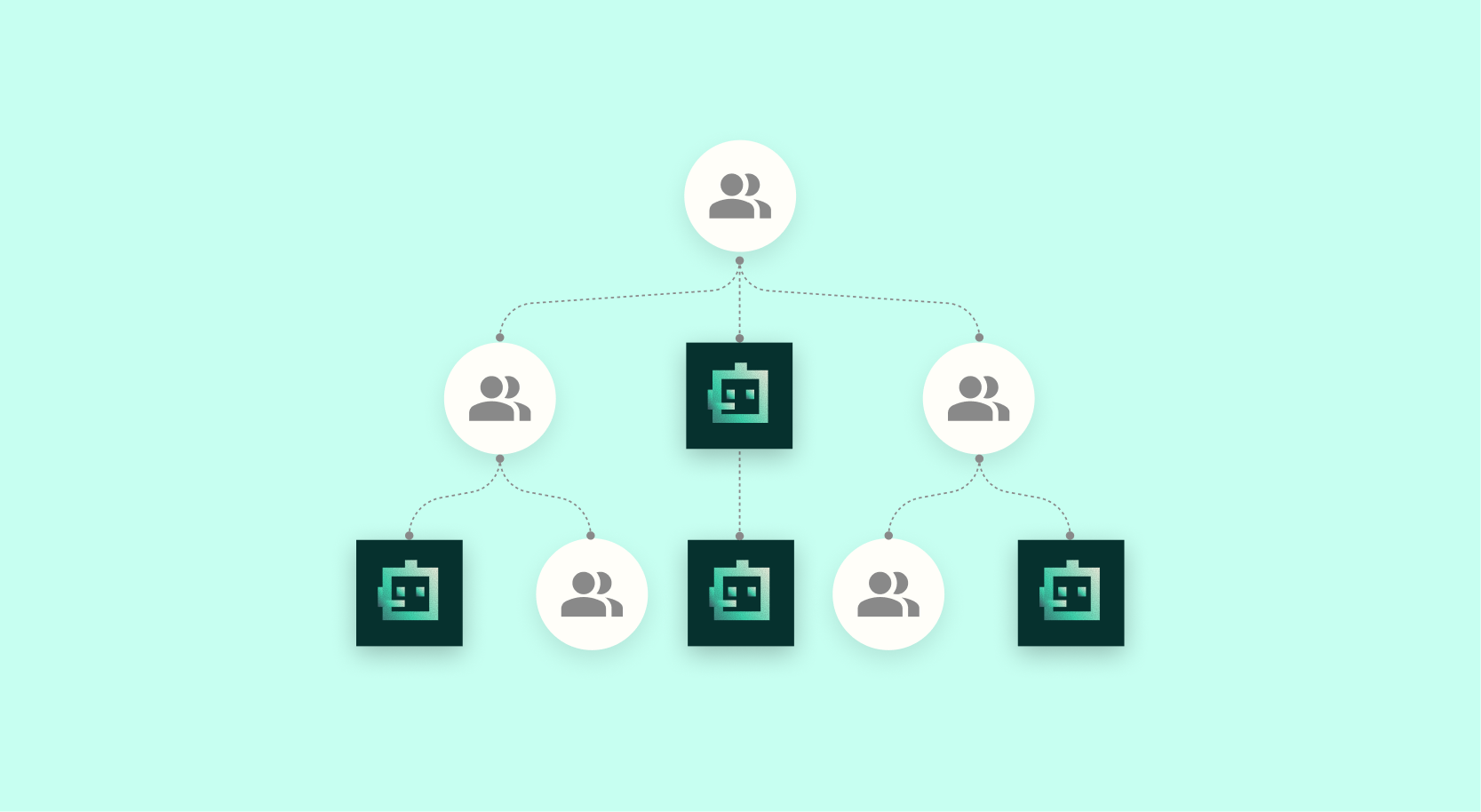
Dataiku Cobuild is an AI-building agent inside Dataiku, the Platform for AI Success, that closes that gap, letting business users describe what they want to build in plain language. Instead of generating code, Cobuild generates a flow: a visual, step-by-step map of what data goes in, what happens to it at each step, and what comes out. Anyone who understands the business problem can follow that flow end to end without reading a line of code, so the person who built it and the person approving it are looking at the same thing. Every project stays connected to the data infrastructure, security policies, and monitoring your organization already runs on.
That gap looks different by industry. Here's what it means for financial services, manufacturing, healthcare and life sciences, and retail and CPG.
The pressure: Every credit, fraud, or collections model a bank builds has to hold up under regulatory scrutiny, fair lending review, model risk sign-off, and a rationale the bank can defend to an examiner. At the same time, lending and risk teams face constant pressure to move faster than a central risk or data science team can support. That leaves most banks picking one side: informal tools nobody can audit versus a backlog that never clears.
Where Dataiku Cobuild fits:
Credit and underwriting teams can build governed default or approval models without waiting in a central queue.
Fraud and AML teams can stand up monitoring pipelines against transaction and customer data already inside the bank's environment.
Collections teams can build models that prioritize accounts by likelihood to pay.
Every one of these lands as a visual, step-by-step map of the data, logic, and outputs, so a model risk reviewer can verify it using the same judgment they'd apply to any model approval decision before it reaches production.
What changes: The bank can expand who's building credit, fraud, and risk models without expanding the central data science team, and every model carries the documentation and audit trail regulators already expect.
The pressure: A single plant runs on more AI needs than one central team can support: predictive maintenance, yield and quality analysis, supply and parts forecasting, cost tracking. Each request competes for the same small group of data scientists, and downtime, scrap, and stockouts get more expensive the longer they wait. Plant data also lives across historian databases, ERP, and MES Systems that generic AI tools were never built to read, and anything touching equipment or safety needs engineering sign-off before it goes near a real action.
Where Cobuild fits:
Reliability engineers can quickly build anomaly detection flows or interactive assistants to query maintenance logs, shift handovers, and equipment telemetry.
Quality engineers can trace yield or detect problems back to the process parameters driving them.
Plant planners can forecast critical spare-part requirements and inventory needs directly from ERP and usage history.
Operations controllers can track shop-floor scrap and energy variance without waiting on monthly corporate finance reporting.
Every project lands as a visual, auditable flow engineering leads can review and sign off before it touches operations.
What changes: More of the plant's real problems get solved by the people who understand them best, and engineering and IT keep full oversight of everything running on plant systems.
The pressure: Clinical development runs under good clinical practice (GCP) requirements. Every decision needs a documented, auditable rationale that R&D, clinical, quality, and regulatory teams, as well as health authorities, can trace. But trial design and deployment is often delayed or outsourced, since there aren't enough clinical managers, clinical research associates (CRAs), biostatisticians, data scientists, or medical writers to support every trial. Decisions like site selection and enrollment monitoring still depend on manually combining site, investigator, and patient population data across separate systems, from clinical trial management system (CTMS) to public sources like clinicaltrials.gov. A delayed trial can cost millions in lost sales or a lost first-to-market position.
Where Cobuild fits:
Clinical operations teams can build site selection models combining site history, investigator experience, and patient population data.
Trial teams can forecast enrollment against a trial's actual pace and flag underperforming sites early enough to define remediation measures.
Feasibility teams can evaluate candidate sites, investigators background and therapeutic area fit without a manual, spreadsheet-driven review.
Every project lands as a visible, auditable flow that clinical, quality, and regulatory teams can review together, meeting the documentation GCP already requires.
Data managers and biostatisticians can automatize the data transformation flow from case report form (CRF) data up to tables, lists, and figures (TLFs) and clinical report file.
What changes: Trial teams move faster on decisions that used to take weeks of manual review, and every recommendation carries a rationale quality and regulatory teams can trace on their own.
The pressure: Demand shifts fast, driven by promotions, weather, and local trends, but a central forecasting model refreshed once a quarter can't keep pace at the store-SKU level. Planners and category managers see these shifts firsthand but can't update the models themselves, so trade promotion spend gets misallocated and stockouts and overstocks pile up while a fix sits in the central team's queue.
Where Cobuild fits:
Demand planners can build store-level, SKU-level forecasts that account for the promotional calendar and recent sell-through.
Category managers can evaluate how a specific promotion or private label item is performing store by store.
Supply chain teams can connect forecasts directly into the same inventory and ERP systems already driving replenishment.
Every project stays inside the same governed data and infrastructure the supply chain data science team already oversees.
What changes: Forecasts track what's actually happening on the shelf, stockouts and overstocks drop, and planners no longer wait on a central team to update every model.
Across all four industries, the same pattern shows up. Business teams are closer to the problem than any central team can be, and they're ready to move faster than that central team can support or control. Cobuild lets these teams build directly, and every project still lands as something IT, risk, compliance, or engineering can see, review, and approve, no matter which team built it.
That's the opportunity in front of every CIO and CDAO right now: speed and control from the same system, built inside the platform your organization already trusts to govern AI.
If this sounds like the tradeoff your organization manages today, the clearest way to see it differently is to watch Cobuild work against your own data, in your own industry. Reach out to your Dataiku team to see that in action today.
Dataiku Cobuild
Dataiku Cobuild
Tags