Access alone isn’t sovereignty: what a new UN report makes clear
August 12, 2026/6 min read/Faye Murray & Charlotte Lambert
A government cut a company off from the world’s most capable AI model overnight, over a decision that had nothing to do with them. Around the same time, a separate group of researchers finished a multi-year assessment asking why, despite years of UN commitments to build AI as “digital public goods,” not a single AI system has actually earned that status.
Neither story is really about AI, yet both are about the same quiet failure: mistaking access for control. This is the starting point of Florian Douetteau’s AI Sovereignty Manifesto. Its argument is straightforward: Organizations cannot treat intelligence as sovereign if it can be withdrawn, repriced, or reshaped by someone else. The manifesto breaks sovereignty into three layers — infrastructure sovereignty, capability sovereignty, and economic sovereignty — and argues that each depends on the one beneath it. Access to infrastructure without the ability to govern what runs on it is not sovereignty; it is just proximity.
What makes the new UN ODET/UNU Macau/ADB research report so interesting is that, from a very different starting point, it arrives at much the same conclusion.
The report asks why no AI system has yet qualified as a digital public good under the UN’s own framework. Its answer is revealing: Openness, on its own, does not create public value. A model can publish its weights and still remain out of reach for the people it is supposed to serve, whether because they lack the compute to run it, the data to adapt it, or the institutional capacity to govern it responsibly.
In other words, technical availability is not the same as usable autonomy. A model can be technically available and still fail at the first hurdle: delivering usable value to the people it is meant to serve. And even where utility exists, independence remains incomplete if that utility cannot be understood, supervised, and governed in practice.
This is precisely where the UN’s public-interest framing and the enterprise sovereignty argument begin to converge.
The UN’s concern is public value: What would make AI function as a genuine digital public good? Dataiku’s Sovereignty Manifesto begins from a different concern: enterprise resilience, and the risk of building critical operations on intelligence controlled by others.
These are distinct priorities, but they lead to the same core question: Can the people accountable for an AI system’s outcomes meaningfully govern it?
That is the deeper significance of the UN report. It does not assume that “open” is synonymous with “good,” or even with “independent.” Instead, it treats AI systems as socio-technical arrangements rather than standalone artifacts. Their value depends not only on the model itself, but on the wider conditions of use: infrastructure, maintenance, documentation, implementation support, oversight, and local capability.
More fundamentally, a system may fail before the question of control even arises. If it cannot be usefully deployed, adapted, or understood, then it is not yet a public good — and it is not a sovereign capability either — no matter how open it appears on paper.
This is a useful corrective to the sovereignty debate, which is still too often reduced to the wrong set of questions: which country the model comes from, which cloud it runs on, whether it is open source, whether it satisfies a particular compliance requirement. Those questions matter, but are not decisive on their own.
The more important question is whether the system remains governable when circumstances change. A model can run in the right geography and still not really be yours if access can be revoked, if pricing can be changed unilaterally, or if the roadmap can shift in ways you cannot meaningfully resist. Equally, a model can be released under an open license and still fail to create meaningful independence if deploying and sustaining it requires capabilities you do not possess.
For the UN, the false binary is open versus closed, as though openness alone could settle the question of public value. For the enterprise sovereignty debate, the equivalent mistake is to reduce the issue to the U.S. versus Europe, or best model versus governable model, as though sovereignty were simply a tradeoff between performance and control. In both cases, the binary is a decoy.
One of the report’s more practical contributions is its recommendation to use the Model Openness Framework (MOF) as a taxonomy for describing degrees of openness, rather than forcing systems into a simple open-versus-closed pass/fail test. This helps shift the conversation from labels to operational reality: which parts of a system are actually accessible, adaptable, and governable — and by whom.
That is a much more useful way to think about sovereignty as well. The question goes beyond whether a system can be called open, local, or compliant, to whether the institution responsible for the outcome can meaningfully govern it. Availability without utility is not independence, and utility without comprehension or governability is fragile at best.
The report reinforces this point in a particularly revealing way. When researchers asked experts what makes AI-as-a-public-good actually work, “open source” and “public benefit” emerged as distinct, and at times competing, clusters, not two expressions of the same idea. That finding is worth dwelling on, because much of the AI conversation has treated openness as though it automatically resolved broader questions of equity, legitimacy, or control. The UN report suggests otherwise.
Perhaps the report’s most striking finding is that citizen representation emerges as the central hub in AI-as-a-public-good governance — not licensing, not model weights, not openness in isolation. In other words, what matters most is not just how a system is released, but whether the people affected by it have some role in shaping, supervising, or contesting it.
In a business context, the equivalent question is whether the people responsible for outcomes — operational leaders, governance teams, domain experts, and risk owners — can first make the system useful in their context, then inspect and understand it well enough to direct it, adapt it, and, if necessary, replace it. Not whether they can access it in theory, but whether they can govern it in practice.
This is the part of the sovereignty debate that still tends to be overlooked: enterprises spend a great deal of time debating which cloud, which model, which license, which provider. The UN report’s SAFE framework — Standard, Accountability, Finance, Equity — is a reminder that none of those choices means very much without the less glamorous foundations that make them meaningful: who has the compute, who can adapt the system, who can audit its behavior, who is accountable for its outcomes, and who can walk away when the dependency becomes too costly or too risky.
That final point may be the most important of all: Sovereignty is often described in geographic terms, but in practice it is just as much about leverage.
Can you change providers without rebuilding from scratch? Can you substitute one model for another without losing the institutional logic built around it? Can you preserve the knowledge, governance, and operating discipline embedded in your AI systems if the external environment shifts?
Put the two arguments together and you get a more precise claim than either makes alone: openness solves one problem — the risk that access gets taken away — but does essentially nothing about the other: whether anyone left holding that access can actually use it responsibly. That distinction also helps clarify what practical sovereignty should look like in enterprise AI.
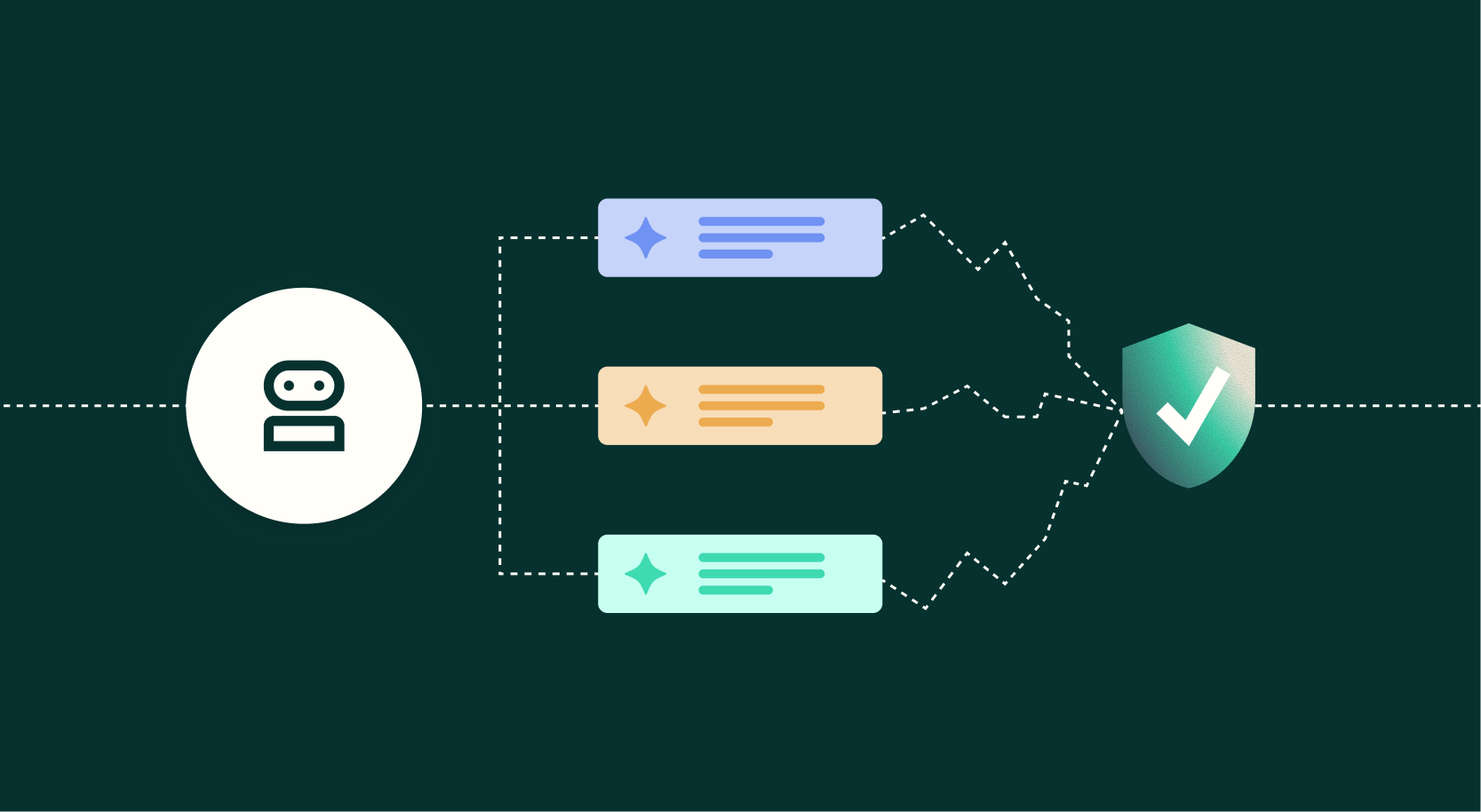
Dataiku’s own architecture reflects that split. The Dataiku LLM Mesh helps organizations avoid hardwiring themselves to a single provider by making models easier to switch, compare, and govern within a common framework. Kiji Privacy Proxy addresses the other side of the problem: giving teams a way to control what a model sees, so access to AI does not come at the expense of oversight.
This is the practical takeaway, for a board or a public institution alike: Do not stop at “Can we get access to this?” Ask whether the people accountable for the outcome can inspect it, adapt it, and walk away from it if it stops serving them. That is the question both an enterprise CEO and a UN policy analyst turn out to be asking, from opposite ends of the same problem.
These are no longer theoretical concerns, they are becoming routine operating questions for both public institutions and private enterprises. The UN’s perspective begins with public value; the enterprise perspective in Dataiku’s Sovereignty Manifesto begins with strategic resilience. One is concerned with stewardship and inclusion, the other with dependency risk and optionality. Yet both arrive at the same underlying conclusion: AI becomes trustworthy only when the institutions that rely on it also have the capacity to govern it on their own terms.
So yes, geography matters, open source matters, infrastructure matters, and compliance matters, but none of them, taken alone, is sufficient.
Sovereignty is not just where your AI runs. As the UN report makes clear, it is also whether you can make it useful, understand what it is doing, and ensure that it ultimately answers to you.The operating model for AI regulatory readiness
The operating model for AI regulatory readiness