Scale machine learning impact
Break down silos between teams and turn individual models into shared, production-ready ML. Dataiku enables more people to build, deploy, and improve models within enterprise standards.

Production ML, scaled across teams
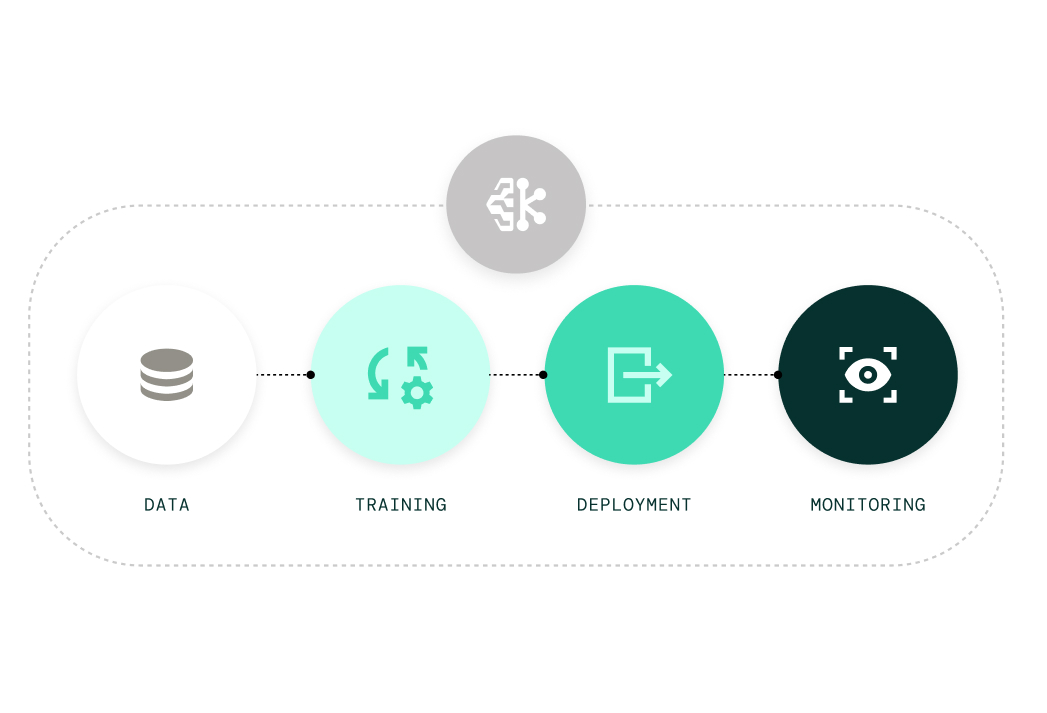
Standardize, deploy, and monitor machine learning in one governed environment.
One environment from exploration to production
Bring notebooks, visual workflows, autoML, and deployment together in one governed environment so models move forward without handoffs or fragmentation.
Production-ready data, by default
Standardize data preparation with AI-assisted workflows that document, version, and govern every step ensuring consistent, trusted inputs at scale.
Explore data prep for AIFlexible tools, shared standards
Teams work how they prefer, no-code, low-code, and full-code, enforcing shared practices for features, validation, and deployment across projects.
Explore MLOps featuresProduction-ready models
Standardize how models are packaged, deployed, and monitored so ML work reliably reaches production.
Explore machine learning capabilitiesGoverned, trusted, and scalable data science
Apply enterprise standards across ML-assisted data preparation by default governing automation, approvals, and monitoring as usage scales.
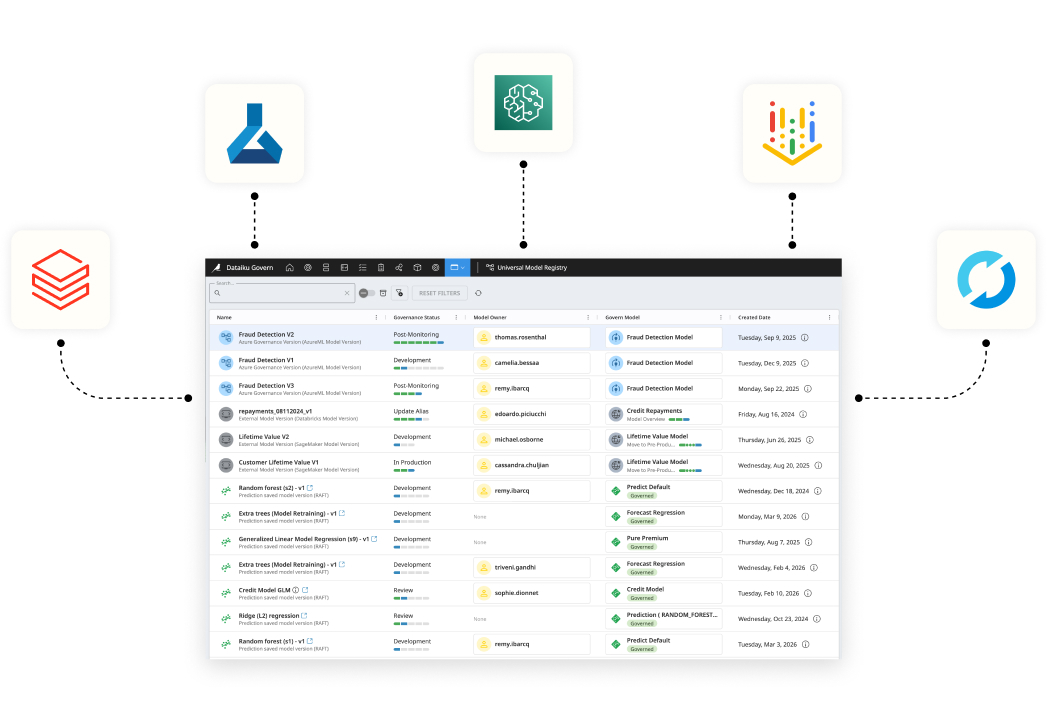
Governance across projects
Apply access controls, approvals, and documentation consistently, no matter who builds the model.
Discover Dataiku GovernExplainability and fairness
Assess, validate, and check against all biases with built-in deep explainability.
Explore data governanceScale safely over time
Ensure models remain reliable, explainable, and compliant as usage grows.