Human-in-the-loop AI agents: design patterns for governance
October 7, 2026/7 min read/Team Dataiku
Many enterprises are deploying agents faster than they are governing them, and the regulators have noticed.
EU AI Act Article 14, EU AI Act Article 14, with standalone high-risk systems under Annex III moving to December 2, 2027, and AI embedded in regulated products under Annex I moving to August 2, 2028,requires high-risk AI systems to be designed and developed so people can effectively oversee them while they are in use. Fines for falling short reach 15 million euros or 3% of global turnover.
According to “Global AI confessions report: data leaders edition", based on a Dataiku/Harris Poll survey of 800+ global data leaders, only 5% say AI output is traceable 100% of the time. That gap means most organizations may not be able to produce the audit trail a regulator would require.
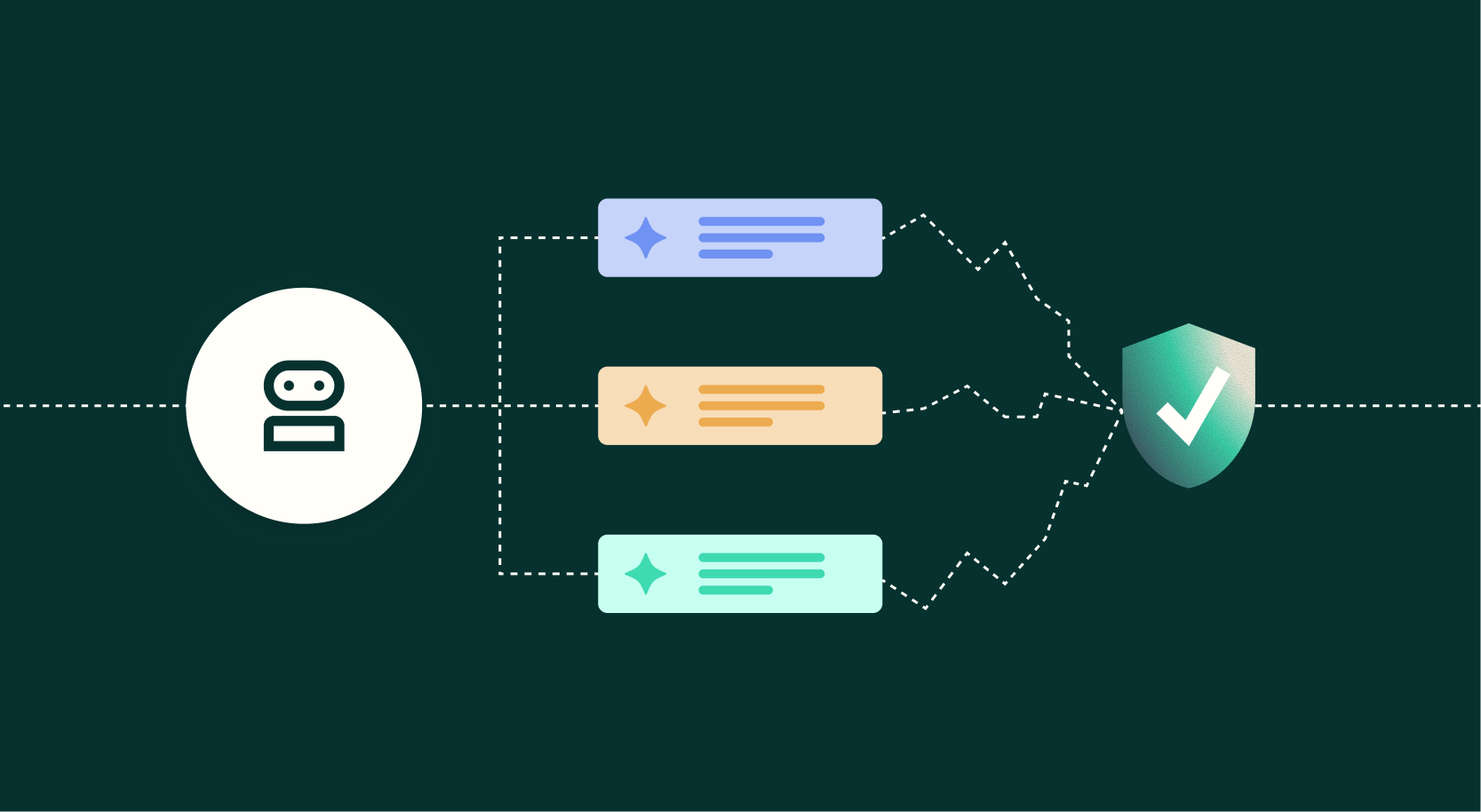
Human-in-the-loop design patterns help provide that oversight: structured checkpoints embedded into agent workflows before deployment, rather than retrofitted after an incident.
This article explores proven governance design patterns, implementation steps, and supporting frameworks to help teams deploy AI agents safely at scale.
Human-in-the-loop AI agents embed human oversight at defined decision points in autonomous workflows, balancing automation speed with accountability.
Four design patterns cover the oversight spectrum: interrupt and resume, human as a tool, approval flows, and fallback escalation.
The patterns can work together, and a production deployment may layer several of them to cover different risks.
EU AI Act Article 14 requires demonstrable human oversight for high-risk AI systems starting August 2, 2026, putting fines behind these patterns rather than leaving them as optional practice.
According to "7 career-making AI decisions for CIOs in 2026," based on a Dataiku/Harris Poll survey, 74% of CIOs regret at least one AI platform selection, and platform gaps in agent governance are a plausible contributor.
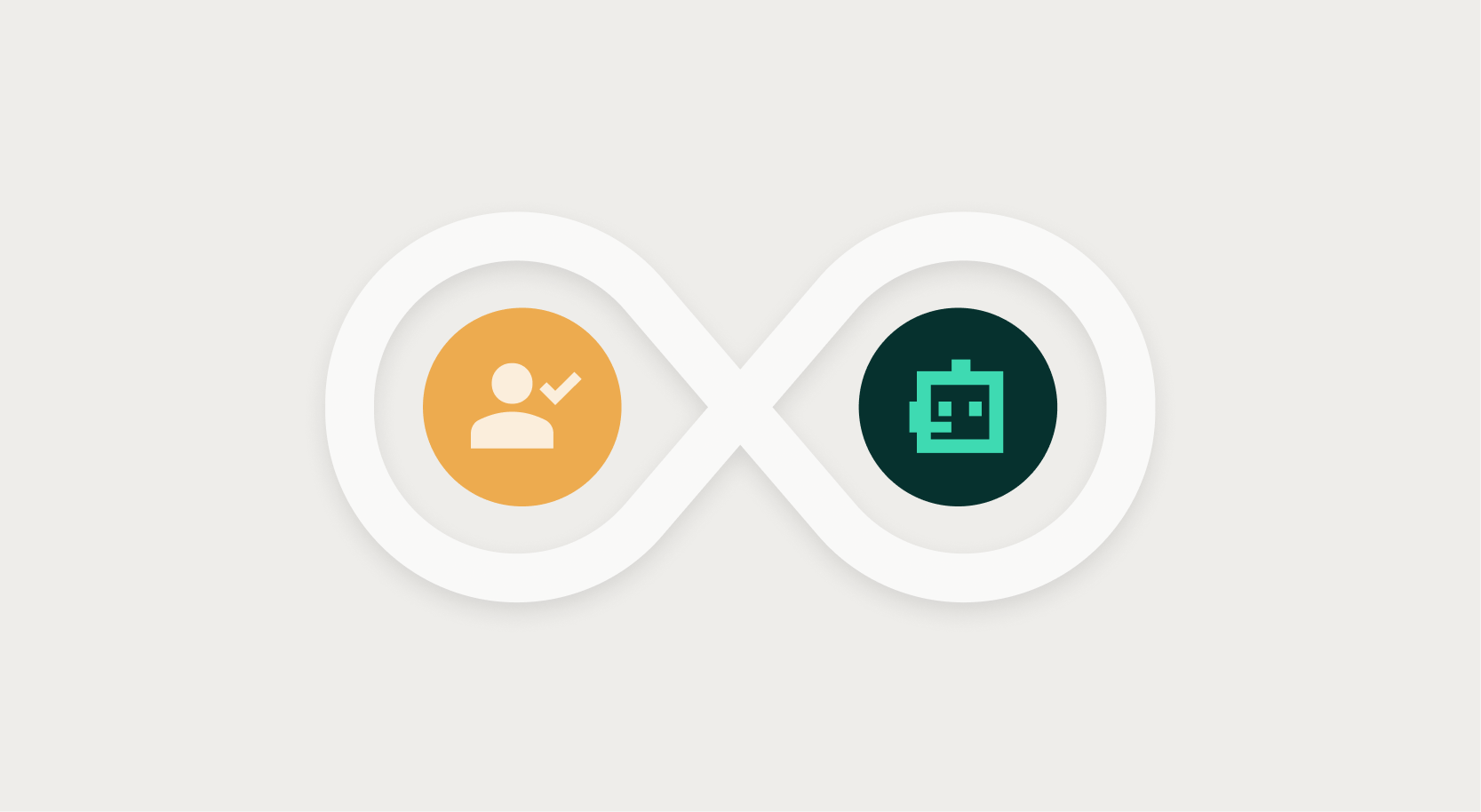
Governance matters because ungoverned agent autonomy now carries regulatory, financial, and operational costs, such as fines for undocumented decisions, pilots that stall before reaching production, and actions the organization can't explain after the fact.
That cost shows up as a tension between speed and control, specific failure modes when oversight is missing, and a concrete set of structural requirements once an organization decides to close the gap.
Speed, accountability, and user trust pull in different directions here, and most organizations already accept that agents need some human oversight. The harder question is where to place it. A workflow with too many checkpoints ends up slower than the manual process it was meant to replace. A workflow with too few leaves the organization unable to explain the decisions its agents made on their own.
Three failure modes tend to appear when agents operate without structured human oversight:
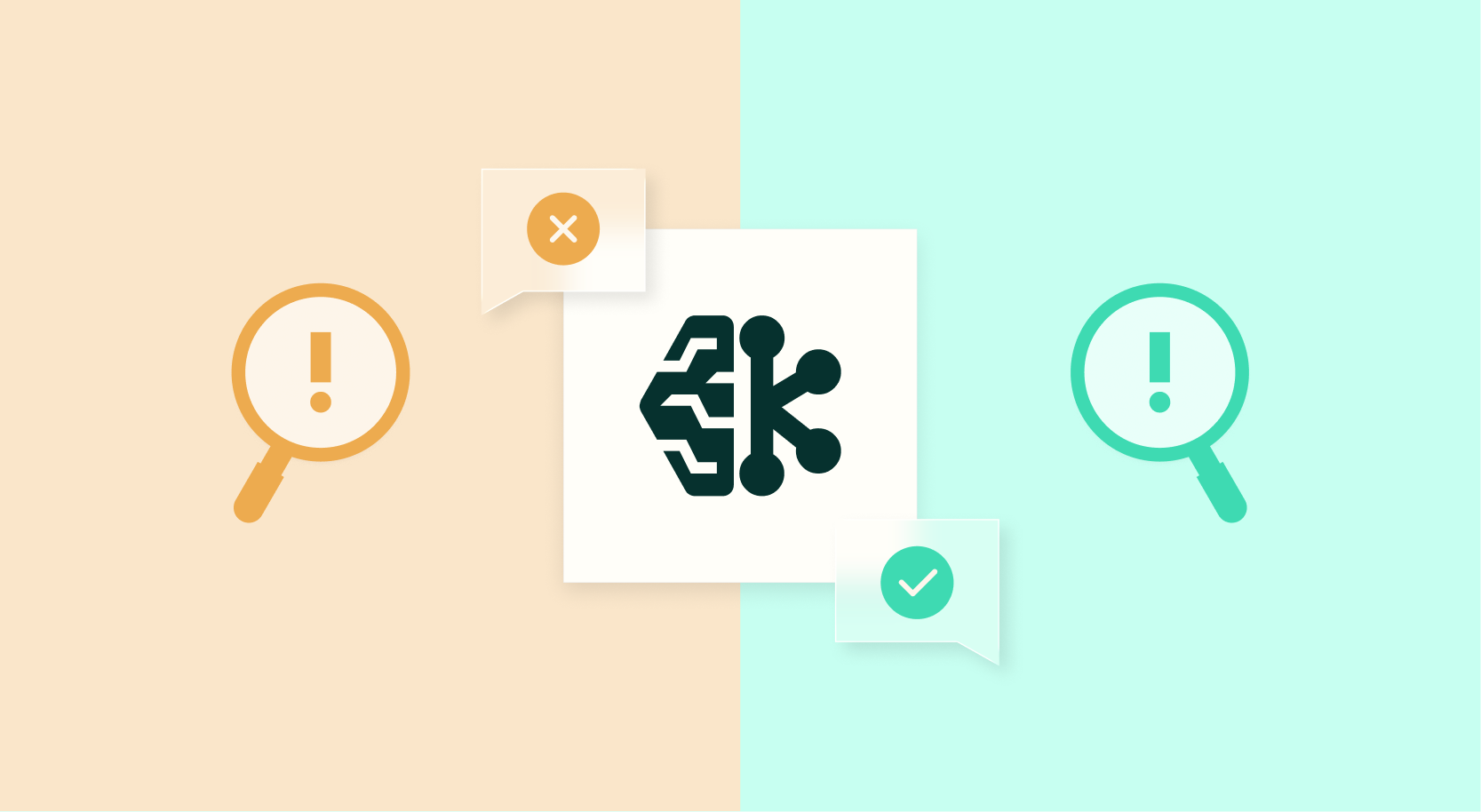
Hallucinated actions: An agent confidently executes a workflow based on fabricated information, and no human reviews it before the action takes effect.
Permission misuse: An agent accesses systems or takes actions beyond its intended scope, and no access review catches the overreach.
Audit failures: A regulator asks "who approved this automated decision?" and the organization cannot produce an answer because no approval checkpoint existed.
Five elements commonly define governed human-AI collaboration:
Policies that specify which decisions require human approval
Approval workflows that route decisions to qualified reviewers
Immutable logging of every approval and override
Role segregation ensuring that the person who builds the agent is not the person who approves its production behavior
Escalation paths for edge cases that fall outside both the agent's scope and the standard approval flow
According to Anaconda's 8th Annual State of Data Science & AI Report, over half of organizations have no AI governance framework in place, and most AI projects take months to reach production. Governance that functions only as an extra approval hurdle can be bypassed or abandoned. Building controls into the workflow makes them part of how the agent operates, not a separate gate in front of it.
Four design patterns cover how humans typically participate in agent workflows. Each addresses a different oversight need, and deployments can combine them to cover multiple risks.
The right pattern depends on three variables: the risk level of the decision, the latency tolerance of the workflow, and the availability of qualified reviewers.
The agent pauses execution at a predefined point and waits for human approval before continuing. The human receives the agent's proposed action, the context that led to it, and the authority to approve, modify, or reject.
Governance benefit: It creates a point-in-time checkpoint with a documented decision record. The audit trail shows what the agent proposed, what the human approved, and when.
Trade-off: It adds latencyfor as long as it takes a human to notice and respond to the request. It is best for high-stakes, low-frequency decisions where the review time is justified by the risk, such as financial approvals, customer-facing actions, and compliance-sensitive operations.
The agent treats the human as one of its available tools and calls the human when it encounters uncertainty, ambiguity, or a task outside its confidence threshold. The human provides the input, and the agent incorporates it into its reasoning and continues.
Governance benefit: It reduces autonomous decisions in gray areas. The agent recognizes its own uncertainty and routes to a human rather than guessing, and the interaction can be logged with its input, output, and timestamp.
Trade-off: It depends on agent calibration. An overconfident agent may not call the human tool. An underconfident agent may call it constantly. Calibrating the confidence threshold is an ongoing tuning exercise.
A policy-driven approval system evaluates every agent action against defined rules and routes those requiring approval to the appropriate reviewer based on role, action type, and risk level.
Governance benefit: It has a more defensible audit trail with policy-based justification. Every approval decision references the policy that triggered it, creating documentation designed to support regulatory review.
Trade-off: Policy design complexity. Poorly designed policies create bottlenecks (too many approvals) or gaps (too few). Policy testing and iteration are ongoing requirements.
When an agent's confidence drops below a defined threshold, it escalates to a human through asynchronous channels (Slack, email, dashboard notification) rather than pausing execution. The agent may continue with a safe default action while the escalation is pending, or it may pause only the uncertain portion of the workflow.
Governance benefit: It reduces reviewer fatigue by routing only genuinely uncertain decisions to humans, rather than requiring synchronous review of every action. It connects to the governance KPI of mean-time-to-resolution for escalated decisions.
Trade-off: Asynchronous escalation means the human may not review the decision before the agent has moved on (if configured with a safe default). For irreversible actions, synchronous interrupt-and-resume is safer.
A mix of open-source frameworks, policy-layer tools, and enterprise platforms support governance workflows. The five below aren't exhaustive, but they illustrate that range of approaches available for different technology stacks and levels of maturity.
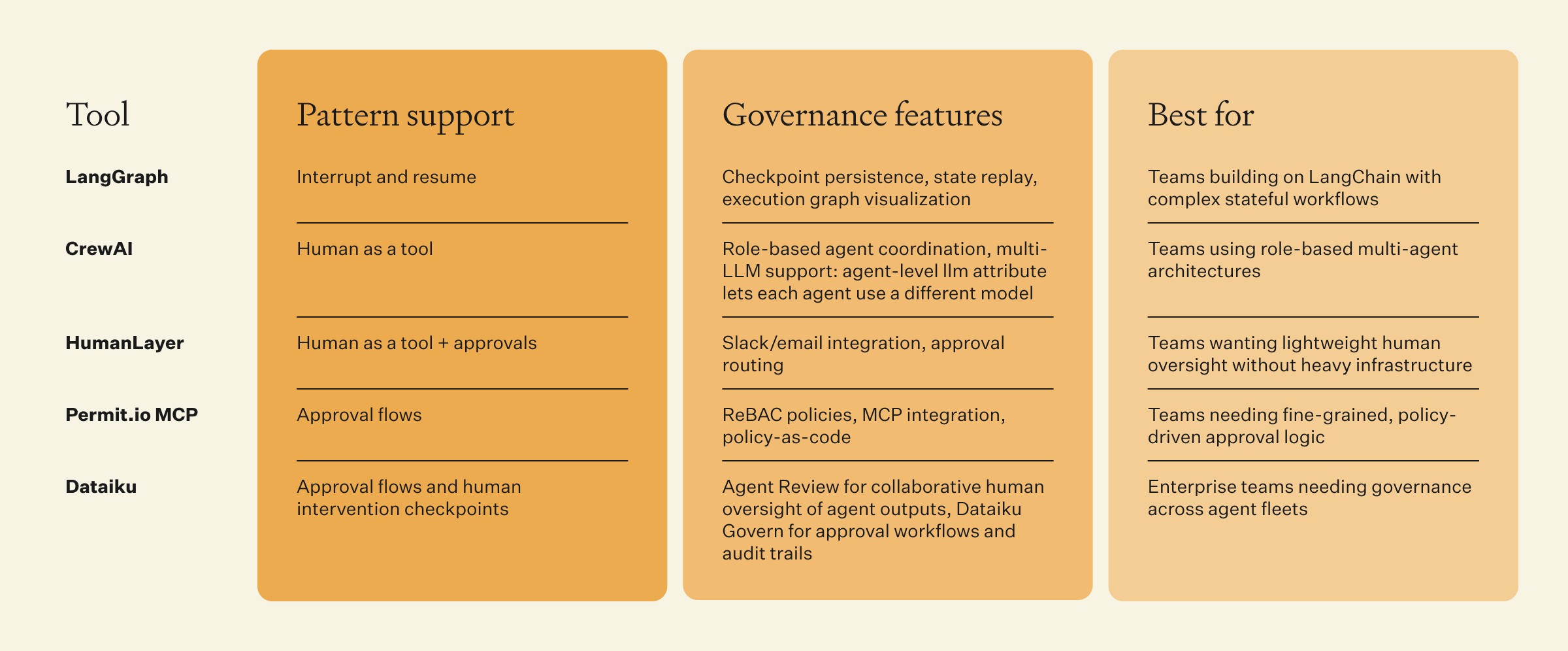
Click on the image above to zoom into full PDF
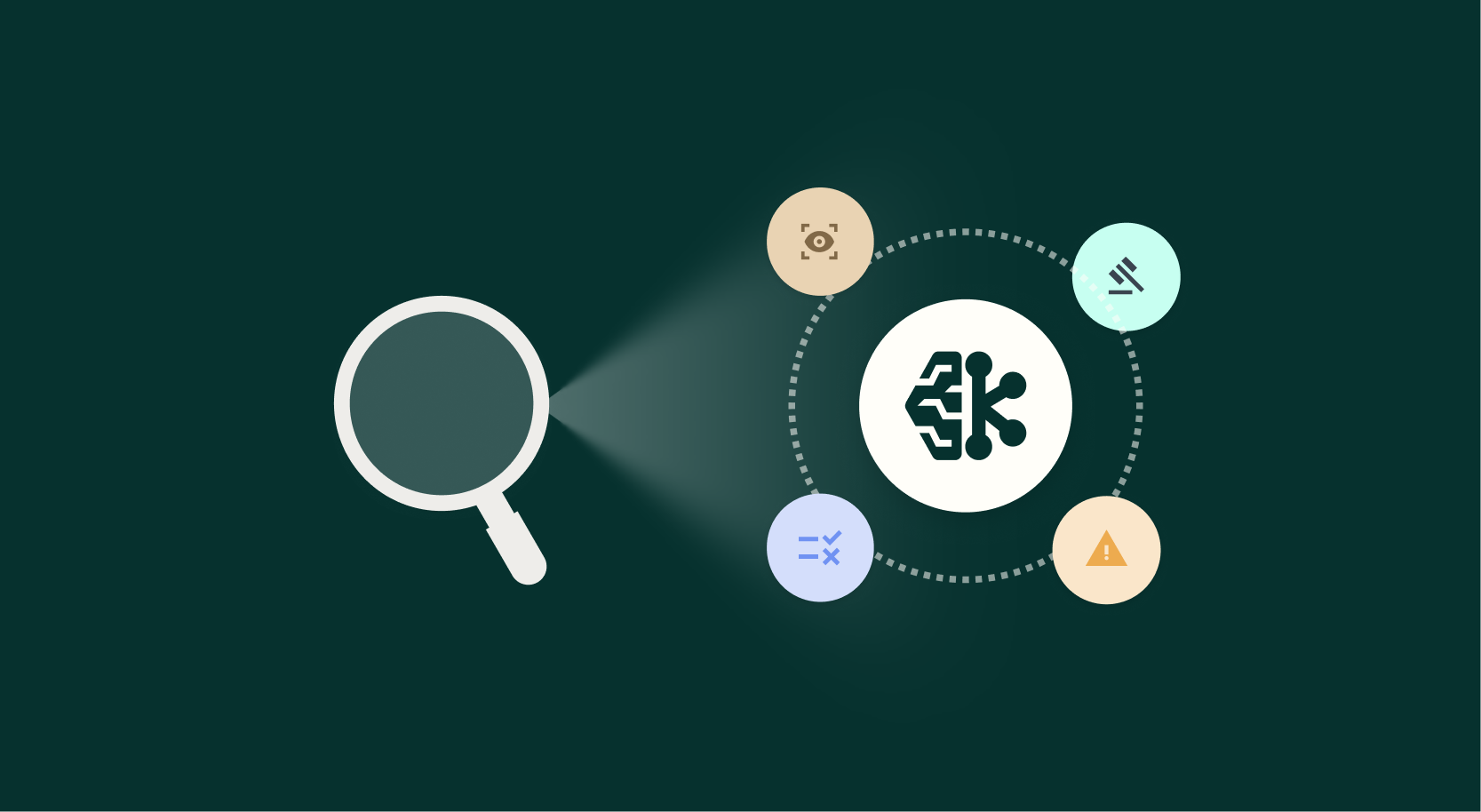
Dataiku, the Platform for AI Success, integrates human oversight directly into the agent lifecycle. Agent Review is a collaborative framework where SMEs validate agent behavior against defined scenarios before and during production.
Dataiku Govern provides the approval workflows, audit trails, and lifecycle tracking that connect human decisions to governance records. Dataiku Agent Management monitors whether governed agents continue to perform within expectations post-deployment.
Six steps sequence the implementation from risk mapping through production iteration.
Start by inventorying every action the agent can take, then classify each one by risk level: low, medium, or high. Once the high-risk actions are identified, define what oversight each one needs, whether that's synchronous approval, asynchronous notification, or simply logging the action for later review.
Then match each risk level to the pattern best suited to it: Interrupt and resume works well for high-stakes, irreversible actions, human as a tool fits ambiguous decisions where the agent itself flags uncertainty, approval flows handle policy-governed actions, and fallback escalation covers the edge cases that fall outside all three.
With the patterns chosen, select the framework(s) that best match your existing stack and team's maturity level, then wire the human oversight points into the agent workflow using whichever native mechanisms that framework provides.
Next, document which roles can approve which action types. Where the stack supports it, implement those rules as policy-as-code so teams can test and version them alongside the agent code.
Once the workflow is running, log every human interaction, capturing what was presented for review, what decision was made, by whom, and when.
Alongside that log, track three metrics:
Approval latency: The time from request to decision
Override rate: The percentage of agent recommendations that humans reject
Escalation volume: The daily count of escalations per agent
Deploy with a single agent and a single workflow first, then measure the three metrics from Step 5 and collect reviewer feedback on the experience itself: Are the prompts clear? Is there enough context? Are escalations landing at the right moments? Use an initial monitoring period, such as the first 30 days of production data, to adjust confidence thresholds, policy rules, and escalation criteria before expanding further.
Four challenges commonly surface once human-in-the-loop governance moves from pilot to production: latency impact, reviewer fatigue, bias in human decisions, and scalability constraints, each with a practical mitigation.
Adding a human into the workflow adds processing time, since the agent has to wait for someone to notice the request and respond before it can continue. That delay is often tolerable for routine decisions, but it becomes a bottleneck when it's applied indiscriminately across every checkpoint rather than reserved for the ones that need it.
Mitigation: Route non-urgent reviews through asynchronous channels such as Slack, email, or a dashboard, and reserve synchronous interrupt-and-resume for irreversible, high-stakes actions only.
Reviewers who face a high volume of escalations each day are more likely to review less carefully, since sustained attention to repetitive decisions tends to degrade over a shift. Left unaddressed, this can undercut the whole point of human oversight, since a rubber-stamped approval offers little more protection than no review at all.
Mitigation: Rotate reviewers on defined schedules, automate low-risk paths so humans review only genuinely ambiguous cases, and track approval-time-per-decision as a fatigue signal.
Human reviewers can bring their own biases into the governance process, whether that shows up as inconsistent standards between reviewers or as systematic patterns in which types of decisions get approved or rejected. Since oversight exists to catch the agent's errors rather than introduce new ones, this is worth monitoring rather than assuming away.
Mitigation: Use diverse review panels for consequential decisions, log reviewer decisions for bias auditing, and periodically compare outcomes across reviewers to identify systematic patterns.
A review process built for dozens of escalations a day can start to break down as volume scales into the thousands, since the reviewer pool rarely grows at the same pace as agent deployment. Without a plan for that growth, the fatigue and bottleneck problems above only compound.
Mitigation: Use risk-based routing and calibrated thresholds so only uncertain or high-risk decisions reach humans. Periodically sample auto-approved decisions to ensure thresholds remain safe.
Eight practicesthat production human-AI collaboration commonly relies on:
Log every approval decision with reviewer identity, timestamp, and rationale.
Keep human review prompts short and context-rich, so thereviewer should be able to decide quickly, often in under a minute.
Automate low-risk action paths so human attention is reserved for genuinely ambiguous decisions.
Review governance policies quarterly and update confidence thresholds based on production data.
Define clear escalation thresholds, includingwhich confidence score triggers human review, and what action types always require approval.
Train reviewers on governance protocols, along the lines of what to look for, when to escalate further, and how to document rationale.
Separate builder and approver roles, such that the person who builds the agent should not be the sole person who approves its production behavior.
Measure governance health. Track approval latency, override rate, and escalation volume as operational KPIs.
Governance patterns providethe infrastructureteams need to scale agent capabilities responsibly. The organizations deploying agents successfully treat human oversight as an engineering discipline with owners, metrics, and iteration cycles.
Start small: Pick one high-risk action in one agent workflow. Apply one design pattern. Instrument logging and measure the three governance metrics (approval latency, override rate, escalation volume). Use that initial window of data to calibrate. Then expand.
Dataiku combines agent evaluation, approval workflows, lineage, and audit trails so teams can govern agents alongside the rest of their AI portfolio.
Human-in-the-loop AI agents embed structured human oversight directly into their workflows, at decision points defined in advance rather than added after the fact. Humans review, approve, or override agent actions at those checkpoints based on risk level, policy rules, or confidence thresholds.
Organizations should use human-in-the-loop AI agents when actions are irreversible, customer-facing, or regulated, or when confidence calibration has not been validated at scale. Financial transactions, healthcare decisions, and compliance-sensitive communications are common examples that qualify.
They create documented decision records at every oversight checkpoint: what the agent proposed, what the human approved, and why. This produces the audit trail that regulators, internal auditors, and incident investigators require during compliance reviews.
Yes, efficient HITL design automates low-risk actions entirely, uses asynchronous channels for medium-risk decisions, and reserves synchronous approval for high-stakes actions only. In many deployments, only a small share of decisions require human review, though this varies by risk profile.
LangGraph supports interrupt-and-resume checkpoints for stateful workflows (Source), CrewAI (Source) and HumanLayer (Source) support human-as-a-tool patterns, and Permit.io supports policy-driven approval flows (Source). Dataiku provides enterprise-grade Agent Review, approval workflows, and audit trails for governing agent fleets at scale.
LangGraph is a product of LangChain, Inc. CrewAI is a trademark of CrewAI Inc. HumanLayer is a trademark of HumanLayer. Permit.io is a trademark of Permit.io, Inc. Slack is a trademark of Slack Technologies, LLC. Dataiku is not affiliated with or endorsed by any of the above companies. All product capabilities referenced in this article are sourced from publicly available documentation as of July 2026.