Sovereignty isn't where your AI runs. It's whether it answers to you.
June 15, 2026/5 min read/Florian Douetteau
Last week, a government order took the world's best AI model offline in hours. No one deleted it and no server failed. A single directive put the most capable model on the market out of reach for everyone not a citizen of one country.
Most enterprises escaped the worst of it. Few had put that model into production, held back by the data-retention concerns that make any frontier model hard to trust with critical work. That was luck, and the next model to go dark could be one your business runs on.
This is what the contest over AI looks like now: a power struggle between the labs that build the models and the states that want to control them. Enterprises had no part in that fight, and no protection from it. The companies exposed learned, in an afternoon, that the intelligence behind their business answered to someone else.
That is the real question of sovereignty. Where your AI runs matters far less than whether it still answers to you when a government somewhere decides otherwise.
We stand against intelligence you can be cut off from. The best models are not sold; access comes by permission, and a government can revoke it overnight, for reasons that have nothing to do with you. You can buy the sovereign cloud, pick the local model, check every compliance box, and still go dark the morning that decision lands. A model a state can switch off was never yours.
We stand against being collateral. The contest over AI is fought above you, between the labs that build it and the states that regulate it. You did not start it, but you are exposed to it anyway. Opting out earns no protection, only dependence on whoever prevails.
We stand against renting what runs your business. No one has to switch you off to own you. A vendor can raise the price, deprecate the feature you built on, shift the roadmap, and make leaving cost more than staying. Step by step, one company ends up setting the terms your business runs on, and you pay rent on the core of your own operation.
We stand against false binaries. The market keeps framing this as a side to pick: the US or Europe, the best model or the governable one, performance or independence. The framing is a decoy. The labs build extraordinary models, the hyperscalers run infrastructure no enterprise would want to rebuild, and the sovereign clouds meet requirements that are real and worth meeting. You will work with all of them. What matters is keeping the freedom to change your mind about any one of them the day it stops serving you.
AI dependency is a board-level risk. A company that cannot say which models run its critical work, who controls them, and what happens if access ends is carrying an unmeasured risk. Boards already manage supplier risk, concentration risk, and cyber risk. AI dependency belongs on the same list, and it is more urgent than any of them. A government can reach past your vendor and revoke your access by decree, as one did last week, and no contract with that vendor will stop it.
Sovereignty operates at three levels. Infrastructure: where it runs, the clouds you choose, the premises you own, air-gapped for security, operations, or compliance. Capability: who builds it, your people on systems they can inspect, modify, and govern. Economic: who captures the value, productivity that compounds as institutional knowledge instead of rent you keep paying the AI industry. Each level rests on the one below. Without control of where your AI runs, you cannot control who builds it, and without that, you have no claim on what it produces. You end up consuming intelligence rather than owning it.
Use the best where you need the edge. Own what you cannot afford to lose. Reach for the top frontier models when you need to be at the edge, and to accelerate adoption across your organization. But the workloads your business depends on, your critical production, should run on open-source models you fully control. Being at the edge and owning your core are two different jobs, and they need two different kinds of model.
Optionality is the destination. Technological and economic sovereignty are the same fight, and you need both to reach intelligence independence. The standing capacity to choose your models, your providers, and your infrastructure early and at every step. Optionality is the asset, and the day you lose it is the day someone else starts making those choices for you.
What comes next is not in doubt. There will be multinational investment in open-source foundation models and alternative infrastructure. Only a handful of countries can match the money and compute behind the leading models, and building a frontier lab alone is out of reach for most of the world. The nations and enterprises that refuse to depend on AI they cannot control will stop trying to do it alone, and they will pool resources and build in common.
Only open source makes that shared ownership real: a model that everyone who funds it can run, inspect, and keep, owned in common and beyond any single government's power to switch off. It is also how the rest of the world gains a say. When the model you depend on is built elsewhere, a small group elsewhere decides who keeps access. A model that many countries build together cannot be shut off by any one of them, because whoever shares the ownership shares the control.
Open source goes further still: once weights are released in the open, no one can pull them back, not even the lab that built them. The model you hold stays yours to run whatever its creators decide later. That also gives you leverage. A buyer with a credible open alternative negotiates with the frontier labs from strength, on price and on terms, rather than from dependence.
You don't have to wait for any of this to plan for it. Build now on foundations you can keep, so that the day the open ecosystem arrives, you are already standing on it.
Everything above is built into the platform we ship today.
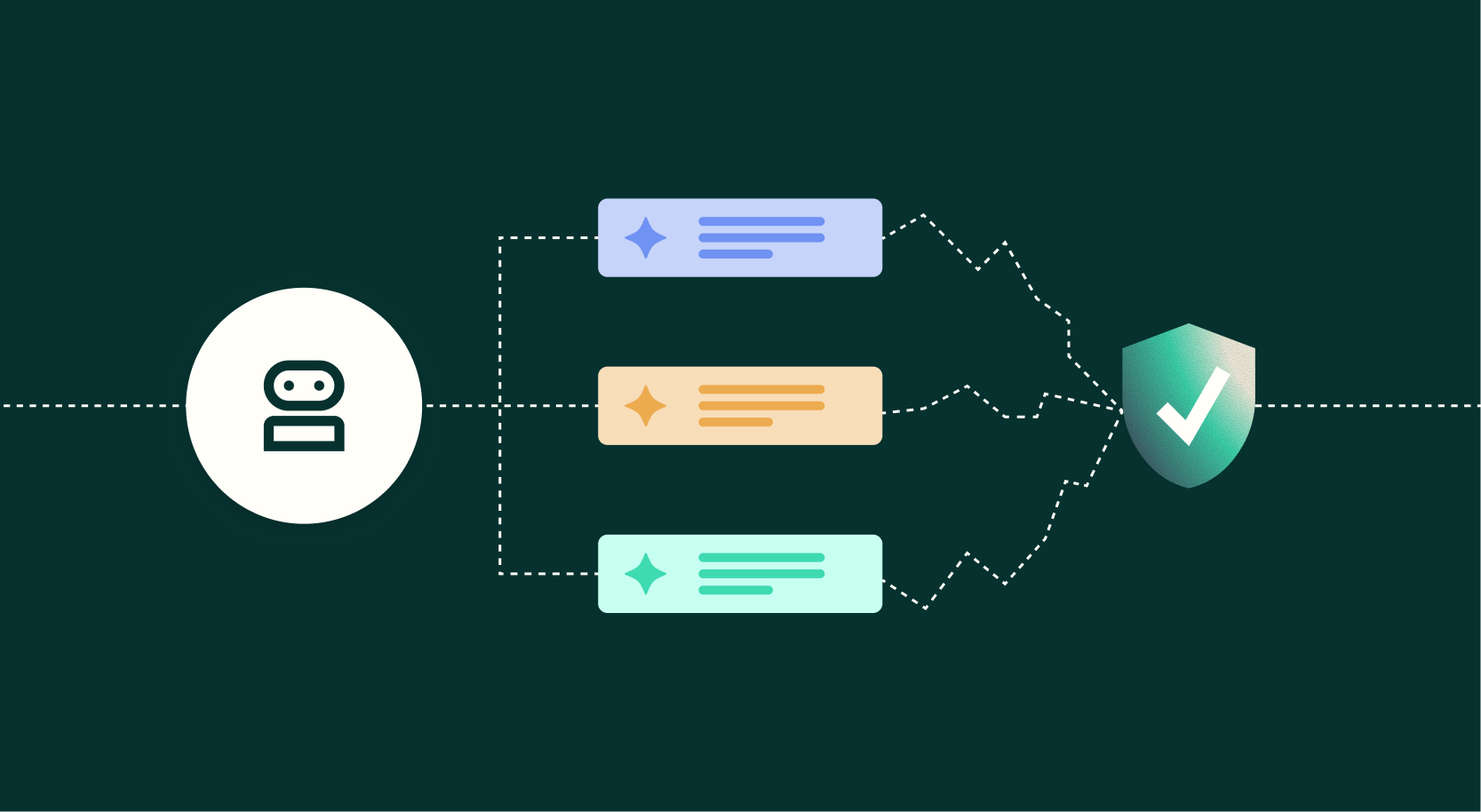
Dataiku connects to any cloud, any data platform, and any LLM provider, including open-weight models you host yourself, and runs on-premises and air-gapped. Switch clouds, change platforms, swap the model behind your agents, and what you built does not need rebuilding. The orchestration layer maps your logic onto whatever runs underneath, the same way every time, and stays independent of it. That is what makes the freedom to choose more than a talking point.
Your people build it, rather than a rotating cast of outside engineers. Dataiku Cobuild lets the people who know the business build on the platform themselves, and what they produce is inspectable, governed, and owned by your organization. Dataiku Reasoning Systems turn your data, your processes, and your institutional logic into assets no provider can replicate or take back. Dataiku Agent Management gives you oversight of and governance over every agent you run, including the ones built outside Dataiku.
We also work in the open. Through 575 Lab, our open-source office, we ship tools any team can run. Kiji Privacy Proxy redacts sensitive data before it ever reaches an external model, so you can use the best frontier models without handing over what matters. Kiji Inspector traces what an agent did and why, for the people who have to answer for it. We contribute to vLLM, the engine that serves open models in production, sponsor scikit-learn, and hold seats in the Linux Foundation and the Agentic AI Foundation. Openness reduces dependence for everyone, including us. When the open ecosystem arrives, we are helping build it.
The only AI worth building is one that answers to you, and not to a single vendor's roadmap, a regulation or executive order from a single nation, or a price increase you never saw coming.
This fight will not wait for you to pick a side, and sitting it out is the one position that guarantees you lose. The intelligence belongs to you. The IP your AI produces — encoded from your data, your processes, your institutional business logic — cannot be replicated or taken away by any external provider. That is the soul of your business. You should maintain sole ownership of it.
We built the Platform for AI Success for exactly this situation. This moment as much as the future ahead of us all. If you believe your AI should answer to you, build it here.
This is not a promise. It is a position. And positions are only worth holding if someone holds you to them. We invite you to.