AI observability: how enterprises control autonomous agents
March 23, 2026/4 min read/Julia Berman
AI observability captures the signals behind every AI action, tracing workflows, decisions, and system interactions so teams can understand how autonomous systems behave in production. As agents coordinate workflows, retrieve information across tools, and make decisions inside production environments, traditional monitoring can confirm that a service is running. But it cannot explain why an agent chose a particular tool, how a response was generated, or where a failure occurred.
Organizations deploying agentic systems need more than uptime metrics. They need the ability to trace decisions, analyze behavior, and detect risks before those risks reach production systems or customers.
AI observability is the discipline of capturing and analyzing signals behind every AI action in production.
Autonomous agents introduce failure modes that traditional monitoring cannot diagnose or explain.
MELT signals (metrics, events, logs, traces) form the foundational telemetry framework for AI observability.
Dataiku, the Platform for AI Success, embeds observability into the AI lifecycle alongside governance controls.
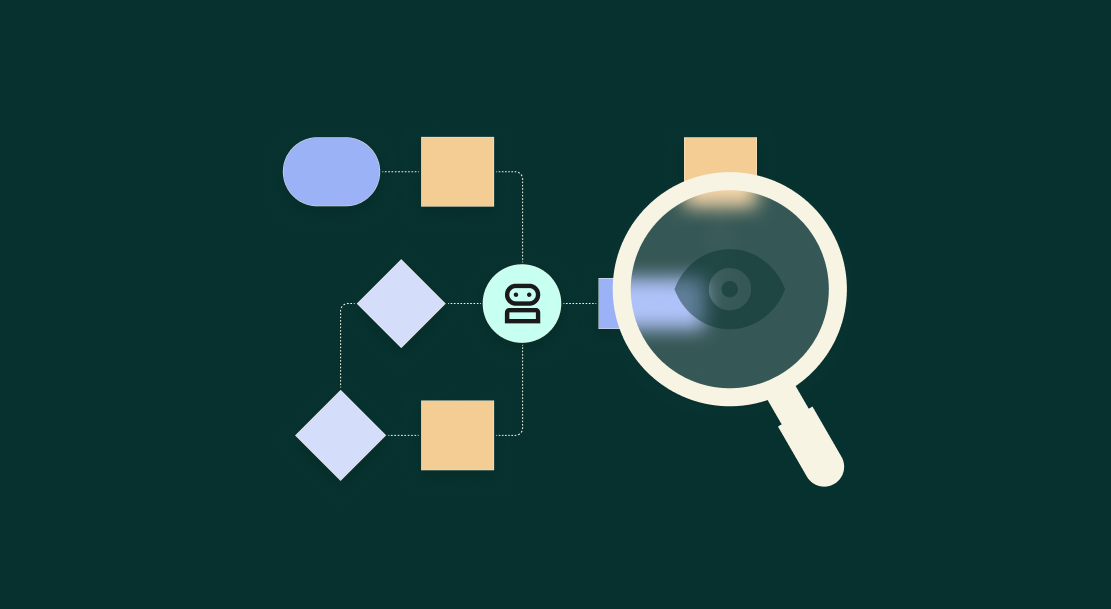
AI observability is the practice of capturing decisions, tool calls, data interactions, and outputs of autonomous AI agents in production to make their behavior understandable, auditable, and correctable.
Traditional monitoring confirms that a system is running and reports whether inputs produced the expected outputs. AI observability goes further: It explains why an agent made a specific decision, which tools and data sources it used, and how its reasoning path led to the final output.
This distinction matters because agentic systems operate probabilistically, interact with multiple services, and adapt to changing inputs. The same request may follow different reasoning paths depending on context or data availability.
AI observability builds on a well-known engineering framework — telemetry signals.
These signals capture the internal state of an AI system through external outputs such as metrics, events, logs, and traces. Together, they form the foundation of what many platforms refer to as MELT data.
Each signal answers a different operational question.
Metrics measure performance and cost. Examples include response latency, token usage, model accuracy, and throughput.
Events track meaningful actions inside the workflow. API calls, tool invocations, and human handoffs reveal how the system executes tasks.
Logs capture detailed records of interactions. These logs show prompts, outputs, and system decisions, providing the evidence needed for debugging or audits.
Traces connect everything together. They record the end-to-end path of a request, showing every step taken by the agent ecosystem from user input to final output.
This telemetry allows teams to understand what happened as well as how and why it happened.
As AI agents move deeper into enterprise workflows, observability shifts from a technical feature to a governance requirement.
Three pressures drive this shift.
Operational reliability: Autonomous workflows introduce new failure modes. An agent may select the wrong tool, call an outdated dataset, or trigger cascading errors across systems. Observability enables rapid root-cause analysis by exposing each step in the decision chain.
Cost management: AI systems consume tokens, compute resources, and external APIs. Without visibility into usage patterns, costs escalate quickly. Observability provides a unified view of resource consumption across agents and workloads.
Risk and compliance: Autonomous systems must operate within policy boundaries. Observability makes AI decisions auditable by recording prompts, data sources, and model behavior. These records become essential for regulatory compliance and internal governance.
The scale of this gap is already measurable. According to "7 career-making AI decisions for CIOs in 2026," based on a Dataiku/Harris Poll survey, 85% of CIOs report that traceability or explainability gaps have already delayed or stopped AI projects from moving into production. The pressure shows up on the technical side too: according to "Global AI confessions report: data leaders edition," based on a Dataiku/Harris Poll survey, 95% of data leaders admit they could not fully trace an AI agent's decisions end-to-end if a regulator asked them to.
Together, these capabilities transform AI from a black box into a system organizations can operate responsibly.
The challenge becomes more complex in a multi-agent environment. Instead of one model generating a response, multiple agents collaborate, each contributing to a final output through its own reasoning, tool calls, and data interactions.
Consider a customer support workflow:
A routing agent classifies the incoming request and selects the appropriate specialist agent.
A retrieval agent searches across internal knowledge bases for relevant documentation.
A reasoning agent synthesizes the retrieved information into a coherent response.
A verification step checks the response against company policies before delivery.
If the final response is incorrect, the team needs to determine which component failed:
Was the request misclassified?
Was the wrong document retrieved?
Did the reasoning agent misinterpret the context?
Did the verification step miss a policy violation?
Without this level of insight, debugging autonomous AI becomes guesswork.
As autonomous systems scale beyond isolated pilots, observability is shifting from ad hoc monitoring to an embedded production standard. The signals that reveal how AI behaves across prompts, model outputs, tool calls, data access, and policy checks are too critical to manage as an afterthought.
Four capabilities define observability as enterprise infrastructure:
Pre-deployment evaluation tests agent behavior under controlled conditions before production, catching failure modes that testing alone cannot predict.
Observability dashboards provide real-time visibility into agent health, cost, and performance across all production AI, surfacing issues as they occur rather than after users report them.
Drift monitoring detects changes in agent behavior, data distributions, or output quality over time, triggering alerts before degradation reaches a threshold that affects business outcomes.
Policy enforcement applies governance rules at runtime, ensuring agents operate within defined boundaries and creating audit-ready records of every action.
These controls create the operational backbone needed to manage autonomous systems safely at scale. Meaning, observability doesn’t slow innovation. It enables it.
With clear insight into system behavior, teams can experiment with new models, prompts, and workflows while maintaining confidence in production systems.
Dataiku, the Platform for AI Success, brings together data preparation, model development, deployment, and governance into a single governed environment. This architecture means observability is not a separate monitoring tool bolted onto the side. It is embedded into the same platform where agents are designed, tested, and operated.
Four capabilities define the approach:
End-to-end traceability records every step in an AI workflow, from data ingestion through model inference to agent action, so teams can trace any output back to its origin.
Cross-layer lineage connects data transformations, model versions, and agent decisions into a single auditable trail, regardless of how many components are involved.
Real-time telemetry surfaces metrics, events, logs, and traces through dashboards that show both technical health and business outcome performance.
Embedded governance enforces policies at runtime through Dataiku Govern, ensuring that every AI action is recorded, auditable, and operating within defined boundaries.
This plays out in production, not just theory. SoftBank Corp. built an AI-agent-powered sales operating model in Dataiku that automatically captures, structures, and links sales conversations to CRM opportunities, all within a governed environment where every agent action stays traceable.
The results: 90% of sellers now working with higher-quality data, 80% of customer conversations linked directly to opportunities, and roughly 250,000 hours saved annually. Those outcomes depend as much on the platform's ability to trace and explain agent behavior as on the agents themselves.
Dataiku has been recognized as a Leader in the 2025 Gartner Magic Quadrant for Data Science and Machine Learning Platforms, reflecting the platform's maturity across the AI lifecycle from development through production governance.
By unifying observability with governance and lifecycle management, organizations can move beyond fragmented monitoring toward true operational control of autonomous AI.
Autonomous AI systems are moving quickly from experimentation into production. Agents are coordinating workflows, assisting employees, and interacting directly with customers. As their responsibilities grow, so does the need for operational clarity.
Observability provides that clarity. It turns opaque agent behavior into measurable signals, enabling organizations to trace decisions, detect risks earlier, and operate AI systems with the same rigor applied to other enterprise infrastructure.
But the deeper shift is cultural. As AI becomes embedded in decision-making, organizations can no longer rely on systems they cannot explain. Visibility into how AI behaves — including how it reasons, how it interacts with data, and how it evolves over time — becomes a prerequisite for trust.
Observability is what makes that visibility possible.
Traditional monitoring confirms that a system is operational and flags when predefined thresholds are breached. AI observability explains why an autonomous agent made a specific decision, which tools it used, what data it accessed, and how its reasoning path produced the output. Traditional tools are designed for deterministic systems with predictable execution paths. Agentic systems operate probabilistically and adapt to changing inputs, requiring a fundamentally different approach.
MELT stands for metrics, events, logs, and traces, the four telemetry signal types that form the foundational framework for AI observability. Metrics track performance and cost; events record meaningful actions; logs capture detailed interaction records; traces connect the end-to-end path of a request through every component in the system.
AI observability supports regulatory compliance by recording prompts, data sources, and model behavior, creating the auditable decision trails that regulators and internal governance frameworks require. As regulatory expectations for explainable AI grow across jurisdictions, the ability to produce complete audit trails on demand is becoming a baseline requirement. Dataiku Govern embeds this capability directly into the AI lifecycle rather than requiring teams to build compliance infrastructure separately.
In multi-agent systems, failures often occur deep inside complex chains of model calls, tools, and data sources, and observability is what allows teams to trace exactly which component caused an issue. For example, in a customer support workflow involving a routing agent, a retrieval agent, a reasoning agent, and a verification step, observability reveals exactly where in that chain a failure occurred. At enterprise scale, guesswork in debugging is not viable.
Gartner, Magic Quadrant for Data Science and Machine Learning Platforms, Peter Krensky, Afraz Jaffri, Erick Brethenoux, Jim Hare, Pieter den Hamer, 16 June 2025. GARTNER is a registered trademark and service mark of Gartner, Inc. and/or its affiliates in the U.S. and internationally and is used herein with permission.