Why traditional evaluation doesn't work for agentic AI
February 18, 2026/4 min read/Julia Berman
For years, “human-in-the-loop” has been enterprise AI’s safety valve. If a model might behave unpredictably, add a review step. If outputs matter, require approval. If something goes wrong, slow it down.
That approach worked when AI systems were largely reactive — producing outputs in response to prompts and stopping there. Risk was episodic, bounded, and relatively easy to contain. But agentic AI changes that landscape entirely.
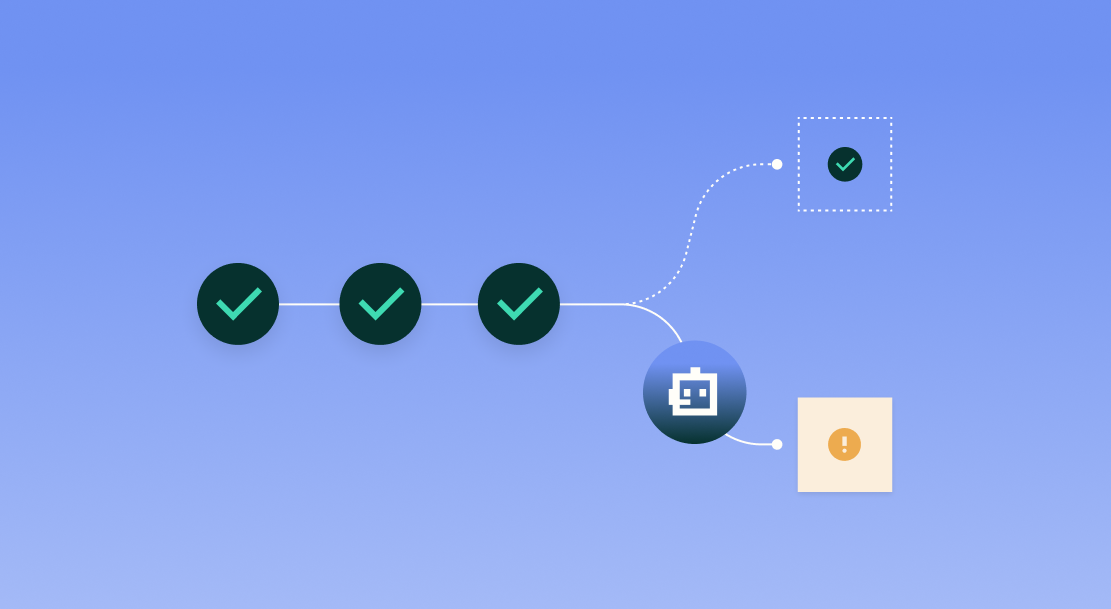
Autonomous agents now initiate actions, chain decisions, and operate across systems with minimal human prompting. Critically, the most meaningful risks don’t appear neatly at the start or end of execution. They surface midstream, while agents are already acting.
Applied to this new mode, traditional human-in-the-loop controls are insufficient for truly safe AI. They make it slower, more fragmented, and paradoxically harder to govern. Review steps become bottlenecks. Visibility splinters. And teams route around controls to keep business moving.
The goal for enterprise leaders has moved from maximum human oversight to safe autonomy: designing governance that places human judgment where it actually matters while enabling automation everywhere else. That requires moving beyond static controls revolving around fear to proportional intervention that scales with risk and uncertainty.
In this post, we examine why human-in-the-loop governance breaks down for agents and what actually works instead. Specifically, how proportional intervention, continuous oversight, and unified visibility allow enterprises to scale agentic AI without sacrificing trust or business velocity.

Human-in-the-loop governance was built for a different generation of AI.
Traditional GenAI systems, and especially copilots, operate in a bounded loop. A human initiates an action, the model responds, and control returns back to the user. In those cases, review points are clear and manageable. Oversight is naturally embedded in the interaction.
Autonomous agents behave fundamentally differently.
Agents are designed to act versus simply assisting. They make decisions continuously, interact with multiple tools and data sources, and pursue objectives across time. Their behavior is a sequence of actions whose risk profile can change dynamically as context evolves.
This creates structural problems for legacy human-in-the-loop models.
When an agent takes dozens, or even hundreds, of actions in pursuit of a goal, it’s no longer obvious where a human should intervene. Requiring approval at every step becomes paralysis.
Static approval processes assume risk can be assessed upfront. But with agents, meaningful risk often appears only once systems interact: Costs spike unexpectedly, outputs drift, or actions compound in unintended ways. Ultimately, one-time reviews miss what matters most.
Applying the same oversight to low-risk and high-risk agent behaviors forces teams into a tradeoff between speed and compliance. In practice, this encourages bypasses, shadow agents, and undocumented workflows. Thereby, leadership has less visibility.
When decisions are distributed across agents, tools, and models, static governance struggles to answer basic questions: Why did this happen? Who approved it? Which system was responsible? Without traceability, accountability erodes.
This is why human-in-the-loop governance, when applied indiscriminately to agents, fails in practice. It treats autonomy as something to restrain rather than something to design responsibly.
For CIOs and risk leaders, the challenge is recognizing that governance models built for reactive systems cannot govern systems that act autonomously. Governing agents requires an approach that accepts autonomy as a given and focuses human involvement where judgment, accountability, and context truly matter.
If human-in-the-loop governance doesn’t scale for agents, what replaces it?
Humans must still be involved in oversight, but they should be tapped in far more intentionally. Proportional intervention is a governance design principle built for autonomous systems. Instead of inserting humans everywhere “just in case,” it places human judgment only where it meaningfully reduces risk, relying on automation everywhere else.
This model operates across three layers.
Low-risk, repeatable agent actions should run autonomously. That means governance through automated controls that operate continuously.
These include:
Real-time monitoring of performance, cost, and behavior
Automated evaluations against defined quality and policy thresholds
Alerts when conditions deviate from expectations
In this layer, humans define the operating boundaries. As long as agents remain within them, execution continues at speed.
Human involvement becomes critical at decision boundaries (i.e. moments where tradeoffs, uncertainty, or accountability cannot be resolved by rules alone).
Examples include:
Approving exceptions to policy or risk thresholds
Reviewing agent behavior changes that affect business outcomes
Deciding whether to accept, mitigate, or halt emerging risk
Here, human judgement is contextual. It weighs intent, impact, and consequence in ways automation cannot.
Proportional intervention only works if humans have continuous visibility, even when they aren’t intervening. For agentic systems, governance is about reconstructability.
Leaders must be able to trace:
What an agent did
Why it made a decision
Which inputs, tools, and models were involved
How outcomes evolved over time
This level of observability enables faster audits, faster incident response, and stronger executive
Safe autonomy is an operating model. One that embeds governance directly into how autonomous systems run, rather than layering it on after the fact.
In practice, this model has several defining traits.
Controls operate alongside agents as they act, monitoring behavior and enforcing boundaries in real time. Risk is managed continuously, not retroactively.
As agents proliferate, governance breaks when fragmented by tool, team, or environment. Leaders need a centralized view of agents, models, and workflows, regardless of where they’re built or deployed.
Low-risk actions move freely. Higher-risk behaviors trigger tighter scrutiny or human review. Governance flexes based on impact, not ideology.
When regulators, auditors, or executives ask hard questions, organizations can reconstruct decisions with confidence. This is what allows enterprises to deploy autonomous agents at scale without sacrificing safety or control.
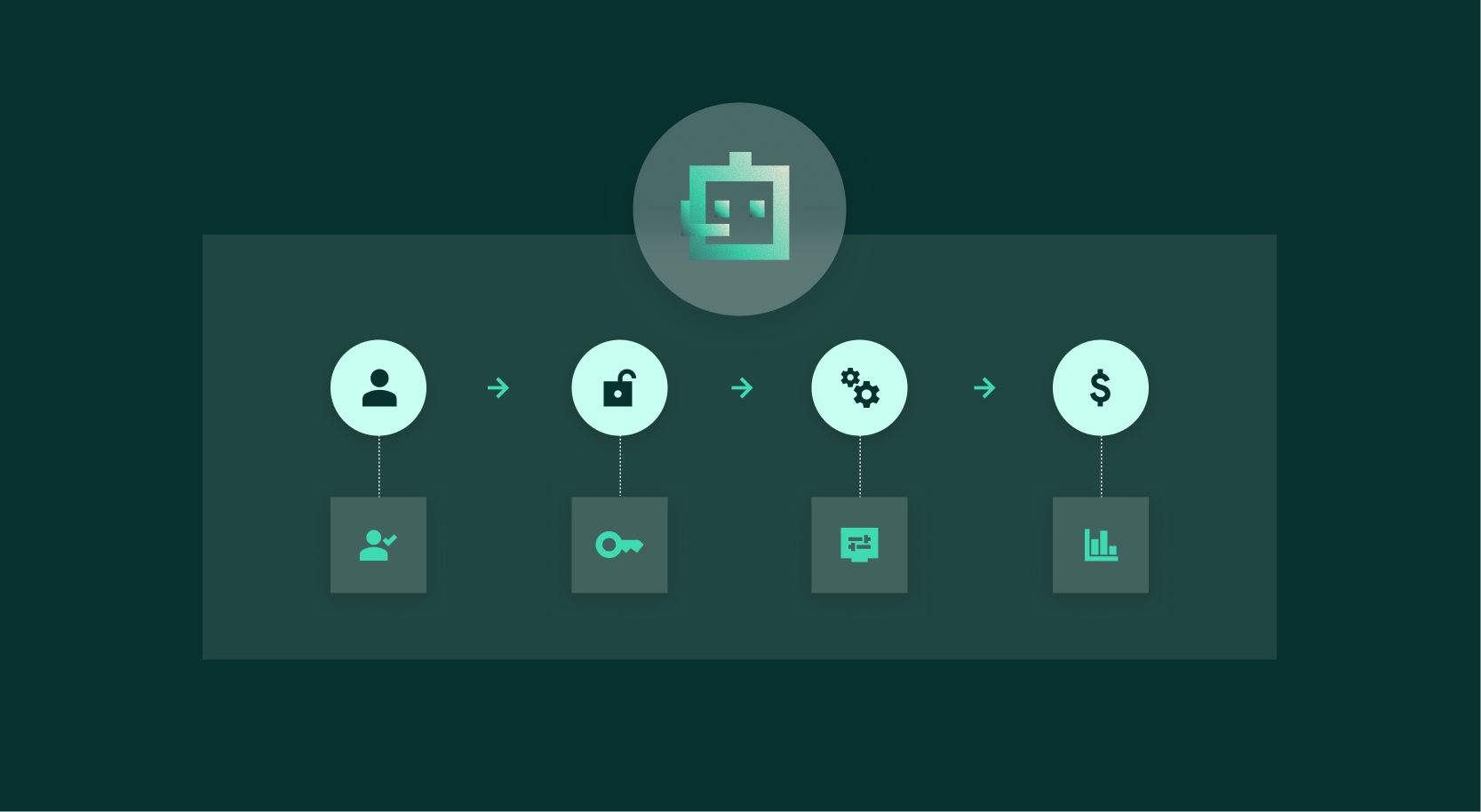
Dataiku enables this operating model by embedding governance directly into how AI and agents are designed, deployed, and monitored. Rather than treating governance as a separate layer, Dataiku provides unified visibility across models, agents, and workflows.
This allows enterprises to scale agentic AI with confidence, maintaining accountability without re-introducing friction, fragmentation, or manual bottlenecks. Governance becomes an enabler of safe autonomy versus a constraint on execution.
Autonomous agents are already reshaping how work gets done. The question for enterprise leaders is no longer whether to allow autonomy, but how to govern systems that act continuously and independently.
Human-in-the-loop governance, while well-intentioned, was never designed for this reality. Applied rigidly, it creates friction, blind spots, and false confidence. What works instead is a deliberate shift: human judgment where it matters most, automation everywhere else.
This evolution moves governance from static approvals to continuous oversight, from uniform controls to proportional intervention, and from fragmented visibility to unified accountability. As AI systems gain the ability to act, governance must evolve from control to intent — deciding not just what systems can do, but when humans must decide instead.