Hybrid development for enterprise AI: low-code and full-code
April 28, 2026/6 min read/Jed Dougherty
Every enterprise AI team hits the same wall. Business users get visual tools and move fast, until a use case needs custom model logic or production-grade deployment. Data scientists get full code control and build anything, but their work stays locked in notebooks nobody else can see, audit, or extend.
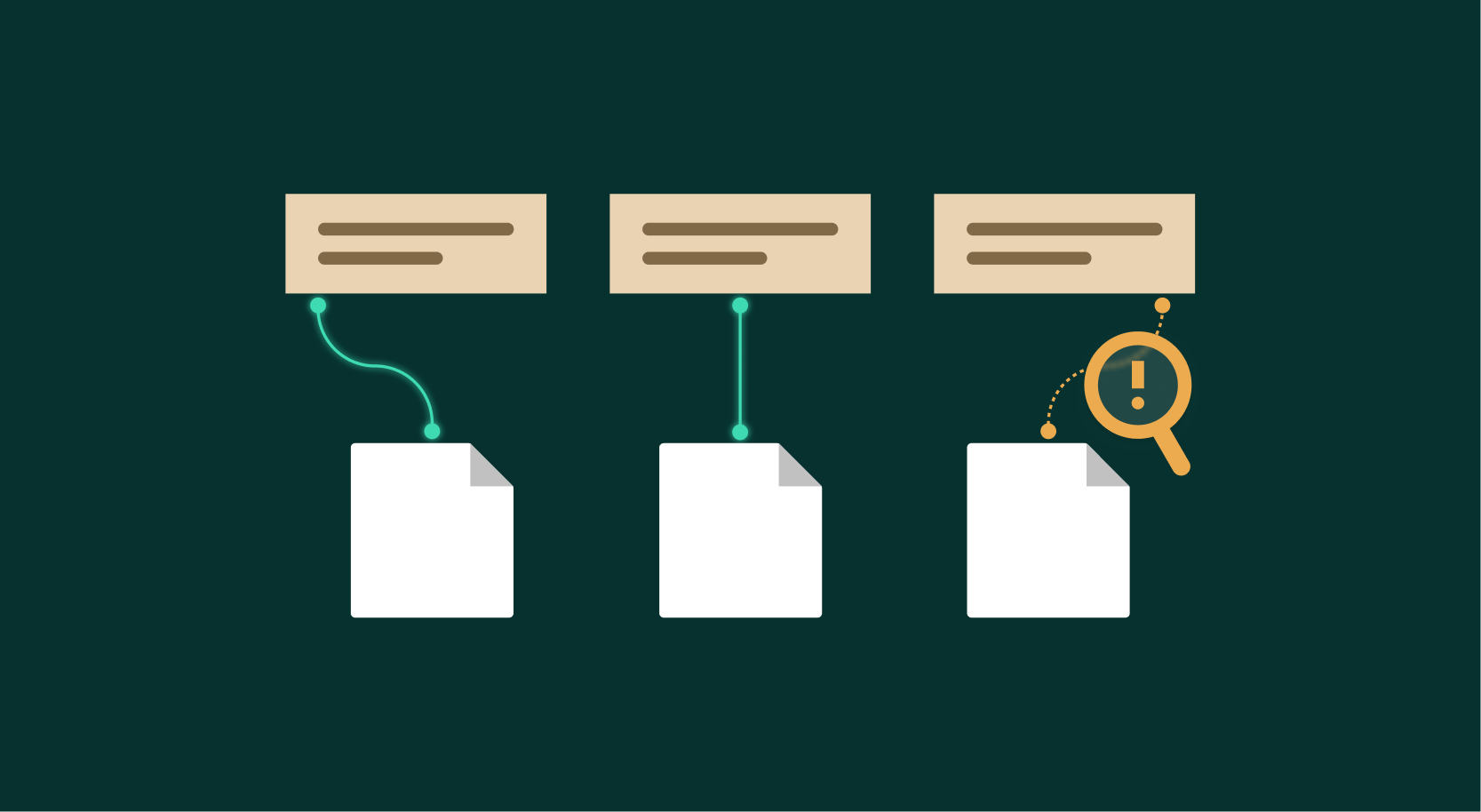
Most organizations try to solve this by running both approaches in parallel. That's where the real damage starts: two toolchains, two governance models, no shared view of what's actually in production. Models slip into deployment without documentation. Compliance teams reconstruct lineage from memory. And every new AI project begins with the same question: which environment do we build this in?
The talent gap gets the blame, but the architecture is the actual problem. And it's why most enterprises end up with more AI projects than AI results. This guide breaks down how hybrid environments, where low-code and full-code development coexist on the same governed platform, close that gap and turn fragmented AI efforts into a production-ready capability.
Low-code accelerates standard use cases, while full-code enables customization for complex models and production needs.
Parallel environments create fragmentation, leading to duplicated work, governance gaps, and limited visibility into what’s in production.
Hybrid platforms combine visual and code-based workflows in a single environment with shared lineage, versioning, and controls.
Scalability, integration, governance, and code extensibility determine whether AI initiatives move from prototypes to production at scale.
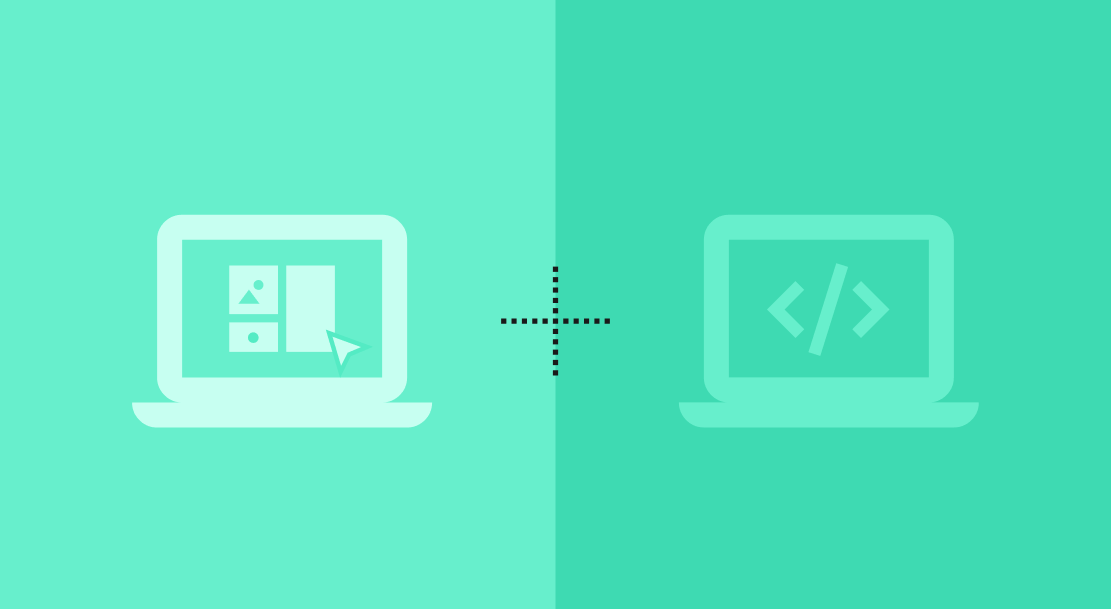
The case for hybrid development starts with a practical reality: AI projects require multiple skill sets working on the same pipeline, and no single development approach serves all of them well.
A marketing analyst building a customer segmentation model needs visual tools that let them explore data, select features, and compare model outputs without writing Python.
A data scientist tuning a custom neural network for fraud detection needs full programmatic control over architectures, hyperparameters, and training loops. A data engineer deploying that model to production needs API endpoints, CI/CD integration, and monitoring hooks.
A pure low-code environment serves the analyst but boxes out the data scientist. A pure-code environment gives data scientists full flexibility while leaving analysts unable to contribute and governance teams without visibility into what's being built.
Combining low-code and full-code bridges both: the analyst uses visual recipes, the data scientist writes Python in the same project, and every transformation, model version, and deployment decision is logged in a shared, auditable environment.
At scale, the benefits are practical:
Non-technical users handle standard preparation and modeling without waiting on engineering.
Every step is visible, whether it was built visually or in code.
Governance applies uniformly across both.
Teams aren't forced to choose between accessibility and technical depth.
Low-code-only platforms frequently hit a ceiling at enterprise scale. What works well for a single team building a prototype tends to break down once the requirements shift to production workloads, multi-team collaboration, and regulatory compliance.
The issue is rarely low-code development itself, but platforms that were never designed to go beyond it.
The scaling challenge has four dimensions:
1. Concurrency: Can the platform handle dozens of users building and running pipelines simultaneously without degrading performance?
2. Performance: Can it process enterprise-scale datasets (millions of rows, hundreds of features) without requiring workarounds
3. Security: Does it support role-based access controls, SSO integration, and encryption standards that enterprise IT requires?
4. Compliance: Does it generate the audit trails and documentation that regulators expect?
As organizations scale AI across teams and use cases, low-code platforms increasingly become a central layer for building and operationalizing models. For governance to hold at that scale, it has to be built into the platform architecture from the start.
Before committing to a low-code platform for enterprise AI, verify that it:
Supports elastic compute for production workloads
Integrates with your existing data infrastructure
Provides automated lineage and version control
Enforces access controls at the project, dataset, and model level
Offers deployment options that match your IT architecture (cloud, on-premises, or hybrid)
The eight criteria that determine whether a low-code platform will scale for enterprise AI are usability, integration breadth, security, governance, cost, scalability, automation, and community support. Each addresses a specific failure mode that causes enterprise AI platforms to underperform or get abandoned.
1. Usability: Can both technical and non-technical users work productively in the same environment? The best platforms offer visual interfaces alongside full-code notebooks without forcing users into one mode.
2. Integration breadth: Does the platform connect to your existing data sources, cloud infrastructure, and enterprise systems? A platform that requires data to be moved before it can be used creates friction and risk.
3. Security: Does it meet enterprise security requirements including SSO, role-based access, encryption at rest and in transit, and network isolation?
4. Governance: Are transformations, model versions, and deployment decisions automatically documented with full lineage? Can compliance teams audit without asking data scientists to manually reconstruct what happened?
5. Cost: What is the total cost of ownership, including licensing, infrastructure, integration, training, and the opportunity cost of what your team can't do on the platform?
6. Scalability: Can the platform handle production-grade workloads, not just prototypes? Does it push compute to your data infrastructure rather than requiring data movement?
7. Automation: Does it support automl code extensibility, allowing teams to start with automated model selection and then customize with code when needed? Platforms that lock users into fully automated pipelines with no escape hatch limit what advanced practitioners can build.
8. Community and support: Is there an active ecosystem of documentation, training resources, and practitioner communities?
A hybrid AI workflow combines low-code and full-code development across three stages: data ingestion, AutoML with code extensibility, and human review before production deployment. Each stage can be executed visually, in code, or as a combination.
Connect to source systems through pre-built connectors for databases, cloud storage, APIs, and flat files. Apply schema validation at the point of ingestion to catch structural issues before they propagate downstream. The key requirement is that both cloud and on-premises data sources feed into the same governed environment, not into separate tools that require manual reconciliation.
Start with built-in AutoML for rapid baseline modeling. AutoML handles algorithm selection, hyperparameter tuning, and cross-validation automatically, giving non-technical users a strong starting point.
When the baseline isn't sufficient, data scientists extend or replace the automated pipeline with custom code: plugging in specialized libraries, building custom features, or implementing architectures that AutoML doesn't cover. The best platforms support this transition within the same project, not as a handoff to a separate tool.
Before any model reaches production, governance checkpoints should verify that the model performs within acceptable accuracy thresholds, has been tested for bias across protected characteristics, meets documentation requirements for regulatory compliance, and has been reviewed and approved by designated stakeholders through a structured approval workflow. These checkpoints should be enforced by the platform, not left to ad hoc review processes.
Selecting the right hybrid AI platform requires a structured pilot on a real use case with both technical and non-technical contributors, measured against the evaluation criteria above.
Select one high-value use case that involves both technical and non-technical contributors, run a proof of concept on two or three candidate platforms, and measure against the evaluation criteria above.
Data scientists will resist platforms that constrain their flexibility. Business users will abandon platforms that require coding. IT will reject platforms that create governance blind spots. The right platform satisfies all three, which is why hybrid approaches consistently outperform pure low-code or pure code-based alternatives in enterprise evaluations.
Adopting a hybrid platform changes how teams collaborate on AI projects, not just which tools they use. Budget for training, designate champions in each team, and set realistic timelines for adoption. The licensing cost of the platform is rarely the largest investment; enablement and workflow integration are where the real cost and value lie.
The platform decision carries lasting consequences. According to "7 Career-Making AI Decisions for CIOs in 2026," based on a Dataiku/Harris Poll survey of 600 enterprise CIOs, 74% regret at least one major AI vendor or platform selection made in the past 18 months. Choosing a tool that fits today's requirements but not tomorrow's trajectory is the most expensive mistake in enterprise AI.
Dataiku, the Platform for AI Success, which integrates data preparation, machine learning, generative AI, AI agents, and governance in one environment, is built from the ground up for hybrid AI development. Visual recipes and Python/R/SQL notebooks coexist in the same project, governed by the same lineage, version control, and approval workflows.
The data science team at Air Canada uses Dataiku visual flows and AutoML alongside custom ML to power their Customer 360 solution, building predictive models, customer segmentations, and recommender systems in hours instead of the weeks their previous tooling required.
The evaluation criteria outlined earlier in this article apply directly here: Dataiku supports elastic compute across cloud and on-premises infrastructure, integrates with major data platforms, enforces governance through automated documentation and approval workflows, and scales from prototype to production within a single environment.
Most low-code-only platforms were designed for application development, not AI and ML. They handle simple workflows well but lack the compute scalability, governance depth, and code extensibility that enterprise AI projects require. Platforms that don't support full-code fallback force teams to maintain parallel environments, creating fragmentation and governance gaps.
Most low-code-only platforms can't. The platforms that succeed at enterprise governance automatically document every transformation, enforce role-based access controls, generate audit-ready lineage, and integrate into existing compliance workflows. The key differentiator is whether governance is built into the platform architecture or bolted on as an afterthought.
For standard use cases like data preparation, basic classification, and dashboard creation, yes. For advanced ML (custom architectures, complex feature engineering, specialized training loops), pure low-code without full-code extensibility is insufficient. Hybrid platforms that combine visual tools with full-code extensibility are the practical answer for enterprises that need both accessibility and depth.
Tags