
What’s new in Dataiku
Shorten the path from agent design to production with conversational creation, simplified visual debugging, integration of reusable skills, eased MCP distribution, and more in Dataiku 15.0.

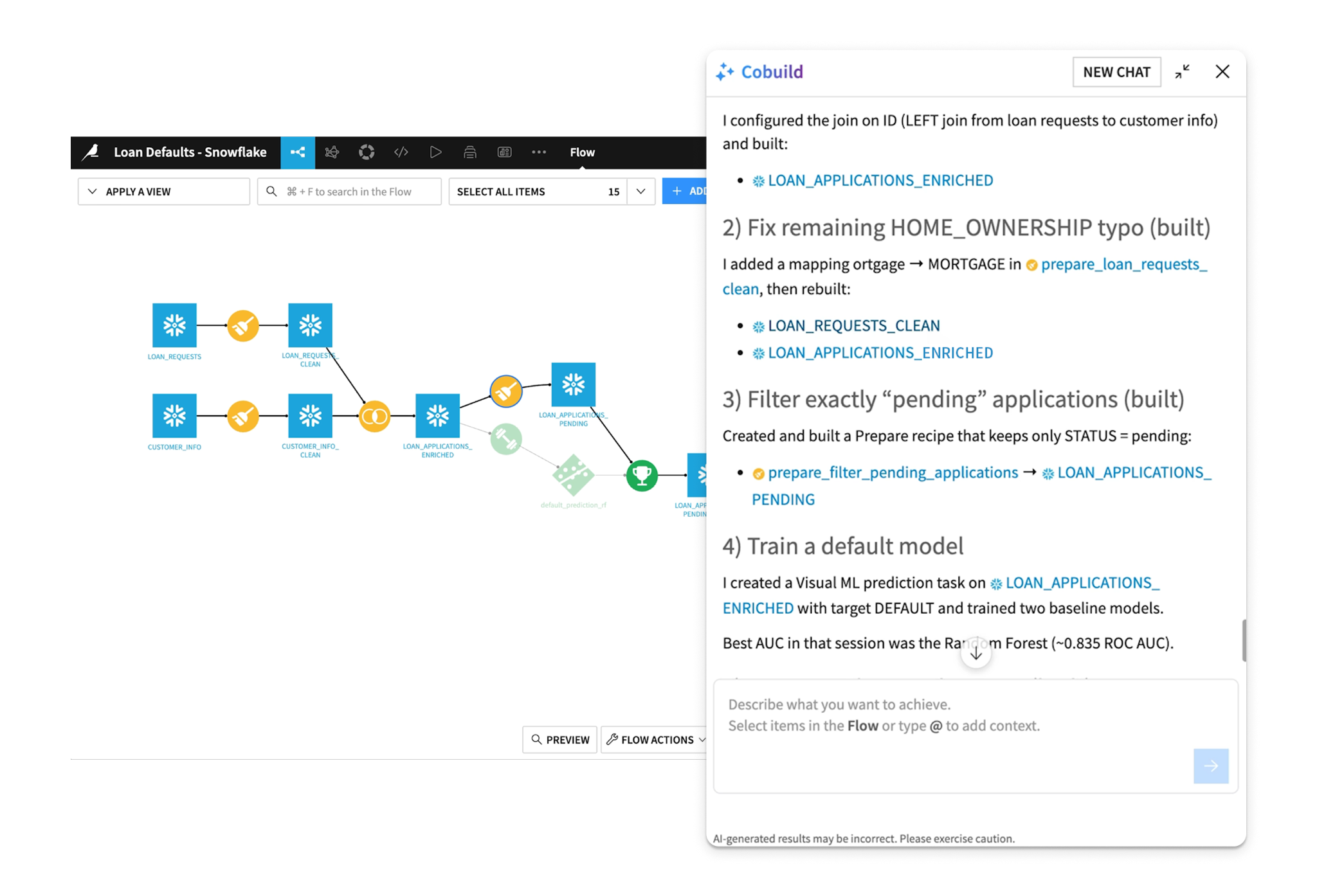
Cobuild: Go from business needs to enterprise AI projects
Describe what you want in plain language. Cobuild generates the right end-to-end AI project in Dataiku — data pipelines, machine learning models, agents, and applications.
Everything is delivered as a visual flow that teams can inspect, edit, and approve, so speed doesn’t come at the cost of control.
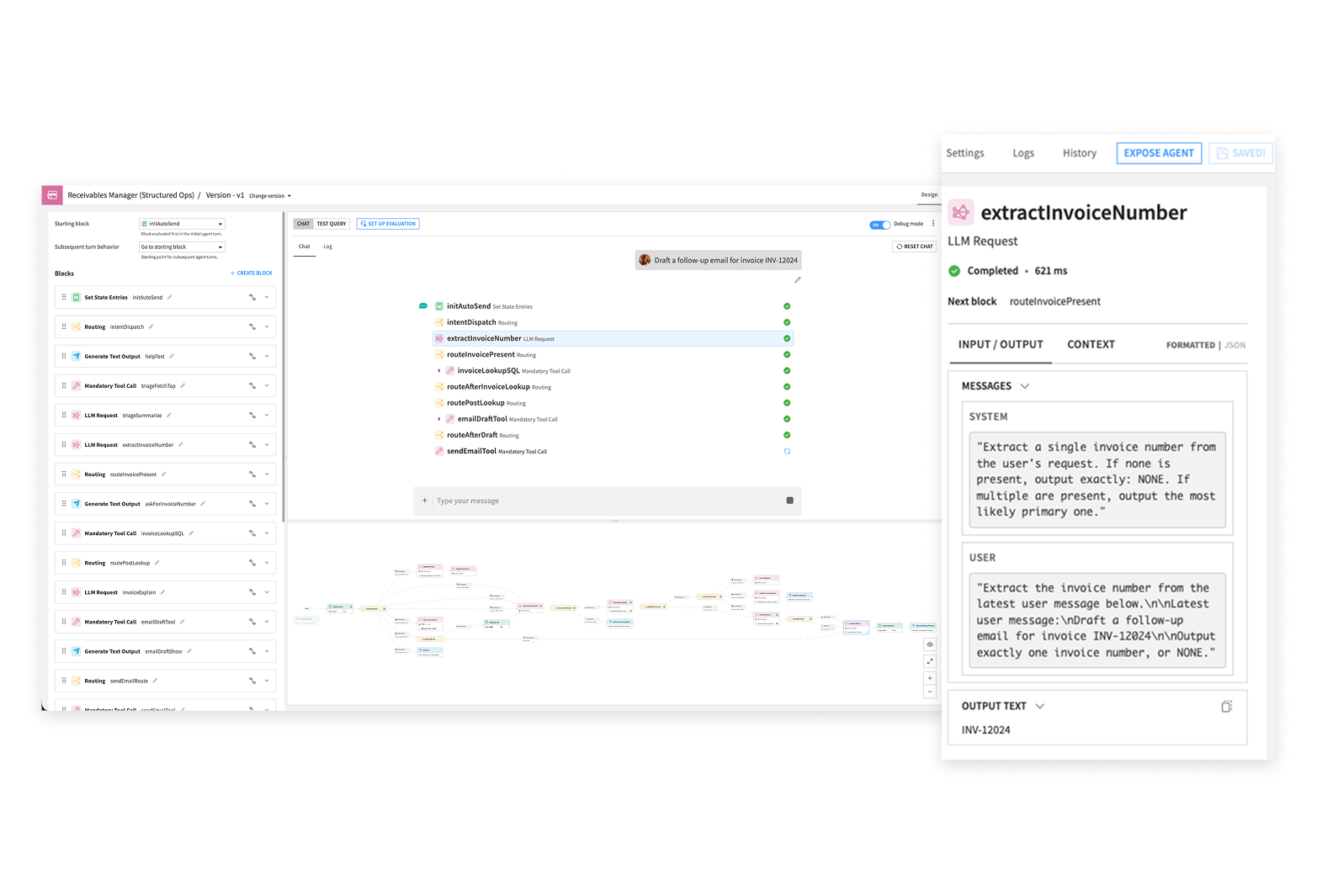
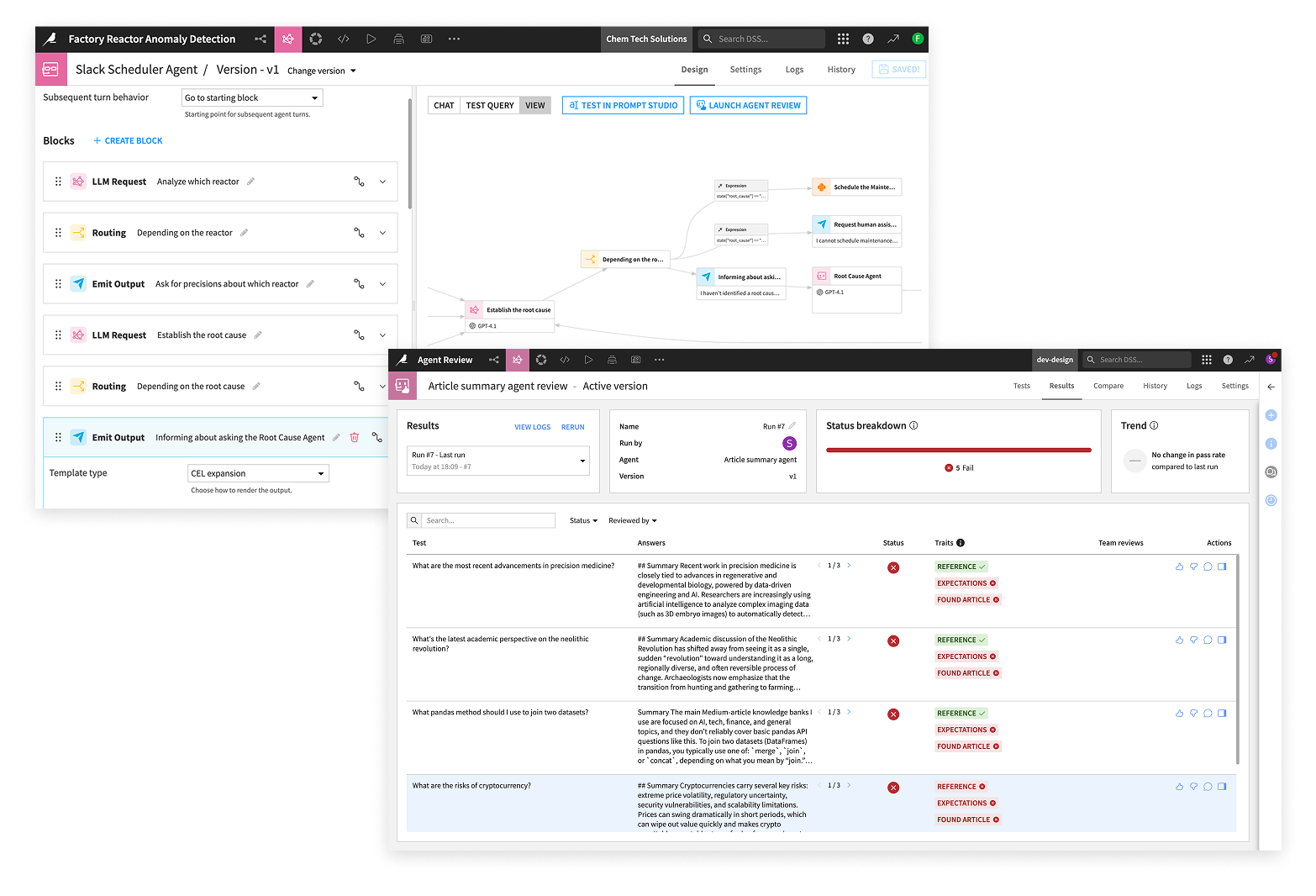
Easily debug your agents visually
Understand what your agent is doing at every step with a visual, streamed view of execution. See what it calls and what inputs and outputs shape the outcome.
The debug mode lets users visually inspect the steps of their agent while they run so teams can iterate faster and deploy with fewer surprises.
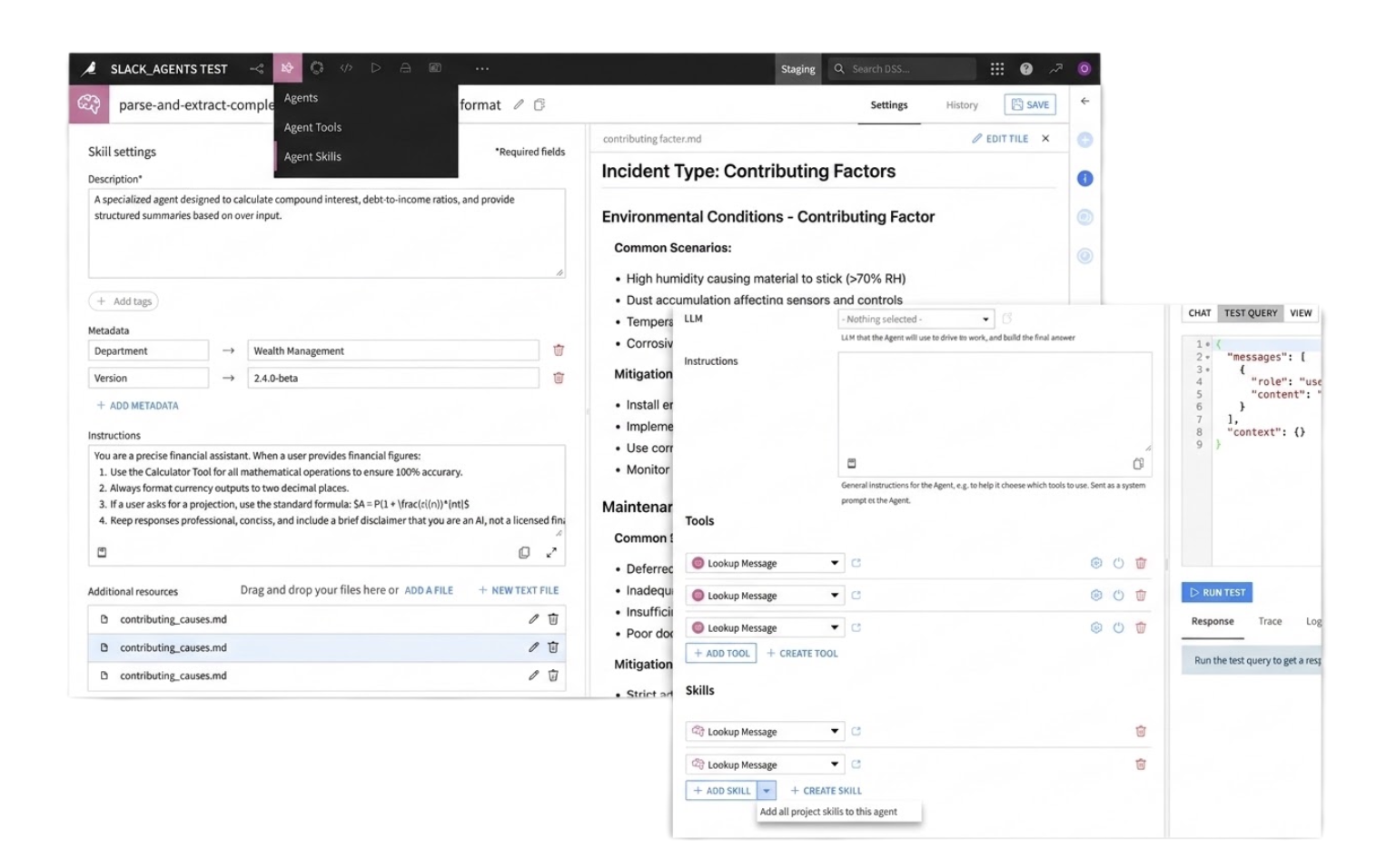
Bring reusable skills to your agents
Package a skill once and use it across agents, with improved context and extended modularity.
Skills can be enriched with additional supporting resources to further grow your agent capabilities.
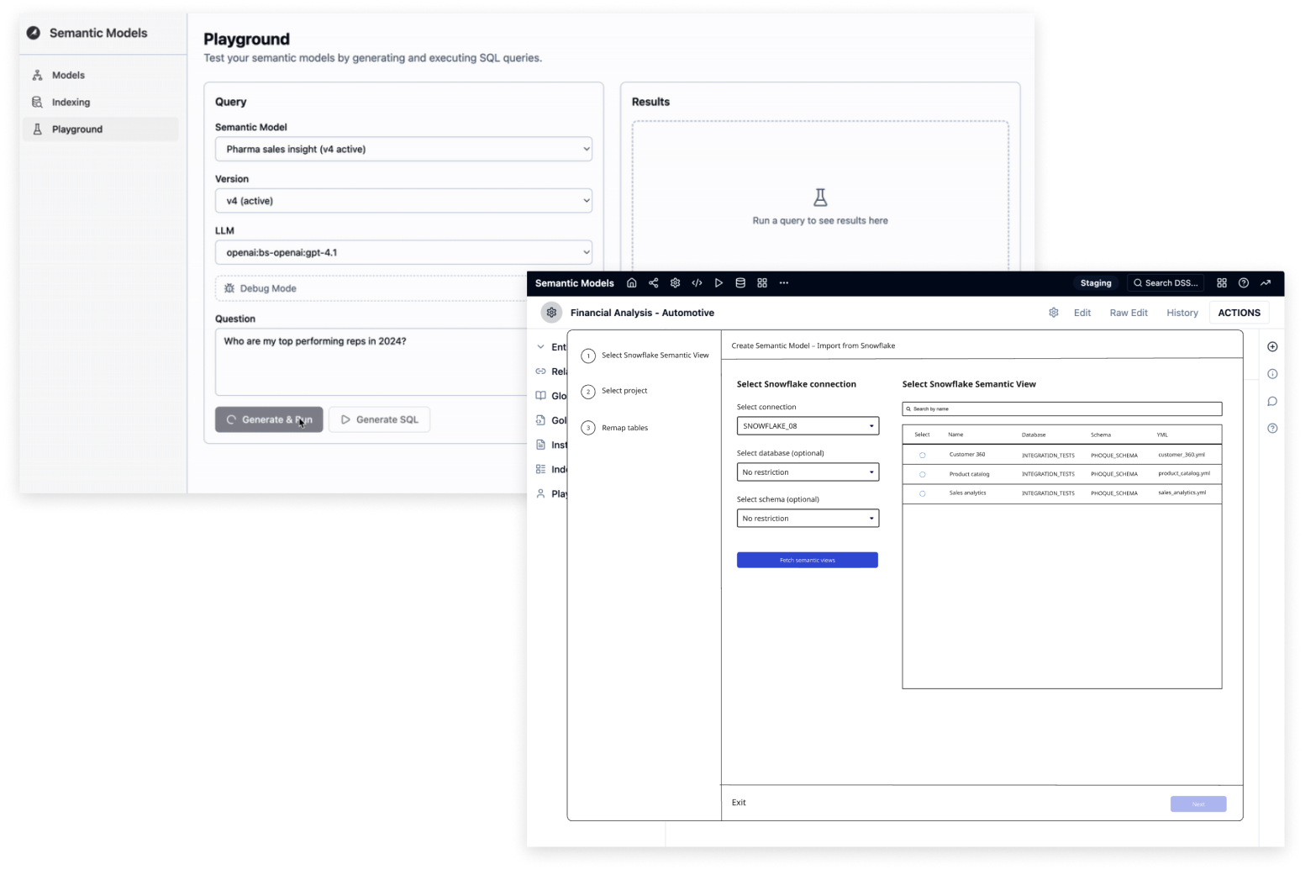
Bring a unified semantic layer to your agents
Help agents interpret structured data and business concepts correctly, so answers are consistent and decision-ready.
Directly build your semantic models in Dataiku, or bring models including metrics, entities and relationships defined in other platforms like Snowflake and Databricks. Expose Dataiku managed semantics in OSI for further reuse.
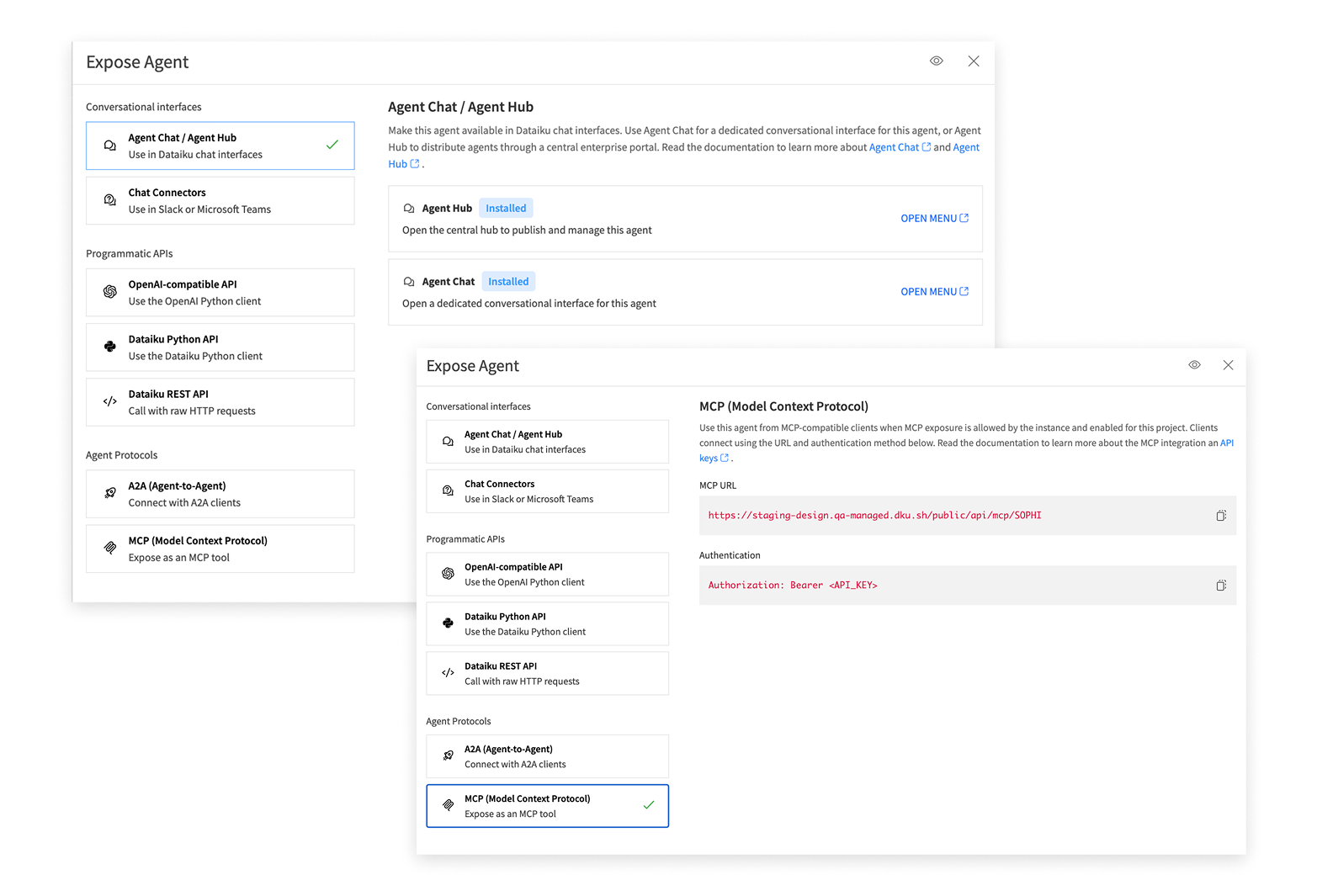
Expose agents anywhere
Bring Dataiku agents into the tools and applications your teams already use.
A native MCP server makes selected agents and tools discoverable and callable from any MCP-compatible client, with permissions and admin gating preserved.
The Conversation API embeds agents in your own apps with server-side conversation history.
Teams, Slack, and Agent Hub are managed from the same place.
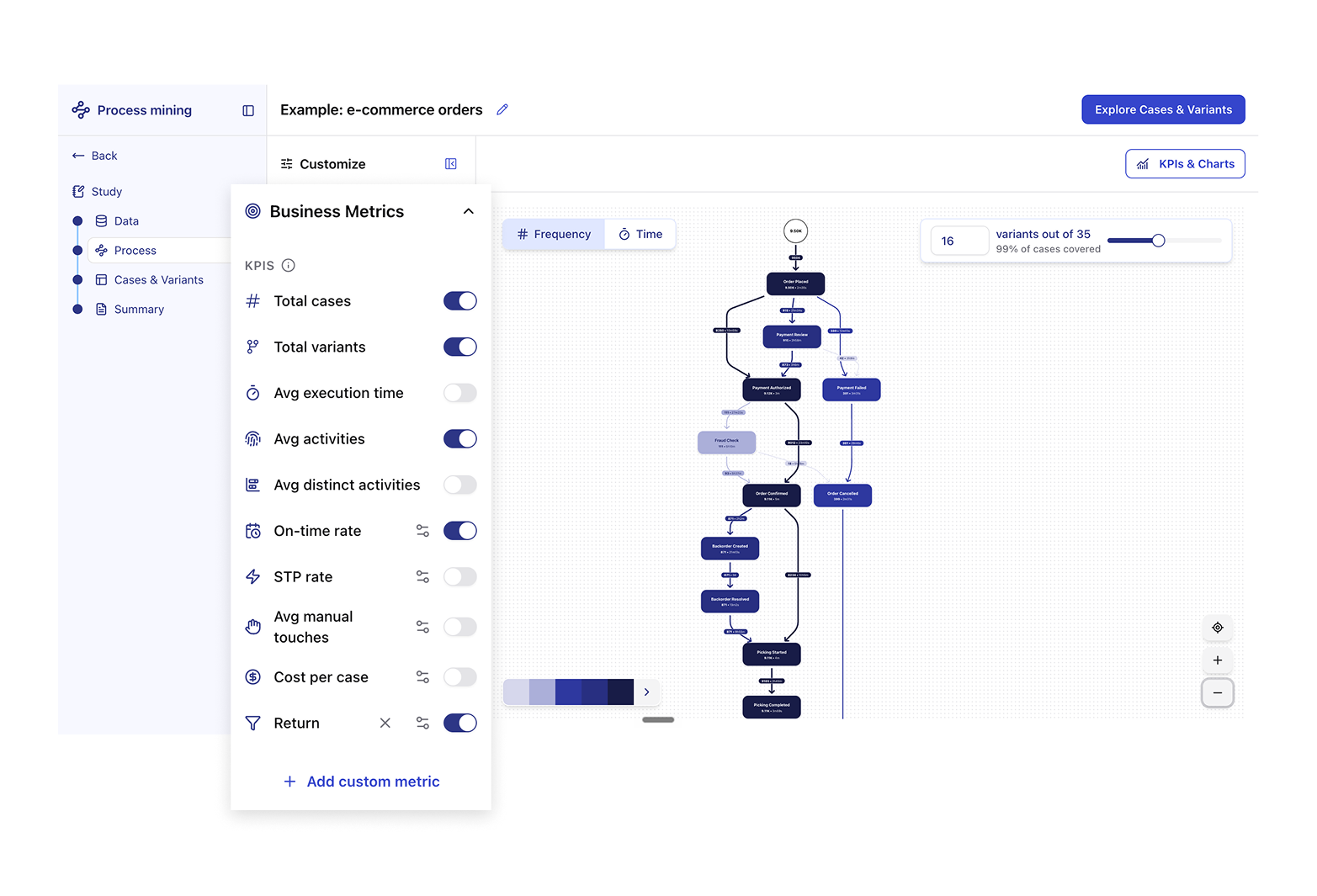
Accelerate process discovery for agentic optimization in Process Mining
With Process Mining, teams can map how work actually happens from event logs, filter and segment runs by case attributes, and use KPI summaries to spot bottlenecks and gaps.
Add business KPI views to identify what drives the highest cost or other key measures, then drill down to the underlying variants and cases to pinpoint root causes. Leverage to accelerate your agentic re-engineering initiatives.
Govern agents end-to-end with review and sign-off
As agents change, governance can’t be a one-time gate. With Dataiku, quality, traceability, and accountability is built into the full lifecycle.
Agent Review helps validate agent behavior against business standards.
Agent Evaluation provides a repeatable way to measure performance across test cases and track changes over time. Its sign-off workflows ensure important stakeholders can approve before deployment.
Explore previous Dataiku releases
Explore Dataiku 15.0
New features include Agent Skills, agent live debugging, native MCP capabilities, multi-turn conversation API, LLM Provider native web search, and more.
Detailed release in a box deckExplore Dataiku 14.6
New features include Dataiku Agents on Microsoft Teams, native SharePoint document support, Snowflake Semantic Views import, and the RFx Accelerator business application.
Detailed release in a box deckExplore Dataiku 14.5
New features include Agent Chat, Extract Fields recipe, Process Mining application, code agents and webapp testing & debugging in Code Studios, and Claude Code in Code Studios.
Detailed release in a box deckExplore Dataiku 14.4
New features include Structured Visual Agent & Human Approval, Agent Review, Semantic Models for Agents, Interact with agent on Slack, Flow Assistant, & AI Search.
Detailed release in a box deckExplore Dataiku 14.3
New features include Agent Evaluation, Agent Diagram, and Agent Hub enhancements.
Detailed release in a box deckExplore Dataiku 14.2
New features include Agent Hub, connect agents to tools like Gmail, Jira, or Slack, Governance Policies and AI Portfolio Badges.
Detailed release in a box deckExplore Dataiku 14.1
New features include Ask Dataiku, Project Standards, and a streamlined Agent Testing interface.
Detailed release in a box deckExplore Dataiku 14.0
New features include a new Dataiku homepage, Python tools for Visual Agents, alerting in Unified Monitoring, and theming in Charts, Dashboards and Stories.
Detailed release in a box deck