Before AI agents: The technology foundations CIOs can’t skip
January 29, 2026/5 min read/Barbara Rainho
AI agents require data readiness first and foremost. They don’t transform enterprises; they reveal whether the organization was prepared for AI, acting as a forcing function for mature data and AI governance.
Measurable results come from executing data strategies that include analytics, models, and agents by orchestrating AI at scale with trust, governance, and collaboration. SoftBank saved a projected 250K seller hours annually, European Air Transport achieved 80x operational efficiency, and ZS Associates saw millions of dollars in cost savings, among other customers we’ve observed adopt an end-to-end, data-driven foundation.

To get ready for AI, step back and strengthen your data foundation with four helpful tips before scaling agents across the enterprise:
Data preparation is the foundation of any AI initiative. Without reliable inputs, even the best models and AI agents can produce biased, inconsistent, or unexplainable results. Data prep connects, standardizes, and structures data so analysts and AI are working from the same trusted information, while fragmented or manual preparation propagates errors, slows deployment, and increases operational risk.
When done right, data prep turns raw, disconnected data into governed, standardized datasets with clear lineage, so analytics and AI can scale confidently. Preparing your data allows you to:
Create trusted inputs for models and agents
Reduce bias, rework, and operational risk
Accelerate analytics and enterprise-scale AI initiatives
Dataiku is The Universal AI Platform™, giving organizations control over their AI talent, processes, and technologies to unleash the creation of analytics, models, and agents so teams can:
Centralize data from multiple sources into governed datasets.
Automate standardization, validation, and transformation with reusable visual recipes.
Track lineage and logic to maintain a single source of truth across the organization.
Analytics is the bridge between raw data and trusted, actionable insights. It’s a prerequisite for AI agents because this is how organizations can reliably act on GenAI and AI agents. Without consistent, auditable analytics, AI agents may act on incomplete or misleading information, producing decisions that are hard to explain or measure. With this foundation, AI agents operate on validated signals — using analysis and visualization to drive reliable, value-aligned decisions at scale. With a good data analytics foundation, you can:
Ground AI decisions based on reliable, governed insights
Measure and explain outcomes
Build a foundation for scaling AI across the enterprise
In practice, Dataiku makes analytics enterprise-ready by linking dashboards, machine learning (ML) models, and agent actions on governed data to deliver actionable insights. Metrics, KPIs, and feedback loops ensure performance is measurable and explainable, tying every decision to business outcomes.
This layer ensures data and analytics flow reliably, on time, and in sequence. Without orchestration, insights become stale or fragmented, causing agents to act inconsistently.
Orchestrated data ensures workflows and pipelines run predictably with clear dependencies and monitoring, allowing AI to scale enterprise-wide with confidence and auditable performance. Strong orchestration moves, transforms, and activates data across systems, so the right data arrives at the right time and in the right form, with observability, repeatability, and measurable ROI. With well orchestrated data, you can:
Deliver consistent, up-to-date inputs for agents
Enable monitoring, auditing, and compliance
Support repeatable, scalable AI outcomes
Dataiku’s visual workflow builder (the Flow), where datasets, recipes, models, and dashboards are connected, enables end-to-end orchestration visually while scenarios automate pipeline execution with triggers, schedules, and conditional logic, ensuring workflows run reliably and on time.
With data preparation, analytics, and orchestration in place, the next layer in your technology foundation is machine learning. It turns curated data into predictive models and decision logic that agents can reliably act on.
ML operational discipline is the practice of reliably deploying, monitoring, governing, and maintaining machine learning models in production so they remain accurate, secure, compliant, and aligned with business goals over time. It ensures models are versioned, tested, and monitored in production, giving agents a dependable, auditable foundation that scales and delivers business outcomes.
Ensure consistent model behavior and transparency through versioning, testing, and continuous monitoring so every decision is traceable and auditable.
Detect drift and failures early to prevent biased or stale outputs.
Enable repeatable, scalable ML workflows that support autonomous agent actions.
Connect model outputs to business impact, ensuring agent actions deliver ROI.
AI engineering operations with Dataiku enables unified pipeline management by connecting data, model training, deployment, and monitoring, ensuring ML operations are repeatable, observable, and resilient in production.
The next step is process governance: where you connect your teams, projects, and data — aligning people, strategy, and technology to turn AI into accountable action. Without this layer, even well-designed agents can introduce risk, confusion, and loss of trust.
Many enterprises rush deployment and get stuck in isolated experiments, fragmented adoption, rising risk, and unclear ROI. Teams move fast, IT struggles for visibility, and leaders can’t link pilots to business impact. That’s why Agent Hub in Dataiku brings agent experimentation, deployment, and governance into one shared space.
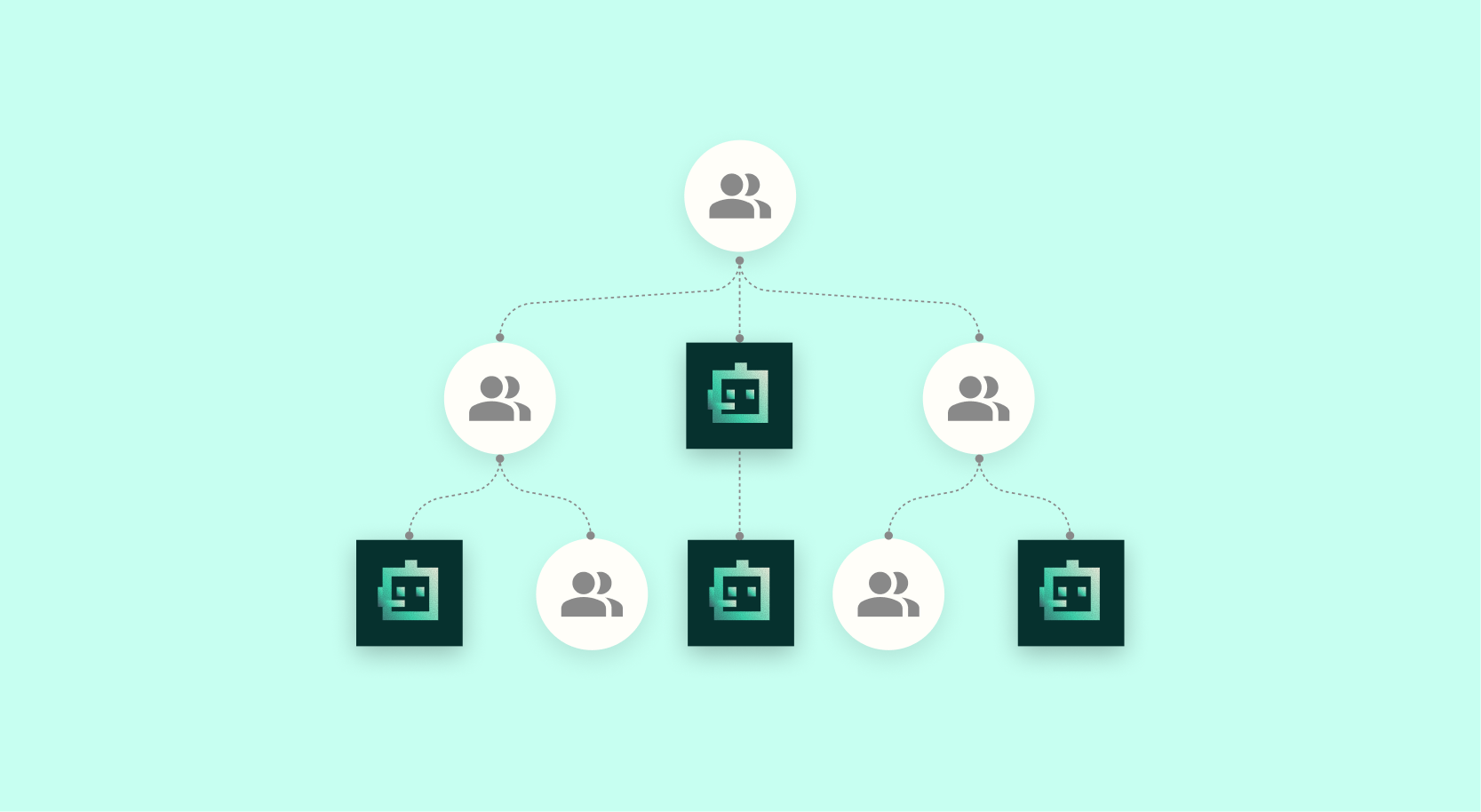
Technology alone won’t make AI successful. Clear decision ownership and human oversight ensure automated actions align with business priorities, remain explainable, and deliver measurable results: Ownership and accountability turn agents into trusted collaborators. These concepts highlight the gap between control and risk: human-in-the-loop as a governance safeguard (control), while shadow AI and agent sprawl signs ambition has outpaced oversight (risk).
Human-in-the-loop (HITL) is an AI approach where people actively review, guide, or intervene in automated systems to ensure accuracy, accountability, and better decision-making. It keeps people involved where judgment matters most. Even with strong data and models, AI can surprise you! Keeping the human in the loop ensures decisions remain explainable, auditable, and aligned, so automation builds trust instead of risk.
Shadow AI occurs when teams move faster than governance. According to a Dataiku/Harris Poll survey of 800+ global data leaders, shadow AI is no longer a hidden phenomenon, it’s a shared concern at every level.
91% of data leaders and 94% of CEOs are aligned on suspecting employees are using GenAI tools without notice or permission. That can cause untracked agents to increase risk, fragment accountability, and obscure ROI while visibility and alignment are essential to scale AI responsibly.
Agent sprawl happens when agents multiply without coordination leading to redundancy, conflicting actions, and unclear ownership make scaling harder. Shared governance and orchestration ensure AI grows with intent.
If agents test enterprise readiness, the most critical foundation is data governance, as it is how an organization ensures its data is trusted, secure, and usable at scale. It defines ownership, quality standards, access, and auditability so data-driven decisions can be explained and defended.
Without trusted data and governed execution across projects, everything that follows risks being unreliable, unexplainable, or unauditable — this is the difference between getting ready for AI and being ready for it.
Dataiku provides a unified, visual environment where governance is embedded directly into how analytics, models, and agents are built, deployed, and scaled. Meaning, teams of all skill levels can move faster without losing visibility, control, or auditability.
Trust in data means having confidence and control over every insight your organization uses. Without it, decisions are risky, operations are exposed, and reliance on external vendors or regulations grows. When data is secure, governed, and high-quality, AI and automation become reliable, auditable, and impactful.
Most AI agents don’t fail because the model is wrong, they fail because the surrounding system wasn’t built for real-world enterprise complexity. What works in a demo often breaks with real data, users, risk, and scale.
AI agents may seem like the future of enterprise automation, but they’re only as effective as the foundation beneath them. Build the layers of readiness first, and agents can deliver predictable, auditable, and measurable business value.
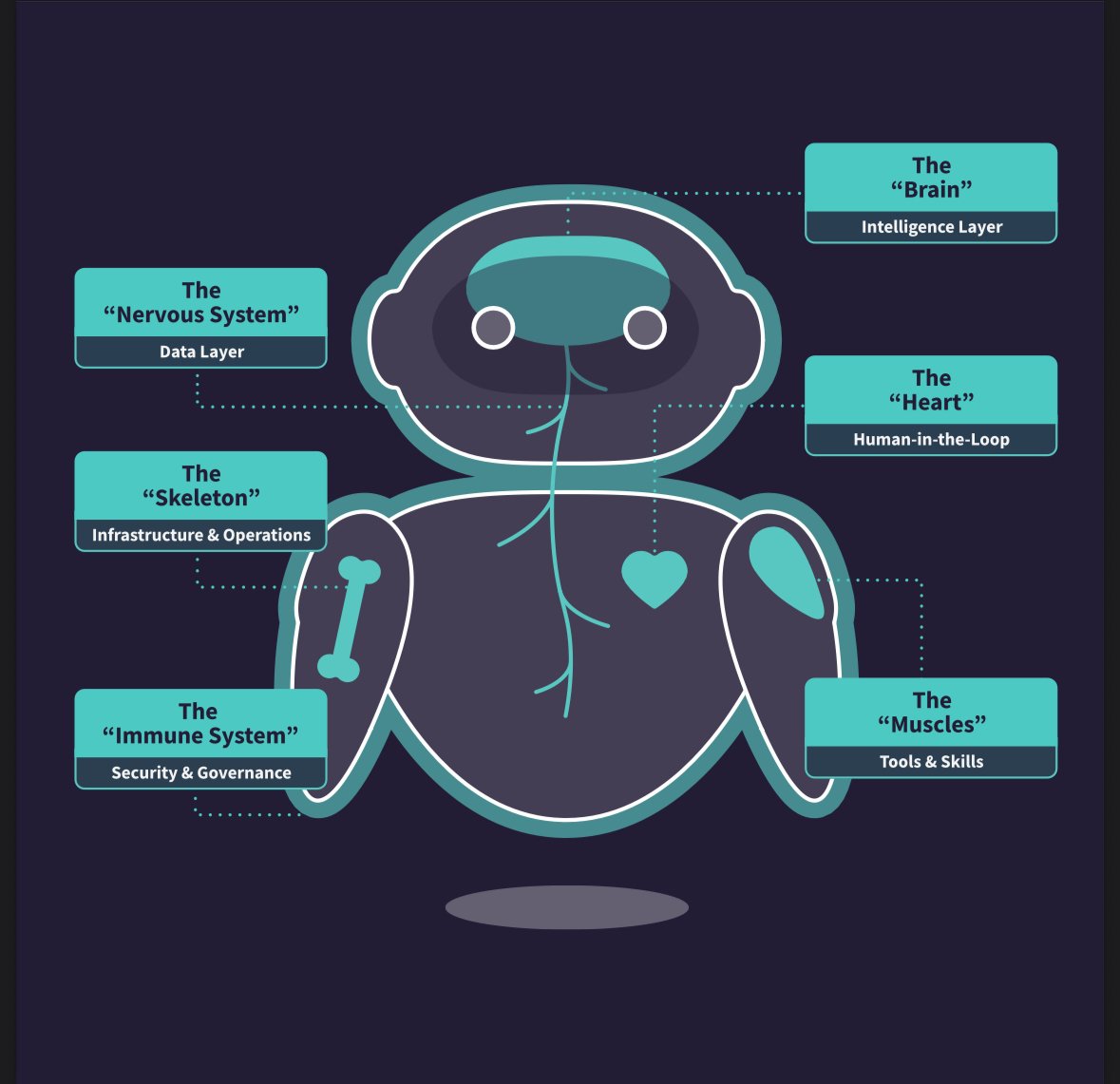
Agents reveal readiness, they don’t create it: Start with a strong data and decision foundation, not automation.
Layered foundations drive ROI: Governance, analytics, ML discipline, human oversight, and accountability must operate in harmony.
Production is harder than demos: Real data, real users, and real risk expose gaps — plan for them before scaling agents.
Now that your AI ecosystem is ready for AI agents, well-built, governed, scalable, and replicable enterprise AI agents can deliver:
Reliable decisions: Consistent actions powered by trusted data and validated models.
Scalable impact: Automation across teams and processes without redundancy.
Measurable ROI: Auditable outcomes tied to business metrics.
Reduced risk & bias: Governance and human oversight ensure compliance and explainability.
Faster time-to-value: Accelerate workflows while freeing humans for higher-value work.
Organizational alignment: Clear ownership ensures actions support business priorities.
Operational resilience: Handle real-world data, users, and scale without failure.
Dataiku connects all these layers from data prep and analytics to ML operations and collaborative agent governance, so teams can experiment, scale, and govern AI safely.