


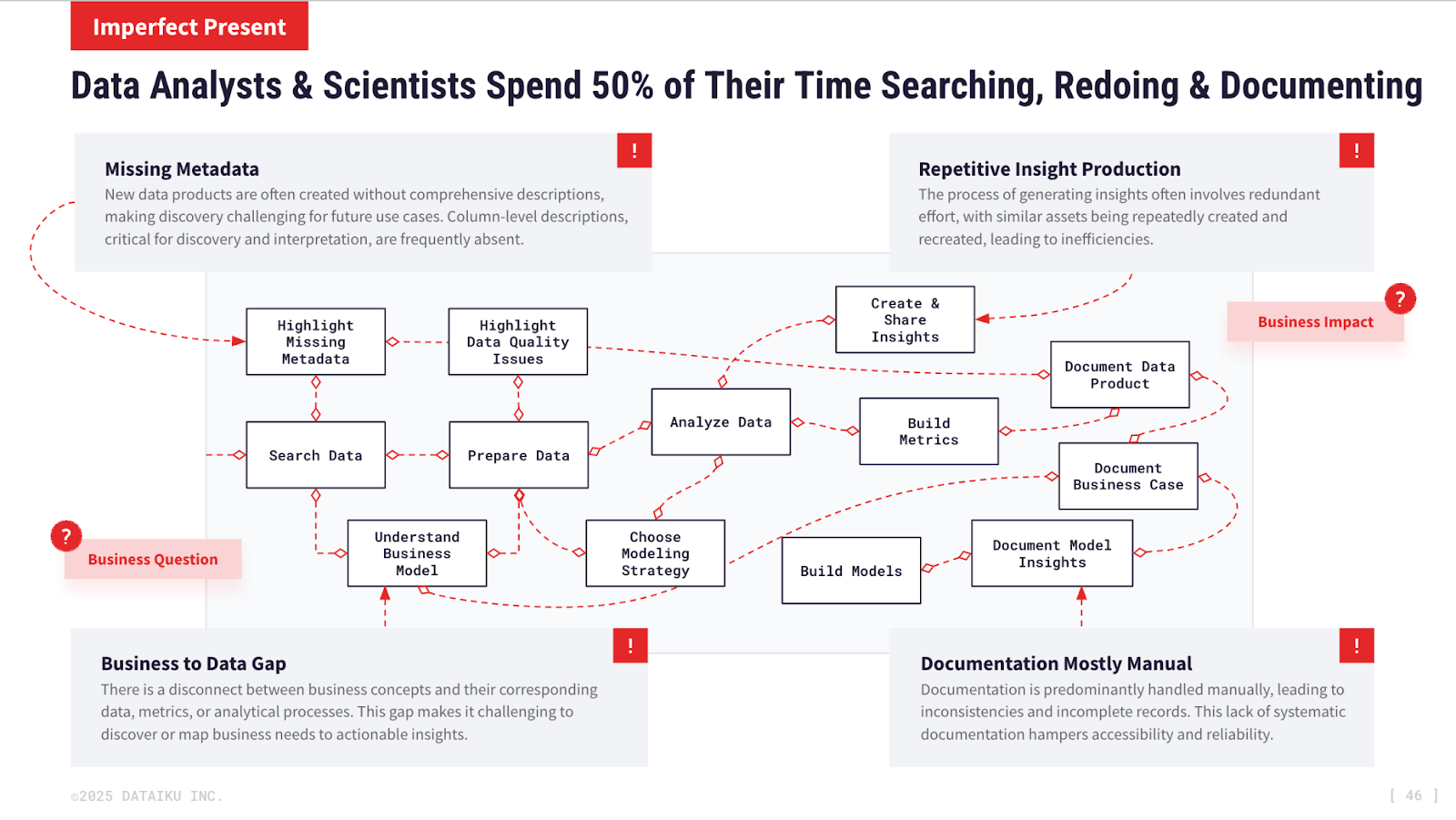
1. Discovery: From Search to Semantic Understanding
The first bottleneck is discovery. New datasets and models are often created without detailed descriptions. Column-level metadata is missing, lineage is unclear, and future users spend hours trying to decipher what they are looking at. In many cases, they abandon the search and recreate the asset instead, adding to the clutter.
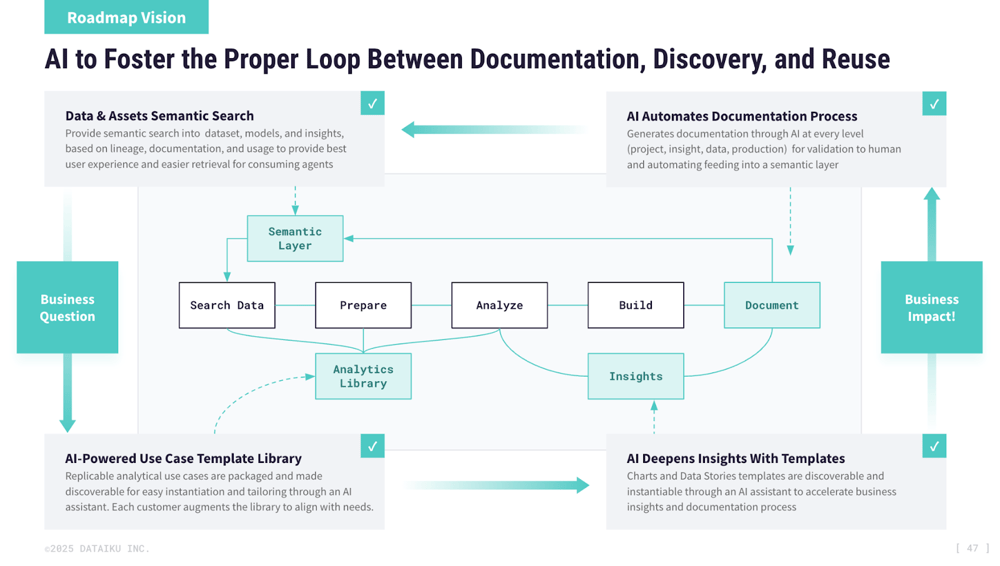
The way forward is semantic search. Analysts should be able to ask in plain language, “Which datasets include validated churn metrics at the customer level?” and receive a clear, contextual answer. Achieving this requires more than better indexing. It calls for a semantic layer that connects lineage, documentation, and usage histories across all assets.
Organizations that have already adopted this approach are seeing dramatic results. At Auckland Transport, customer service teams once spent 30 minutes per case sifting through unstructured feedback. By implementing semantic search with Dataiku, case identification now happens in seconds, a 180x acceleration. Instead of guessing at incomplete metadata or recreating assets, teams instantly access the right context, resolve issues faster, and build greater trust with customers.
Dataiku’s end-to-end platform enables capabilities like semantic search across datasets, models, and insights, helping teams collapse discovery time from hours to minutes. By reducing duplication and making discovery more efficient, teams establish the foundation needed for later automation. With discovery strengthened, the next barrier comes into view: ensuring insights don’t just get found once, but can be reused across the organization.
.png?width=928&height=620&name=Thumbnail%20link%20(2).png)
.png)