
The advantage is you: What stood out at Dataiku Succeed
October 2, 2026/7 min read/Barbara Rainho
At Dataiku Succeed, one message connected the keynotes, product announcements, demos, and customer stories. Competitive advantage in enterprise AI comes from how organizations turn widely available models into differentiated outcomes.
Dataiku, the Platform for AI Success, captured that idea in a simple formula: People + Orchestration + Governance = AI Success.
The question now is what that formula looks like in practice and what enterprises need to get right to turn it into real business value. In this piece, we’ll look at what each part of that formula means in practice and how people, orchestration, and governance come together to create enterprise AI success.
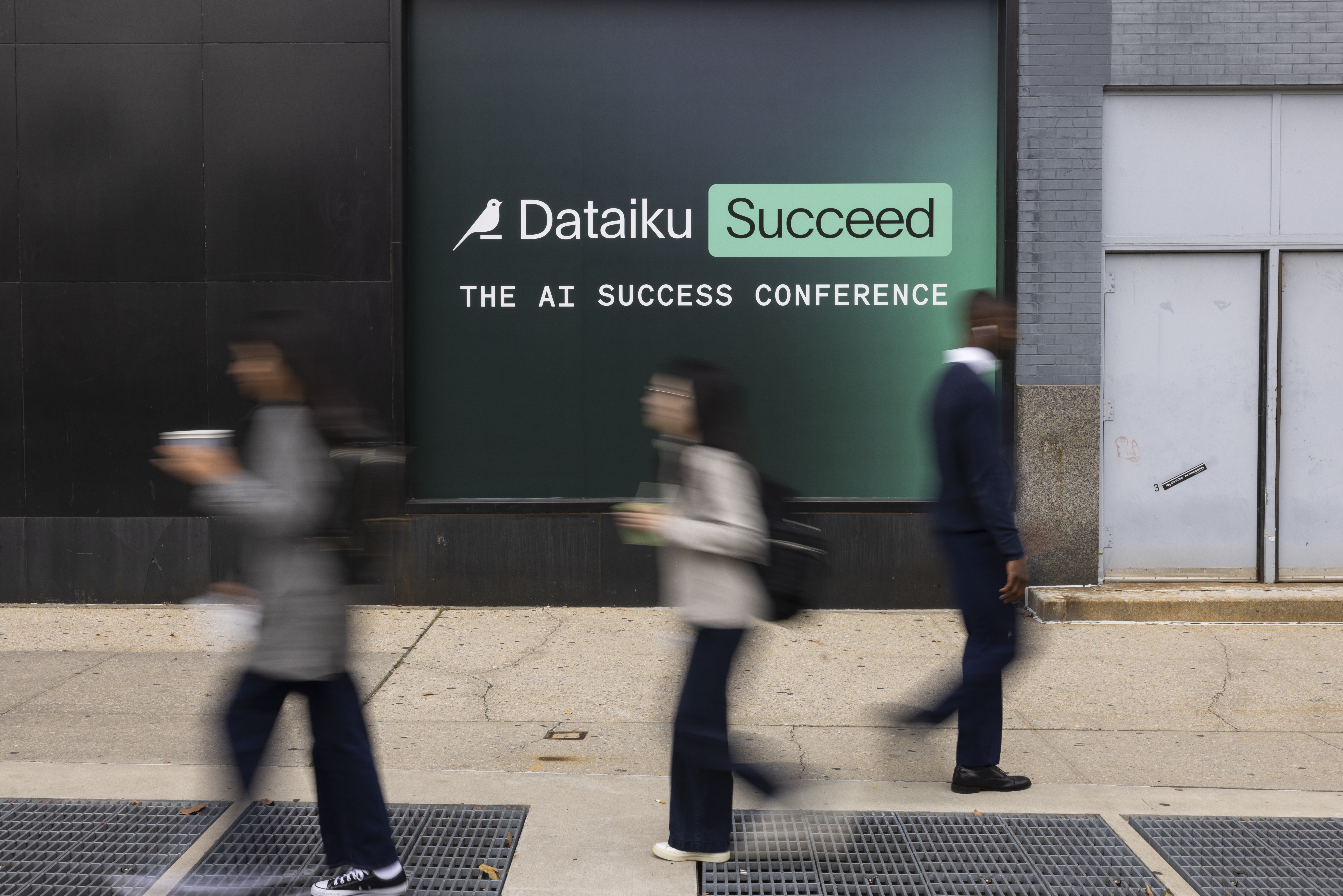
When Florian Douetteau, co-founder and CEO of Dataiku, opened the event, he compared the current AI market to a supermarket. There is an assumption that organizations can simply put intelligence in their basket and walk out, but access differs from impact.
Florian noted that only about 20% of companies are capturing the value of AI, while the other 80% are getting the scraps. The gap is not explained by the models alone. Enterprises can buy access to many of the same models, tools, and capabilities. What separates the leaders is strategy, implementation, and the willingness to make hard choices — including ending projects that fail to deliver value.
AI can create real breakthroughs. It can also produce unreliable outputs, expose sensitive data, or introduce new risks at scale. The model itself, Florian argued, is neither the enemy nor the answer. The outcome depends on the organization using it.
As AI supports increasingly consequential decisions, enterprises need more than promising prototypes. They need an audit trail, accountable ownership, and people who can decide where trust is required.
Florian contrasted two types of companies. Company A distrusts its people, fears governance will slow progress, and treats old and new systems as separate worlds. Meanwhile, Company B upskills its people, connects its technology estate, and uses governance to see value and risk together.
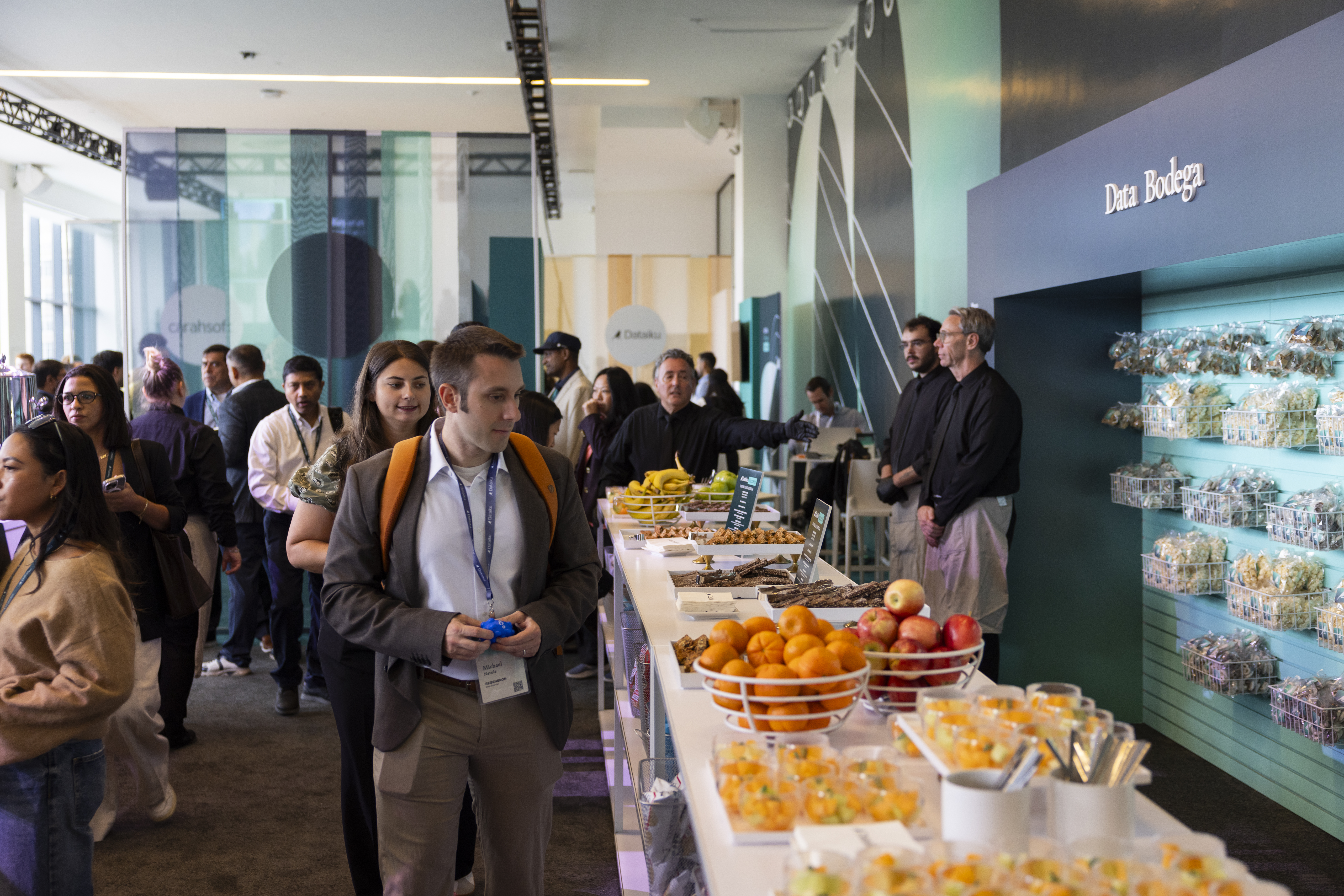
The day’s product announcements focused on helping enterprises build and scale AI systems without losing visibility or trust in order to achieve AI success.
First, Dataiku introduced Agent Management, a standalone product that creates a centralized inventory of enterprise AI agents, including agents built both inside and outside Dataiku. It is designed to give leaders visibility into the business and technical performance of their agents, highlight the highest-risk systems, and bring cost, risk, and value into one view.
This matters because agent sprawl is already a reality. According to IBM research referenced at the event, fewer than one in five organizations maintain a complete, current inventory of their AI systems. Enterprises cannot govern what they cannot see.
Dataiku also announced an expansion of Cobuild, its AI building agent. The expansion includes:
Cobuild Insights: for asking plain-language questions of governed data.
Dataiku Headless: which brings Cobuild and Dataiku into coding environments such as Claude Code, OpenAI Codex, and Cursor.
Cobuild capabilities within Agent Management.
An expanded AI Catalog for approved datasets, models, agents, and semantic models.
Together, these launches respond to a core enterprise requirement: empower more people to build with AI, while ensuring what they build is explainable, governed, and connected to the wider business.
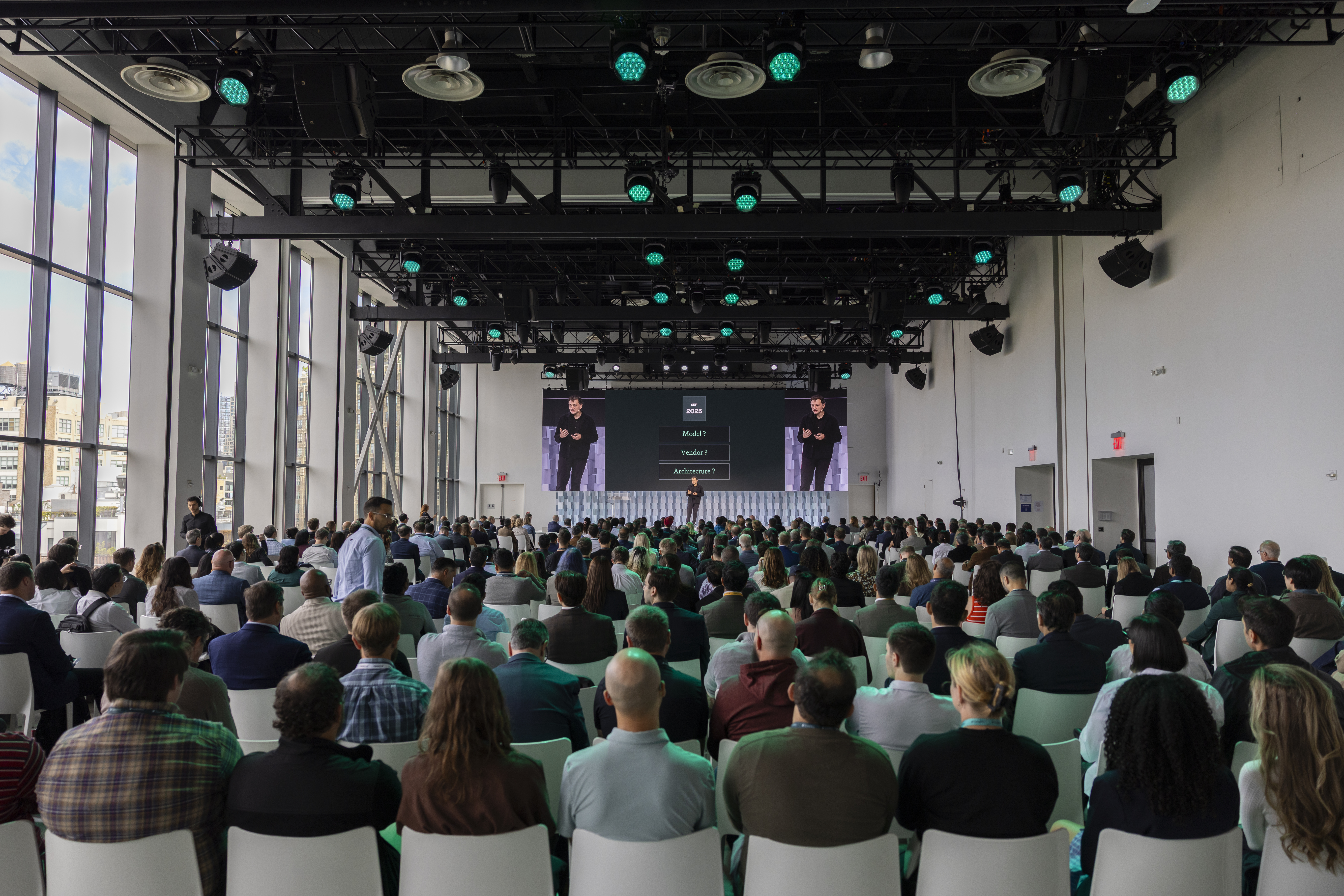
For decades, enterprises have run on Excel. Critical processes often depend on workbooks built by domain experts, with logic that may be powerful but difficult to inspect, reproduce, or safely evolve.
Those business users did not create spreadsheets because they wanted to bypass IT. They created them because they had decisions to make and work to do. Today, that behavior is accelerating through AI-assisted development, agents, and automation. The opportunity is substantial, but so is the risk.
Jed Dougherty, SVP of AI & Platform at Dataiku, described a manufacturer that had built a popular calculator on top of an existing business process. It made its way to the CFO, who asked to see the data and assumptions behind its output. No one could explain them. The logic was buried, unreviewable, and impossible to validate with confidence. That is the difference between empowering builders and creating unmanaged risk.
"We don’t want vibe grenades. We want control."
— Jed Dougherty, SVP of AI & Platform, Dataiku
Rather than preventing domain experts from building, the answer is to give them safe places to build correctly, with IT defining the guardrails, oversight, and approvals. Business experts maintain speed; IT focuses on establishing the systems that make speed sustainable.
Perdue Farms demonstrated what this operating model can look like in practice. Kyle Benning, CDO at Perdue Farms, described an approach that gives decision-makers the tools to work with data and builds teams around that capability.
"We don’t have an AI strategy and we never will. We have a business strategy that uses AI."
— Kyle Benning, CDO, Perdue Farms
Perdue’s early Dataiku initiatives generated more than $35 million in bottom-line savings, according to Benning. From there, the company expanded from a small number of teams to functional groups across the business, using a shared operating model supported by Dataiku, Snowflake, and Azure.
Dataiku showed how this could apply to one of the most common enterprise challenges: a business-critical Excel workbook. Using Dataiku Headless within Codex, the team migrated the workbook into an inspectable Dataiku project, with validation steps, automated workflows, and live operational data replacing manual uploads. The result was a more transparent, reusable process that stakeholders could understand without having to rely on the original workbook owner.
The lesson was clear: enterprises that succeed will welcome the new builders—and give them a platform they can trust.
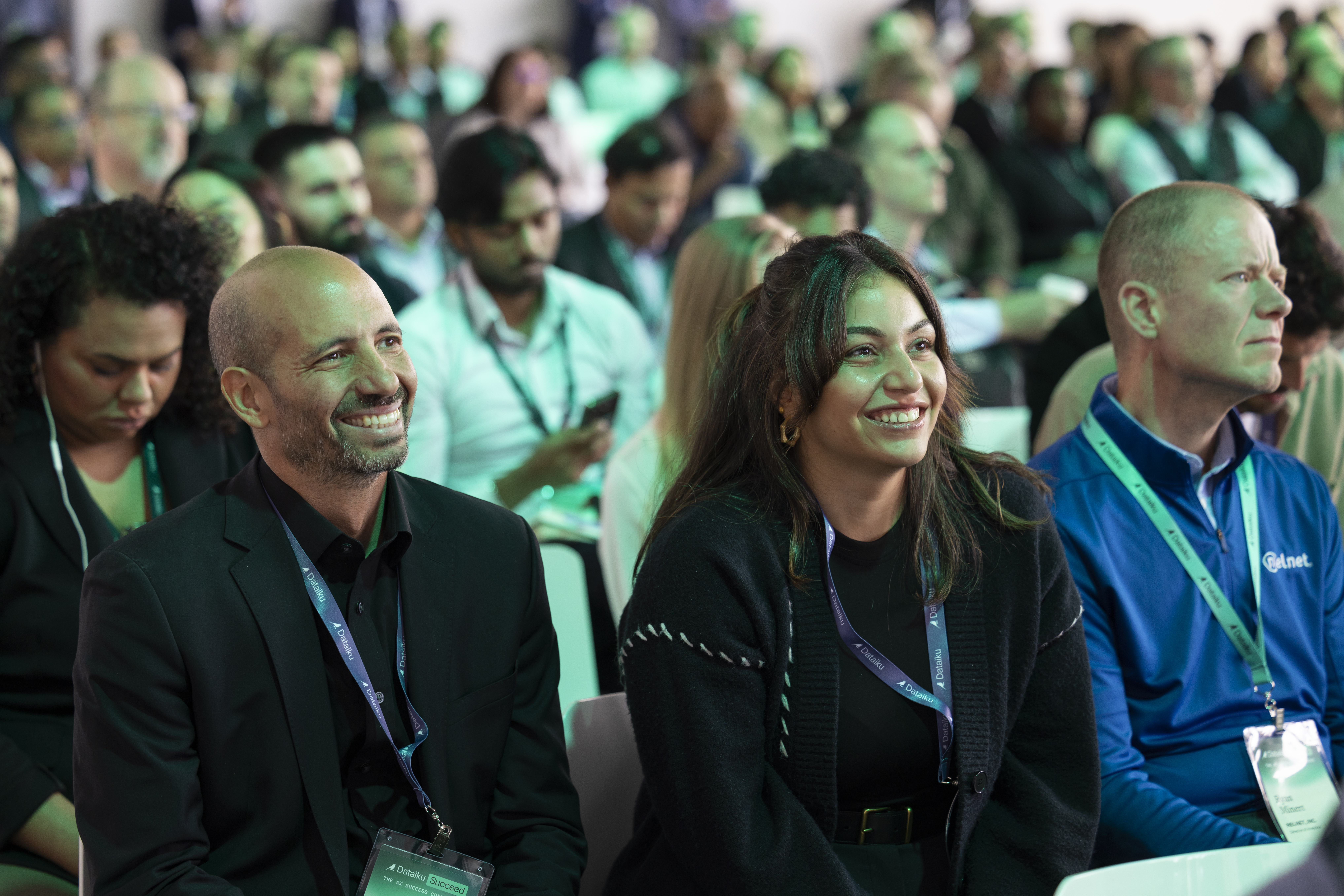
Building more AI is not necessarily the next challenge for most enterprises. Connecting what already exists is.
Clément Stenac, co-founder and CTO of Dataiku, described the fragmented reality of enterprise AI: data platforms, legacy systems, predictive models, agents, business applications, and workflows that often operate independently. The pieces may all be valuable, but isolated intelligence rarely changes how the business operates.
To drive outcomes, agents need more than a prompt. They need business context, governed data, access to the right tools, and clear moments where human judgment is required.
Air Canada brought that idea to life: The airline has built more than 100 analytics assets in production, including models, dashboards, and applications. Over time, its teams automated processes that once took weeks and reduced them to a matter of hours. But as the number of assets grew, the next challenge emerged. They needed to know which asset to use, when, and how to connect them.
Luc Gagnon, Director of Analytics for Travel Marketing & Loyalty Spend at Air Canada, summarized the shift:
"We don’t need more AI. We need to connect the AI we already have."
— Luc Gagnon, Air Canada
For Air Canada, that means starting with critical business problems rather than technology. Its teams identify repetitive tasks, turn them into agent-supported workflows, and connect those workflows to a governed data foundation.
Dataiku showed an airline campaign process that brought together policy information from SharePoint, customer data from Snowflake, a recommendation agent, quality checks, live operational alerts, and human approval. When an unexpected East Coast travel disruption occurred, the team did not need to rebuild its process. It used Cobuild to adapt the existing project, add a service-recovery branch, and create a new policy flow while preserving traceability at each step. The people still owned the decision. Orchestration helped them act with better context, faster.
ExxonMobil described using Dataiku across a global supply chain that spans roughly 300 warehouses, 40,000 railcars, 800 marine vessels, and operations in 160 countries. Its focus is not experimentation for its own sake, but carrying AI-enabled workflows through to business decisions and improving AI fluency across the workforce.
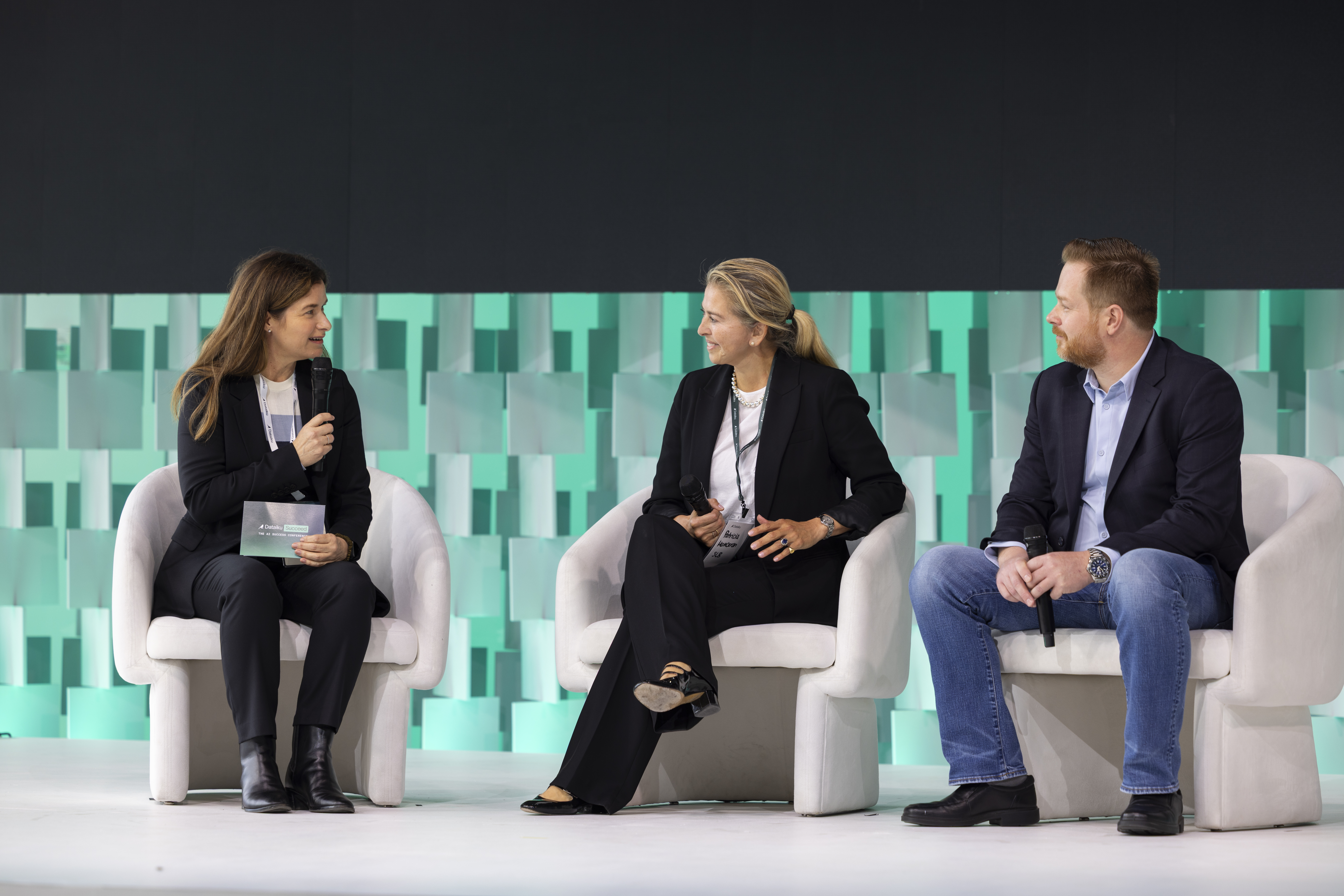
Governance is often treated as the part of AI that slows everything down. Sophie Dionnet, SVP of Product and Business Solutions at Dataiku, offered a better analogy, labeling governance as the traffic light.
A traffic light does not prevent people from crossing the road. It gives people rules, visibility, and coordination so that they can move safely and at scale.
The same is true for AI. Governance defines the responsibilities, controls, and decision rights that allow organizations to move from a small number of builders to hundreds — and from a limited number of models to a fast-growing portfolio of agents.
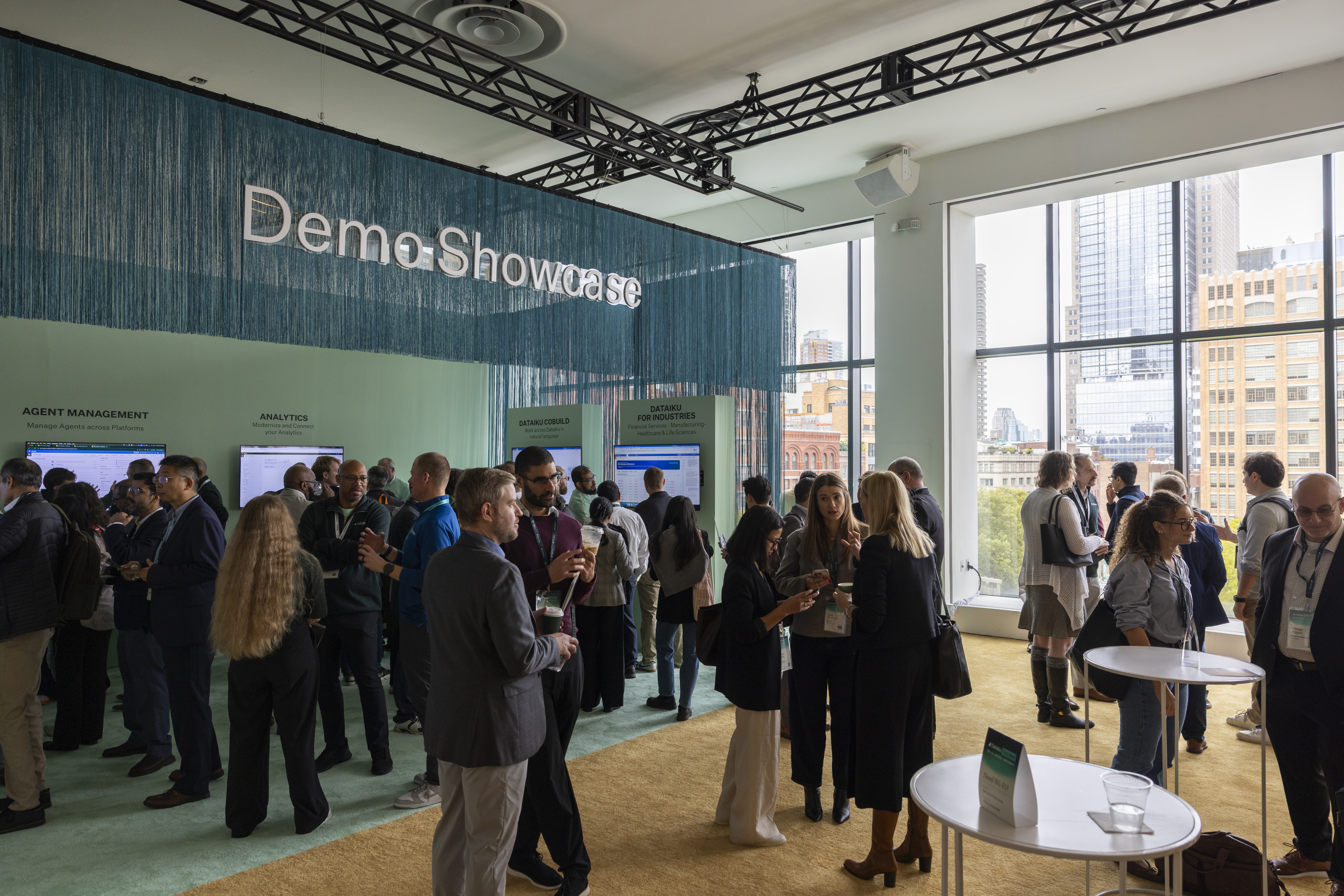
The Agent Management demo illustrated this progression from monitoring to action. A CIO could see an enterprise-wide inventory of agents, integrations, usage, average cost, and risk. Governance teams could then identify an agent producing unsafe advice, investigate what had changed, and route a ServiceNow ticket to the responsible team with clear context and next steps.
This is what governance as an accelerator looks like. Instead of a blocker, it serves to help teams build, improve, and scale responsibly.
As Florian noted in his closing remarks, the goal is not to fear agent sprawl. With the right change management and trust at scale, it can become a force for transformation.
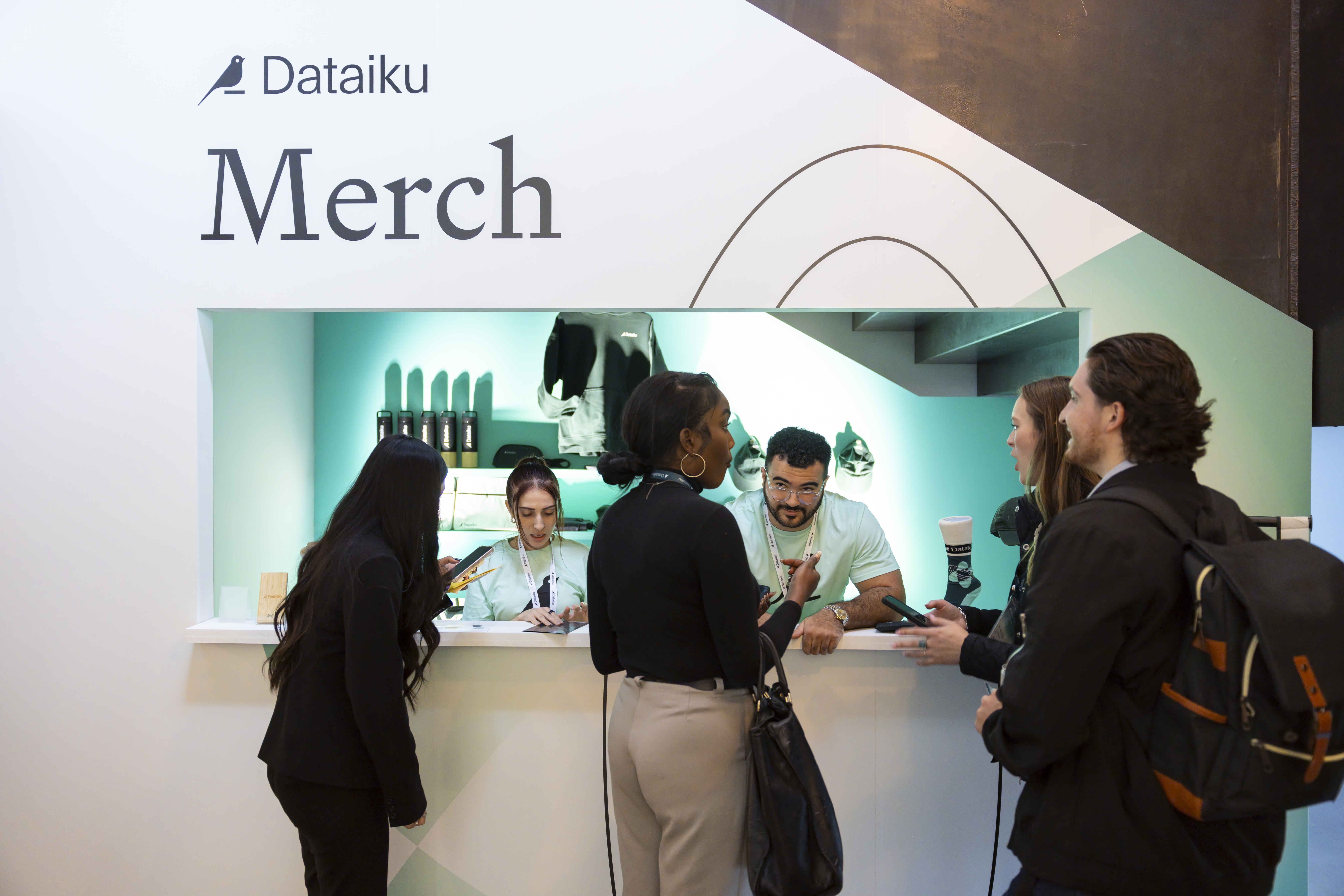
The customer stories throughout the day reinforced that enterprise AI success is an operating model versus a one-time deployment.
At Regeneron, a raw-material intelligence platform replaced a process that could require roughly six weeks to gather and compile supplier information. Now, data can flow into a centralized environment in near real time, making it more accessible to scientists and engineers across sites. The team’s key lesson was that reliable data requires true partnership.
"Big problems are solved by strong teams, not lone experts."
— Regeneron
At GE Aerospace, Carlo Serrangeli described a multi-agent system designed to support engineering decisions for a growing global fleet. Each alert can take around 13 minutes to assess, with roughly 80% of the work focused on information retrieval and 20% requiring expert judgment. GE’s aim is not to replace the expert.
"We’re not automating judgment, just giving it back."
— Carlo Serrangeli, GE Aerospace
The company built a crew of eight specialized agents, supported by 41 tools, so individual components could be tested, governed, and improved independently. The foundation remains the same: quality data, reliable tools, and human expertise.
"An agent is only as good as the tool and the data underneath it."
— Carlo Serrangeli, GE Aerospace
At Trane Technologies, a two-person platform team supports approximately 1,000 users, 14,000 projects, half a million datasets, and 5,700 daily scenario triggers. The team used metadata to identify inactive projects, redundant dataset rebuilds, and non-production or failing automations. Its operating model combines automation with a network of trusted business champions.
"A community is actually what achieves the scale."
— Jason Sematoski, Lead Architect, Trane Technologies
These stories show that enterprise AI scales through trusted teams, shared standards, and the ability to make improvements continuously.

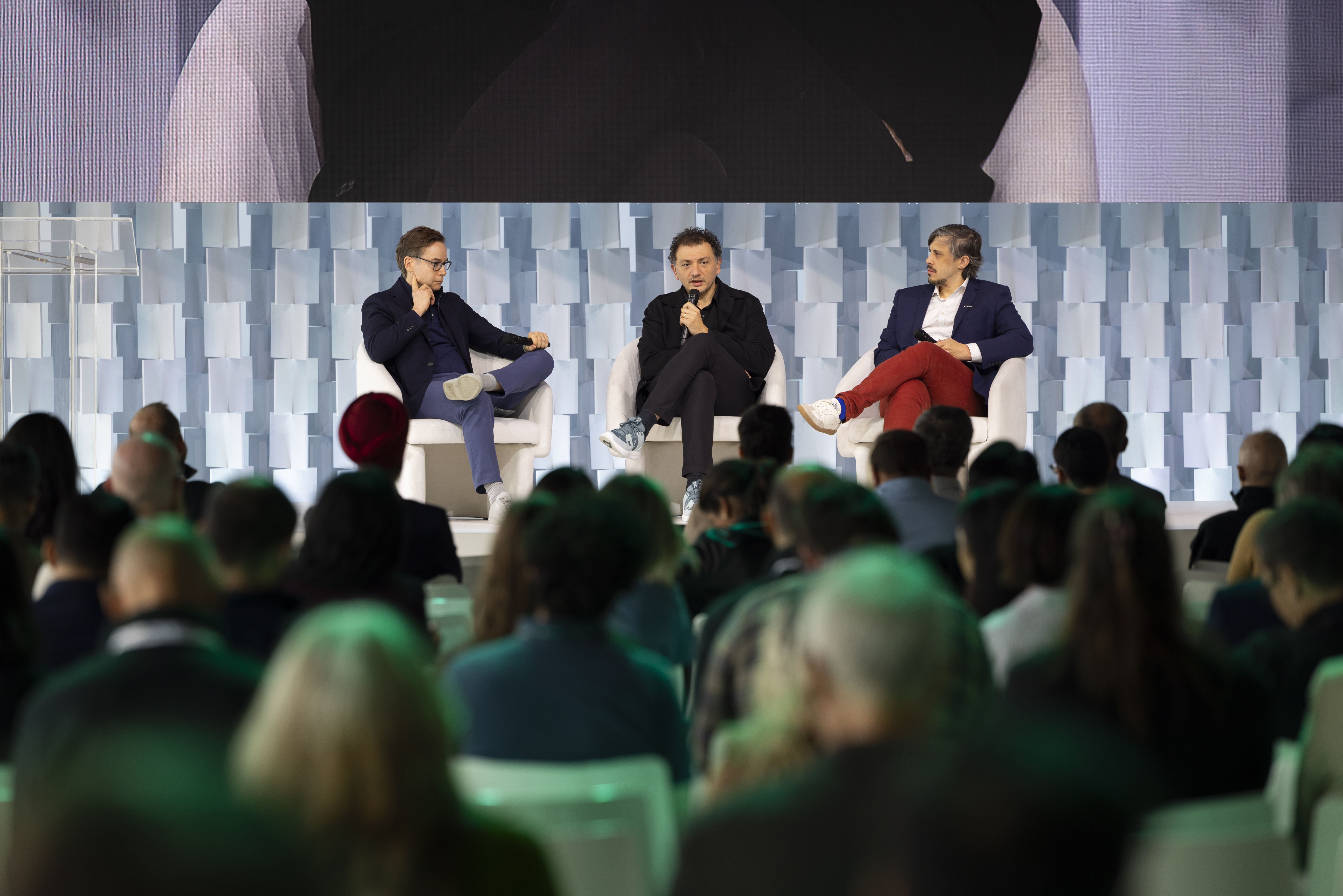
In the closing founders conversation, Florian Douetteau and Clément Stenac joined FirstMark’s Matt Turck to discuss the current AI cycle. This included the investment surge, questions of sovereignty, and the complexity enterprises will need to manage next.
Their perspective was pragmatic. AI demand is real, but so are the costs and risks of building at scale. Enterprises need to understand where investments are going, how much it costs to operate systems over time, and when it makes sense to build capabilities versus rent them.
Sovereignty is part of that equation. Enterprises need choices in where data and systems run, which models they use, and how they maintain flexibility as providers and regulations change. Dataiku is built to operate across environments, whether managed by Dataiku, self-hosted, or deployed in tightly controlled settings.
But the deeper question was what makes an enterprise distinct when many companies can access the same foundational models.
The answer is the customer trust, operating knowledge, data, judgment, governance, and conscious decisions a company brings to its AI systems.
Those are not commodities. They are how an enterprise preserves and extends its advantage.
Likewise, Jeremy Utley closed the event with a provocative idea: ambition is increasingly becoming the defining constraint on what AI can achieve.
He referenced research from Harvard Business School and Boston Consulting Group showing that consultants using AI completed 12% more tasks, worked 25% faster, and produced more than 40% higher-quality work on tasks within AI’s capabilities.
But access to AI does not automatically create better outcomes. In Utley’s work, many people use AI to get to a good-enough answer faster. The strongest performers treat it as an active collaborator that helps them question assumptions, generate options, and push beyond the first acceptable idea.
"I don’t use AI. I work with AI."
— Jeremy Utley, adjunct professor at Stanford and co-author of Ideaflow
His conclusion was a fitting final thought for Dataiku Succeed. Everyone now has access to powerful collaborators. Yet the questions, imagination, domain expertise, and judgment that make those collaborators valuable still come from people.
Mark Abramowitz, Chief Marketing Officer at Dataiku, closed the day with a call to connect with colleagues, peers, and the broader community working through the same changes.
Because at its core, AI success is about people learning to thrive with it.
The enterprises creating value with AI are moving beyond adopting new models. They are equipping their people to build, connecting intelligence across their business, and governing AI with the visibility and control to scale responsibly.

AW Rostamani Group scales enterprise AI through agentic intelligence and governance
Oct 2, 2026
At Novo Nordisk one analyst's expertise turned into an AI agent the whole team can rely on to create and deliver faster insights and performance reviews
Sep 21, 2026
Uptime, engineered: how SLB cut downtime 55% and avoided $7.8M with predictive maintenance
Sep 21, 2026