
Aviva turned hours of audit research into seconds with Q!, a series of AI agents
September 21, 2026/3 min read/Renata Halim
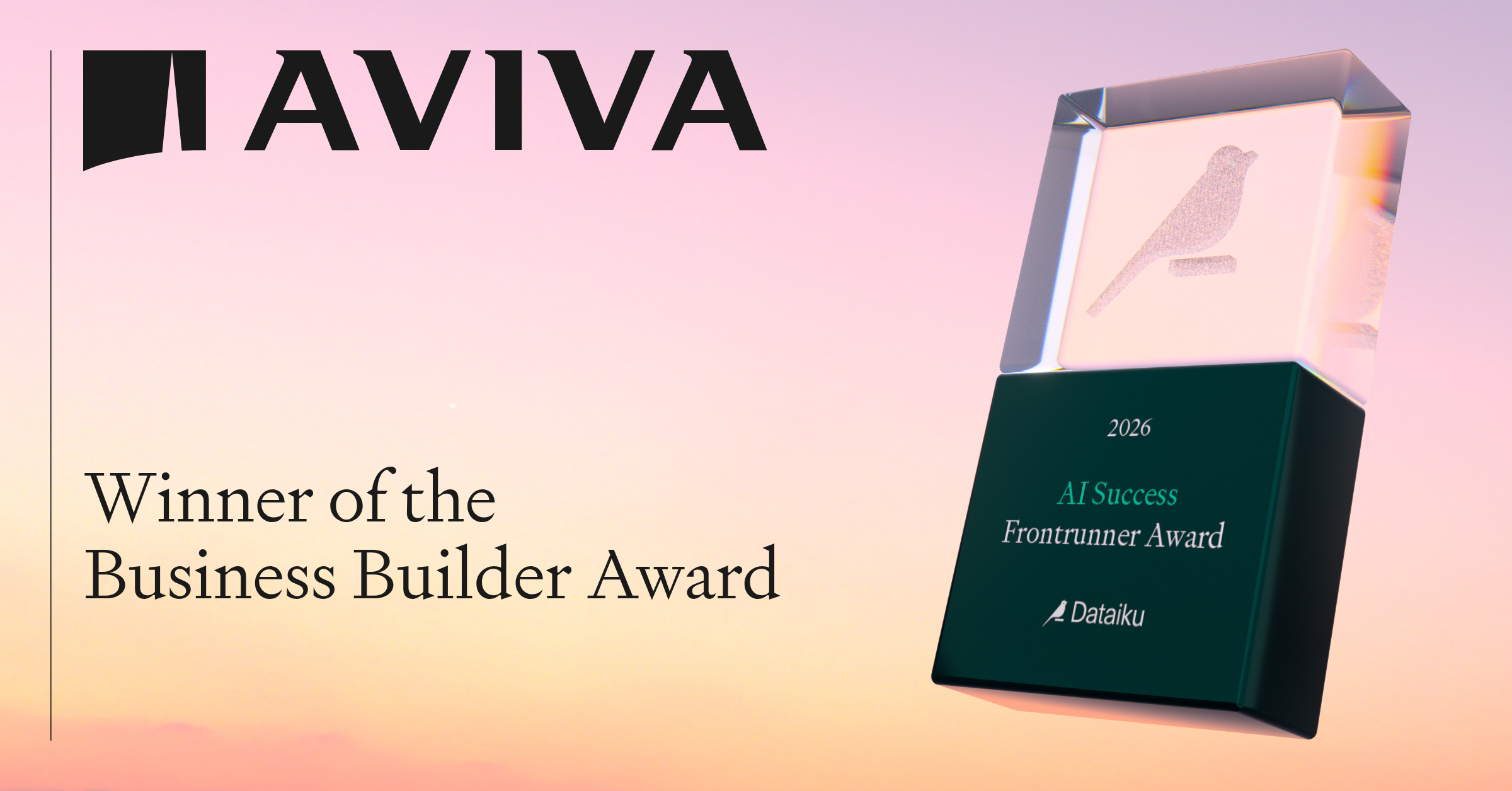
Aviva is one of the UK’s largest insurers, serving 21.8m customers in the UK and over 25m globally. Protecting a business of that size means understanding risk across thousands of people, processes, and decisions.
Now its internal audit team is using Q!, a suite of AI agents built in Dataiku, to find and connect evidence in seconds instead of hours — freeing auditors to investigate risk, challenge assumptions, and ask better questions.
>95%
faster comparative risk analysis
120 auditors
supporting 30,000+ employees
Creates immediate additional capacity
for higher-value audit activity
For Aviva’s 120 internal auditors, providing assurance across an organization of more than 30,000 employees globally means asking complicated questions. And the answer rarely lives in one place.
At Aviva, critical audit knowledge spans structured risk data, previous reports, working papers, PDFs, SharePoint, messages, and supporting documentation. Answering a question could mean searching across multiple systems and manually piecing together the evidence before the real analysis even began.
That created a fundamental trade-off: time spent finding information was time auditors couldn't spend understanding risk.
What makes Q! distinctive starts with who built it. A small group of three to five Internal Audit practitioners helped shape Q! from the ground up, acting as both domain experts and hands-on builders. They defined the use cases, shaped the terminology and relationships behind the data, and determined how structured records and documentary evidence should come together.
Dataiku gave them a governed environment to turn that expertise into a production solution, with technical specialists providing support where needed. Through Dataiku, Aviva can coordinate agents, models, and data sources while keeping responses traceable to the evidence auditors need to trust them.
Q! represents a broader shift for Aviva: domain experts aren't simply consuming AI. They're helping build it around the work they understand best. As Q! expands across more audit and risk use cases, that model may prove as important as the hours it saves.
An auditor asks a question in natural language. Q! finds information across structured data and documents, identifies the relevant sources, and brings the evidence together in a grounded response. Instead of navigating system after system, auditors can begin with the evidence they need to investigate further.
Instead of navigating system after system, auditors can begin with the evidence they need to investigate further. And because Q! connects its responses back to the underlying sources, auditors can scrutinize the evidence themselves.
AI gets them to the evidence. The auditor decides what it means.
A comparative risk analysis that previously took two to four hours can now be completed in seconds, a reduction of more than 95%. This creates immediate additional capacity in the team for higher-value audit activity.
The opportunity isn't simply to do the same work faster. Auditors can use that time to explore additional scenarios, pursue new lines of inquiry, challenge assumptions, and bring stronger insights to the business. The goal isn't faster searching. It's more time for thinking.
Q! has made it possible for auditors to interrogate large volumes of audit methodology, prior audit reports, risk and control information, and guidance using natural language. This enables rapid insight generation and knowledge retrieval that would previously have been impractical, time-consuming, or dependent on individual experience.
Standard Chartered prevented ~$90M from being laundered by helping investigators surface higher-risk accounts faster
Sep 21, 2026
Corios helped an $82B bank replace outdated software and rethink reporting processes without disrupting a single deadline
Sep 21, 2026
Best legal software for cross-functional teams in 2026
Aug 14, 2026