CIO confession 5 of 6: answer to distributed AI isn’t centralization
November 5, 2026/5 min read/Barbara Rainho
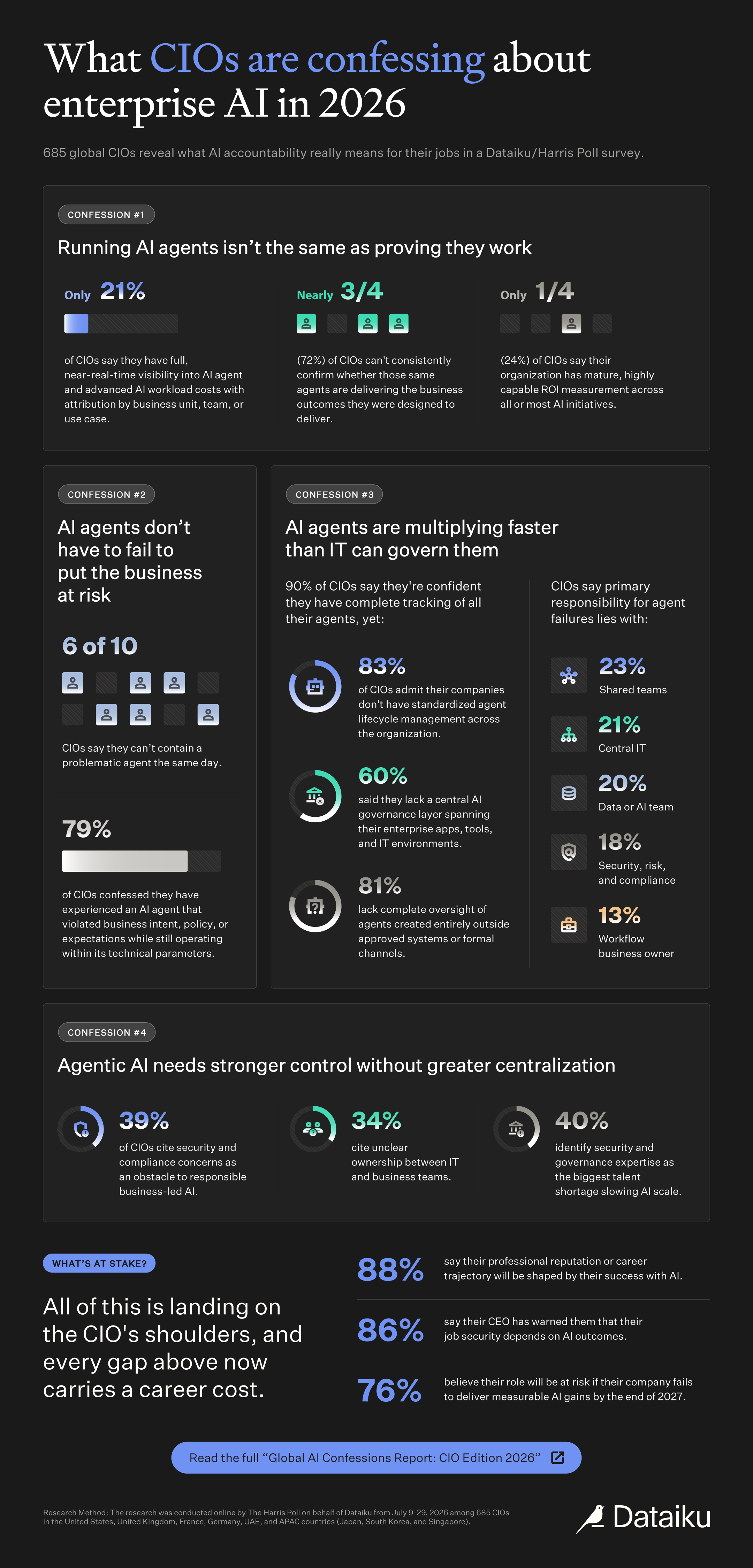
Business teams need to adapt AI workflows as fast as the business changes, with the autonomy to act immediately. For CIOs, the challenge is making that freedom compatible with enterprise accountability. Already, 82% agree employees are creating AI agents and apps faster than IT can govern them.
In part 5 of Dataiku’s six-part CIO blog series, we examine the operating model behind distributed AI. Drawing on "7 Career-Making AI Decisions for CIOs in 2026," based on a Dataiku and The Harris Poll survey of 685 CIOs, we explore how business teams can build and modify AI without fragmenting ownership and control.
Distributed AI is an existing reality. More than half (54%) of CIOs report discovering employees using unsanctioned AI tools, apps, platforms, or experiments for work.
Keeping approved development inside IT does not mean all development stays there. It can widen the gap between official processes and how employees actually work.
The report puts the decision plainly: “The decision is not whether to expand AI creation, it’s how.”
That requires separating centralized standards from centralized creation. Business teams can have authority to build without having authority to rewrite the rules.
CIOs recognize the risks. Eighty-nine percent agree broader employee access without strong governance will create significant technical debt from shadow AI. Another 81% are concerned citizen-built AI could expose sensitive company data.
Those findings explain why access and governance must develop together. Before teams start building, they need clear answers: Which data can they use? Where can they deploy? Which changes require review? Who remains accountable?
Without those answers, the organization distributes creation while leaving the CIO responsible for the consequences.
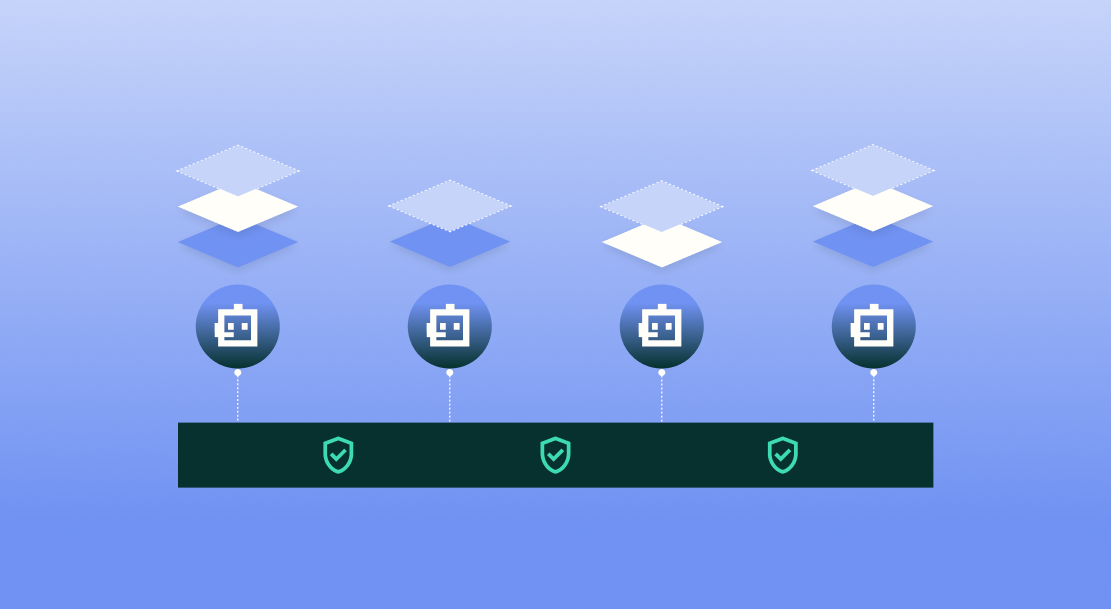
The CIO confessions report recommends controlled data access and standardized deployment patterns. These give teams a defined environment in which to work independently.
A team might adjust a workflow within an approved scope, while changes involving sensitive data or broader deployment trigger additional review.
The objective is purposeful IT involvement. Not every adjustment needs the same approval process, but teams should know when they are crossing a boundary.
Permission answers who can build. Ownership answers who remains responsible after deployment.
Each operational application or agent needs clear accountability for its purpose, permitted scope, and escalation requirements. That responsibility must remain visible as teams modify or expand its use.
The report also recommends “monitoring by default.” Yet only 25% of CIOs say their organization is completely able to monitor all production AI agents in real time.
Visibility cannot be an afterthought. It needs to be part of the pathway from development to deployment.
Central IT still sets enterprise requirements for access, deployment, monitoring, and escalation. But setting those requirements is different from making every change.
The report describes the goal as “guardrails that allow speed without surrendering accountability.” With those guardrails built in, business teams can adapt AI to their needs while IT maintains oversight.
The answer to distributed AI is to build governance, ownership, and control into the environment from the start — so business teams can move independently without moving beyond enterprise oversight.
In the next and last blog of this series, we will dive into CIO confessions around markets presenting the same AI accountability problem.
Tags